
ROUZATI JOURNAL / THE BUYER’S DOSSIER
Overdyed vs. Naturally Aged Turkish Rugs: What to Ask Before Buying
A faded look is an appearance.
A treatment history is information.
THE SHORT ANSWER
Ask what changed the color.
When comparing overdyed vs naturally aged Turkish rugs, separate an intentionally altered palette from changes that happened through use and exposure. Overdye describes an added coloring treatment; natural aging describes a history, not a standardized finish. A rug can be old, worn and later overdyed at the same time.
“Vintage” does not mean “untreated.” Ask for the known treatment history in writing. Neither a muted palette nor visible wear can establish from a photograph that the current color is original.
This guide uses one listing explicitly labelled overdyed and a second vintage listing whose title does not state overdye. The second is an example of a question still to resolve—not a certified naturally aged control. Seller descriptions and catalog measurements remain seller statements.
01 / TREATMENT NAMED IN TITLE
Outstanding Overdyed - Distressed Vintage Turkish Rug - 3'9" x 6'4" ft.
CATALOG SKU 105571
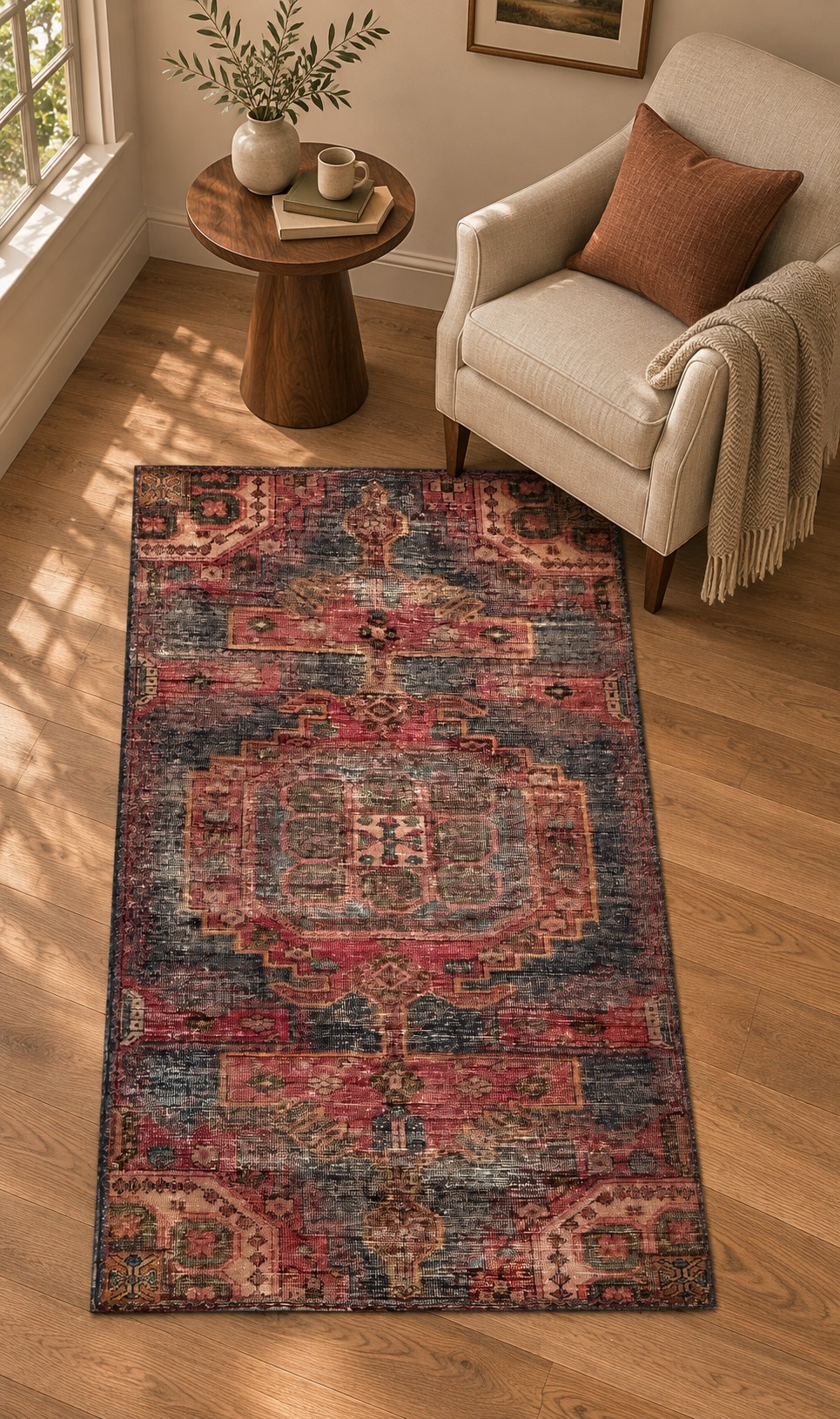
AI ROOM-STYLING CONCEPT · Based on this exact catalog reference and stated proportions. Approximate visualization, not an actual installation, exact reproduction, color sample or evidence of treatment, wear or fit.
The catalog title explicitly includes Distressed Overdyed and identifies this as a vintage Turkish rug at 3′9″ × 6′4″—45 × 76 inches. The reference view shows muted red geometric forms against a dark field, with pale interruptions in the visible surface.
The useful question: what coloring and distressing work was done, and what is known about its timing? Ask whether the seller has pre-treatment photographs or a treatment description. The title does not supply the dye chemistry, the sequence of work, the remaining pile height or a colorfastness guarantee.
The photograph is not a before-and-after record. Do not use the pale areas to diagnose a process or assume every visible mark was deliberately created.
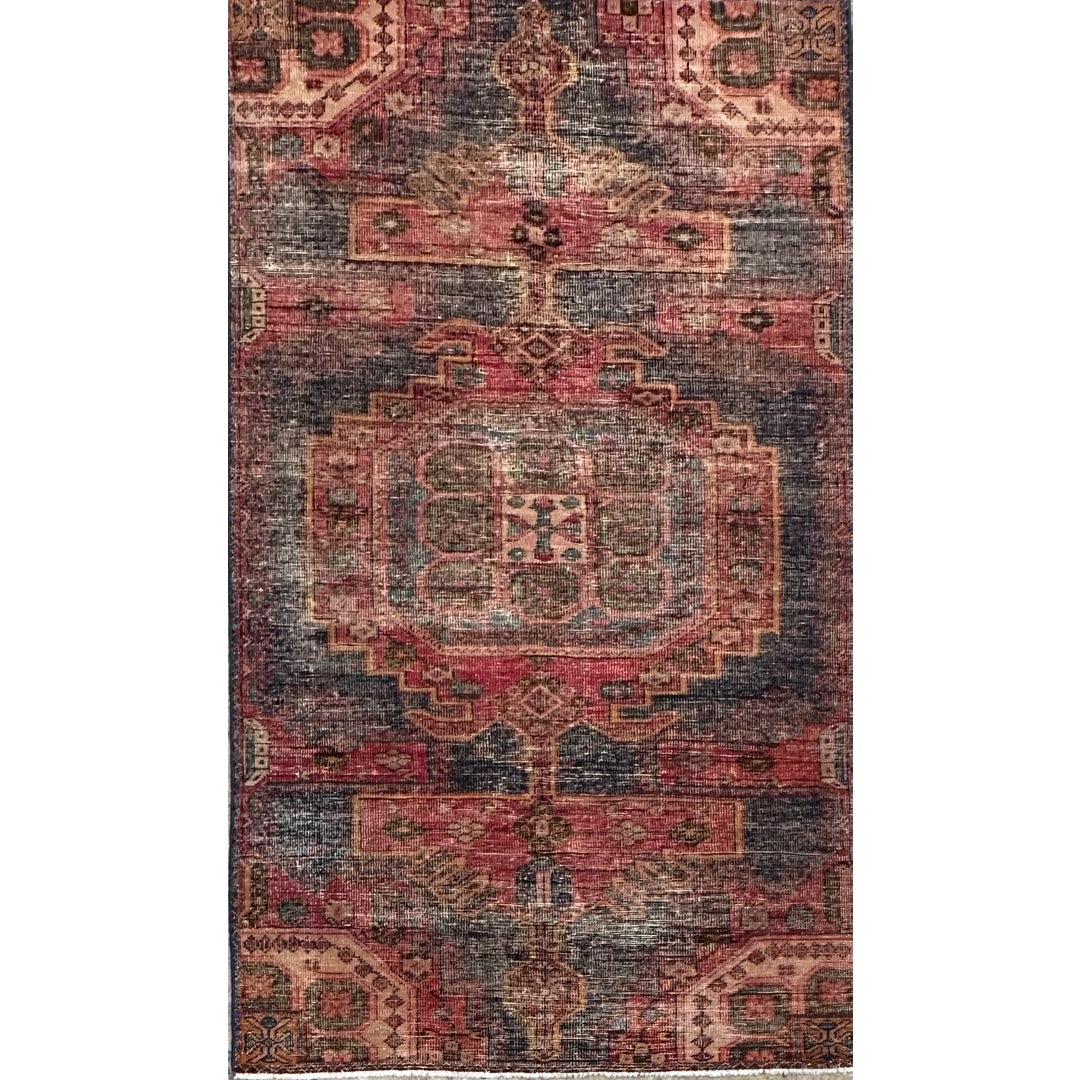
Original catalog reference. Use it to request further views, not to certify a treatment history. Each image links to this exact listing.
02 / TREATMENT HISTORY TO CONFIRM
Rustic Radiance – Vintage Anatolian Oushak Area Rug – 5'7" x 9'0" ft.
CATALOG SKU 106650
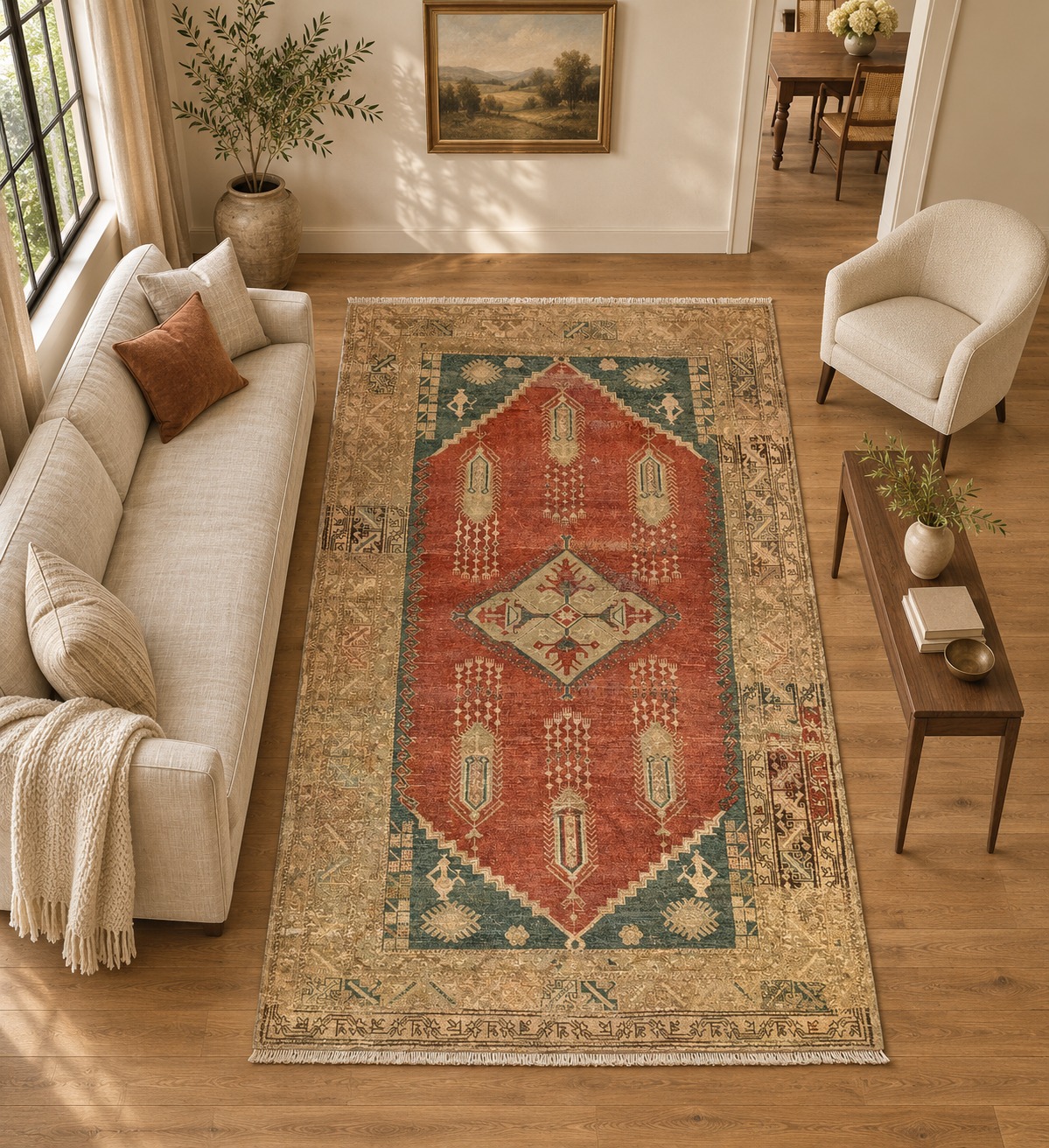
AI ROOM-STYLING CONCEPT · Based on this exact catalog reference and stated proportions. Approximate visualization, not an actual installation, exact reproduction, color sample or evidence of treatment, wear or fit.
The catalog identifies a vintage Anatolian Oushak area rug at 5′7″ × 9′0″—67 × 108 inches. Its title does not include overdye. The original view shows a rust field, pale hanging forms, blue-green corners and a tan patterned border.
The useful question: has this piece been overdyed, recolored, chemically lightened, deliberately distressed or otherwise altered? Ask what the seller knows and what remains unknown. A vintage title and a varied-looking surface do not prove that the colors are untouched.
This example makes the evidence gap visible: absence of a treatment word in a title is not the same as a written statement about the rug’s history. Its larger size also means it is not a fit-matched alternative to the first piece.
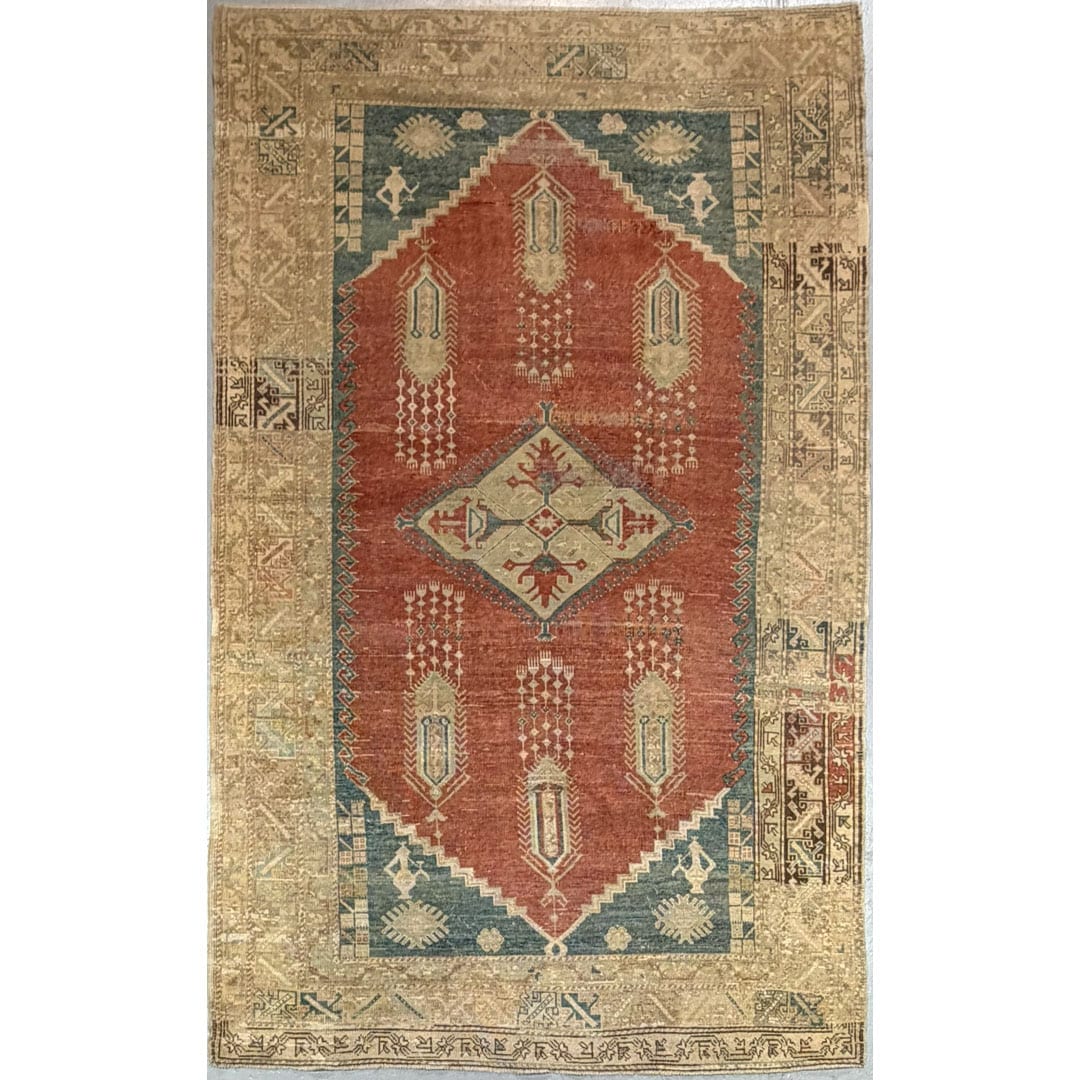
Original catalog reference. Use it to request further views, not to certify a treatment history. Each image links to this exact listing.
READ THE WORDS SEPARATELY
Age, appearance and treatment are different entries.
Overdyed tells you an additional coloring stage is being described. Distressed can describe an intentionally aged-looking finish, but a title alone may not specify what was done. Ask the seller to explain the term for that item rather than assuming a universal manufacturing recipe.
Naturally aged is most useful when supported by a history of use and a clear account of known interventions. It does not mean damage-free, never cleaned or immune to future change. Equally, a declared overdye does not make a rug new or settle its current structural condition.
Keep country of weaving separate too. A Turkish-style pattern is not evidence of Turkish manufacture. A design can be copied elsewhere, and a country label does not establish which treatments followed weaving. Use the origin-label guide when a listing mixes those terms.
THE EVIDENCE GRID
An appearance is a starting point.
| Listing or observation | What it can tell you | What remains unproved | What to request |
|---|---|---|---|
| “Overdyed” in the description | The seller is describing a coloring treatment. | Its chemistry, date, extent or future performance. | A written treatment account and any earlier photographs. |
| “Naturally aged” in the description | The seller is attributing the appearance to history and use. | That no recoloring or deliberate distressing occurred. | What is known about interventions, and the limits of that knowledge. |
| “Vintage” without a treatment statement | An age-related description is being used. | An untouched palette or an absence of treatment. | A direct answer about overdye, lightening and recoloring. |
| Pale or low-looking areas in a photo | Places to examine in additional views. | Whether the cause is wear, treatment, light or imaging. | Close, reverse and angled views with a condition explanation. |
| Soft, uneven color | A visible appearance under that photograph’s conditions. | Original dyes, natural dyes, age or color stability. | Consistent-light views and any documented color history. |
REQUEST 01 / TREATMENT RECORD
Get a useful answer, not just a softer adjective.
Send the rug ID with your questions so the answer relates to the same piece as the photographs. Ask which alterations are documented: additional dye, localized recoloring, color reduction or deliberate changes to the surface. If the history is incomplete, ask the seller to say so plainly.
Useful follow-ups include whether the treatment was performed by the current seller or before acquisition, whether there are dated photographs, and whether repairs or replacement yarns were involved. Do not assume a seller can reconstruct every previous cleaning or intervention on an older rug.
A good record can include “unknown.” An explicit limit is more useful than inferring an untouched history from a title. If original color or minimal intervention is essential to your purchase, decide what documentation or independent assessment you need before committing.
REQUEST 02 / CONDITION
Ask about the surface underneath the look.
Assess the exact rug’s structure separately from its palette. Request a clear condition description addressing areas of reduced pile, visible foundation, ends, sides and known repairs. Ask for location-specific photographs when the description names an issue. An attractive aged effect is not a structural inspection.
Compare the same area in an overall view, a close view and an angled view, with a reverse view where useful. Lighting and camera angle can change how yarns and low areas appear. Do not assign a wear grade or treatment mechanism from one compressed image.
Keep the original product photographs alongside any styled scene. The large home images above are labelled AI concepts; they cannot show actual pile, repairs, color transfer or the result of a treatment. Our antique-rug photo request guide provides a broader checklist if you need additional seller views.
REQUEST 03 / COLOR AND CARE
Do not turn the comparison into a home dye test.
The Canadian Conservation Institute explains that both natural and synthetic textile dyes can fade or change under light and ultraviolet exposure, and their vulnerability varies. A naturally aged label therefore does not establish light resistance, and an overdye label alone cannot rank one rug against another for future color stability.
Ask what care guidance applies to this specific rug, whether the seller has information about previous color movement, and what assessment supports the advice. Avoid wetting, rubbing, applying solvents or trying a cleaning recipe to identify the finish yourself.
CCI’s museum-textile guidance treats colorfastness testing as a treatment decision with limitations: a test can affect the test area, and dyes may still run during cleaning even after testing. That is a reason to seek item-specific professional advice, not an invitation to reproduce the museum procedure at home. The museum guidance does not prescribe a cleaning method for these catalog rugs.
If a new mark or transferred color is already present, document what happened and consult the appropriate specialist. See our color-bleeding guide for the separate response question.
NOT ALL COLOR DIFFERENCES HAVE THE SAME QUESTION
Keep aging separate from abrash and viewing direction.
A change when you walk to the opposite end belongs in a viewing-and-light comparison. A band within a woven color belongs in an abrash discussion. Neither observation, on its own, establishes overdye or proves an untouched palette.
Use our pile-direction guide when appearance changes with viewpoint, and our abrash guide for the separate weaving-color question. Keep the seller’s treatment account attached to the same rug ID rather than trying to answer all three questions with one photograph.
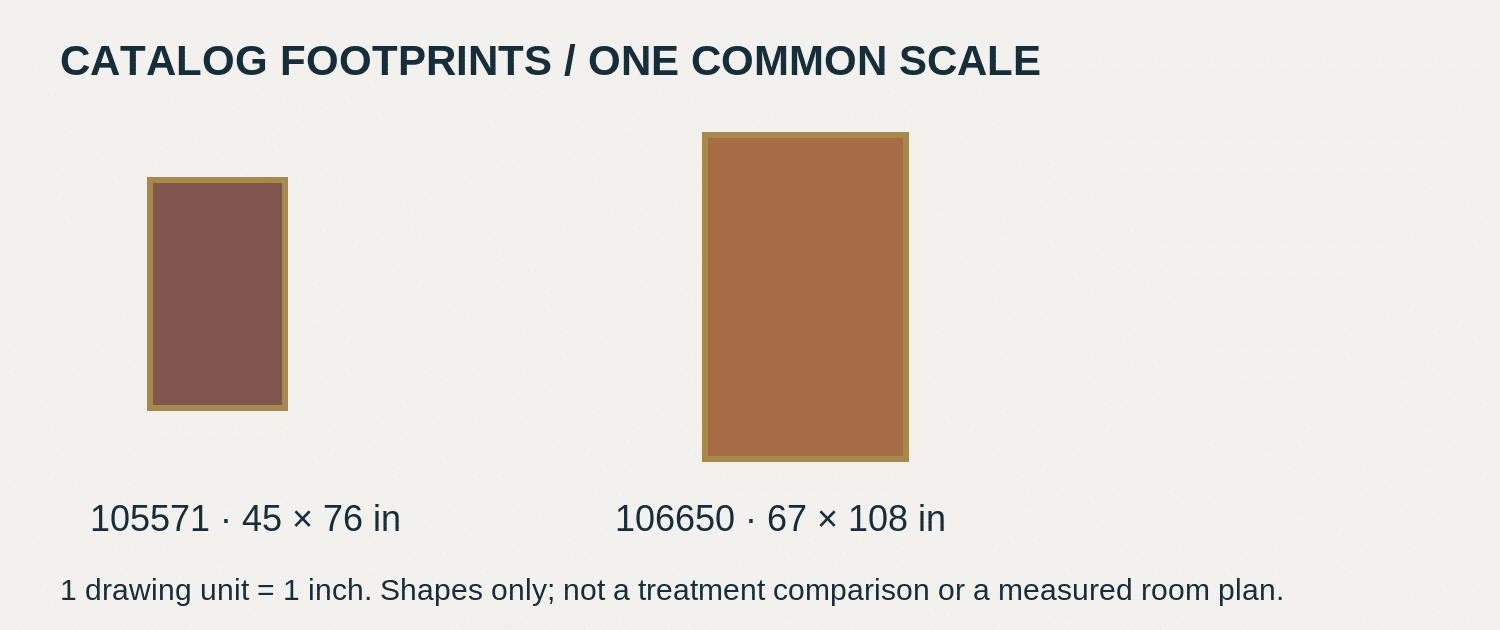
Confirm the footprint as well as the finish.
The first rug’s catalog dimensions convert to 45 × 76 inches; the second to 67 × 108 inches. The diagram uses a shared inch scale so equally sized image boxes do not suggest equal rug sizes. These are seller-stated dimensions, not measurements taken for this article.
Ask for current rug-body dimensions and whether fringe is included. A treatment description does not settle size, and a room concept cannot prove the actual fit. Plan furniture and walking routes with confirmed measurements.
BUILD YOUR SHORTLIST
Choose a disclosed finish you actually want.
When browsing turkish rugs for sale, decide whether you want a deliberately altered palette, an appearance supported by a known aging history, or simply a rug you enjoy with an acceptable level of uncertainty. Keep treatment, condition and origin as separate entries in your shortlist.
If you broaden the search to persian rugs for sale, use the same questions. Persian origin does not imply an untouched palette, just as Turkish origin does not imply overdye. Compare the actual seller records and photographs rather than assigning a treatment history by country.
Request the current purchase terms directly from the seller and retain the item-specific answers. A declared alteration may suit your decorating goal; a preference for documented original color may lead you elsewhere. Neither preference alone creates a value, authenticity or durability conclusion.
BUYER QUESTIONS
Before you decide
Is every faded Turkish rug overdyed?
No. Faded-looking photographs do not establish overdye. Ask what coloring or distressing treatments are known, and separate that answer from wear, exposure and image conditions.
Can an antique rug also be overdyed?
An older rug can undergo a later coloring treatment. The age description and the treatment record answer different questions; neither should replace the other.
Does vintage mean naturally aged and untreated?
No. Vintage is not a treatment-history certificate. Request a direct answer about known recoloring, lightening, distressing and repairs, including anything the seller cannot establish.
Is an overdyed rug less colorfast?
The label alone does not establish how a particular rug’s colors will behave. Ask about item-specific care and assessment; do not rank two rugs by the treatment name alone.
Can I tell whether the dye is natural from the photo?
No reliable conclusion about dye chemistry follows from the palette alone. Request any supporting documentation and obtain specialist advice if that distinction matters to the purchase.
Which of the featured rugs is proven naturally aged?
Neither is presented as a verified untreated example. One title declares overdye and distressing; the other leaves treatment history to confirm. That evidence difference is the point of the comparison.
THE TAKEAWAY
Keep the history with the rug ID.
Record the finish you want, the treatments the seller can document, the condition questions still open and the confirmed measurements. Buy from the evidence you have—not from a promise you inferred from the word “vintage.”