

THE RUG JOURNAL / COLOR & LIGHT
Why a Rug Looks Different
from Opposite Ends
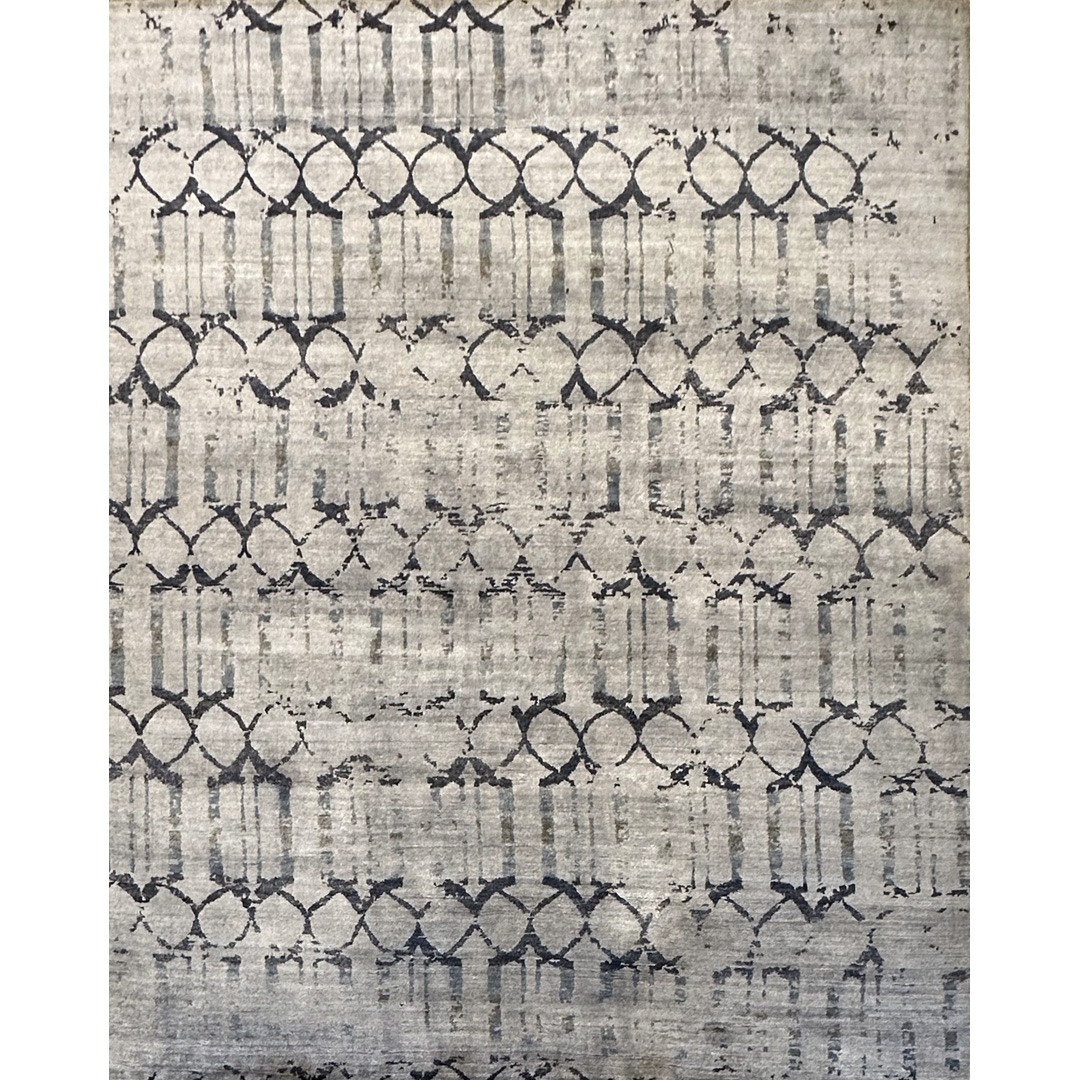
Same rug. Different point of view.
Before you call it faded, compare the pile, your viewing position and the light in the room.
THE SHORT ANSWER
Why does my rug look lighter from one end?
The pile of many rugs leans in a direction, so the surface reflects light differently as you move around it. A rug can look lighter from one end and deeper or more saturated from the other. The yarn has not necessarily changed color just because you changed position.1
A change with viewpoint is a clue about reflection, not a complete condition diagnosis. If an area is new, marked or different in texture, check it separately. This guide helps you compare what you see without assuming that every pale area is fading or every dark area is dirt.
ONE PRODUCT / TWO CATALOG VIEWS
Look at the same rug twice.
Both photographs below come from the listing for Lovely Lustrous, an 8′ × 10′ modern geometric Silkette rug. They show the same product from different viewpoints. Neither photograph has been recolored for this article.
A CATALOG VIEW
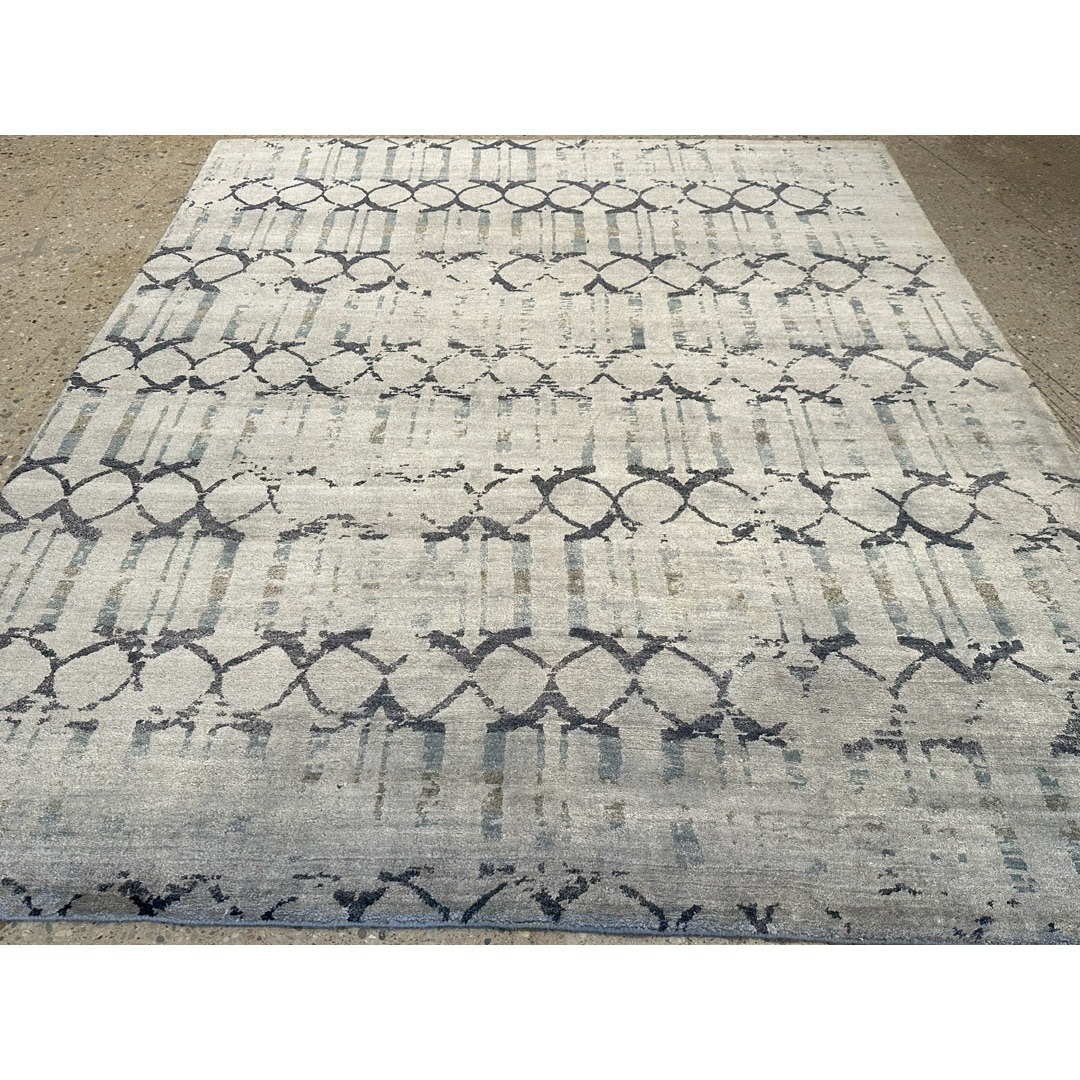
A lighter impression in this catalog view.
B CATALOG VIEW
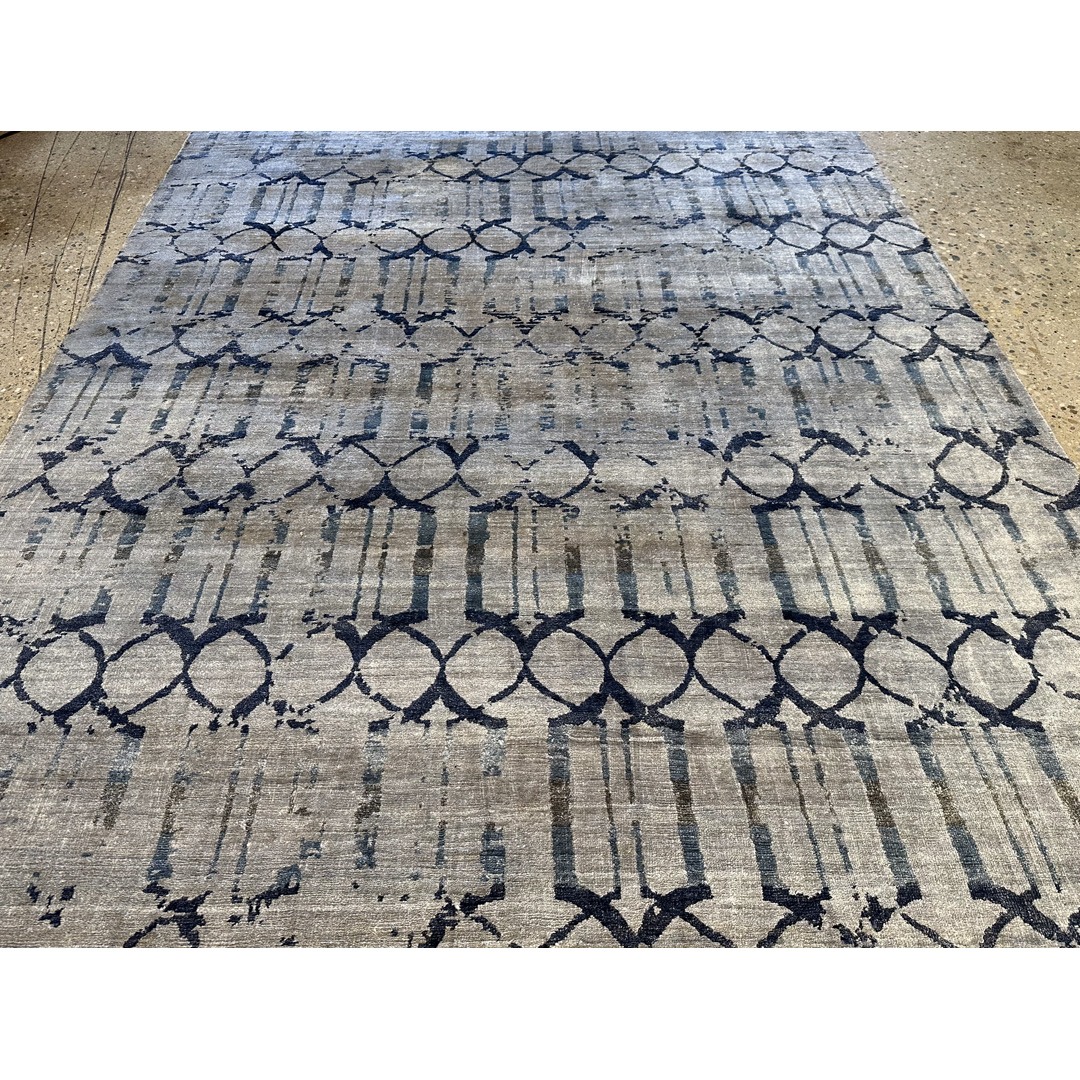
A deeper impression in another catalog view.
These are original catalog images, not a controlled lighting experiment. Viewpoint, room light, camera exposure and white balance may all contribute to the difference. Use the comparison below at home to investigate pile direction under steadier conditions.
What is rug pile direction?
The pile is the raised surface of a pile rug. Its yarns may lean rather than stand perfectly upright. Looking along that lean and looking back against it can produce different impressions of color and sheen. The Association of Rug Care Specialists describes this as an effect of the way the pile reflects light.1
Keep two ideas separate: a whole rug’s directional appearance, and a local patch whose pile has changed direction. The latter is often discussed as shading or pile reversal. It does not follow that a rug which looks different from each end has developed a new problem.
Schematic positions only. The arrows do not identify the pile direction of the catalog rug.
CHANGE ONE THING FIRST
Move yourself.
Leave the rug in place.
Start by comparing the same area from opposite ends. Keeping the rug still makes it easier to notice a viewpoint-related change before you start rearranging the room.
How can you compare the two ends at home?
Use this observation checklist before you try to clean, brush or rotate the rug. It is designed to help you describe the appearance, not to certify that a mark is harmless.
- 01
Keep the lighting steady
Use the same room lighting for both views. Avoid comparing bright sun from one end with a photograph taken later after the light has changed.
- 02
Choose a reference area
Pick a motif or a small area of the field that you can identify from both ends. Compare that same area rather than two different colors in the design.
- 03
Walk to the other end
Look back across the rug at a similar distance and height. Note whether much of the surface changes together or only one small patch catches your attention.
- 04
Photograph with care
If your phone allows it, keep exposure and white balance consistent. Avoid filters. Keep the original photographs and note the window and lamp positions.
- 05
Separate persistent concerns
Record any stain, roughness, missing pile or recent change separately. A directional effect and a condition issue can occur in the same rug.
Is it pile direction, fading or abrash?
A useful comparison asks what changes when you move, what stays in the same place, and what has changed over time. These clues guide the next question; they do not replace an examination of an uncertain area.
| What you notice | A possible explanation | A useful check |
|---|---|---|
| Whole rug looks lighter or darker from opposite ends | Directional reflection may be contributing. | Repeat the view comparison under steady room lighting. |
| One patch changes its light-and-dark appearance | Local shading or pile reversal is one possibility. | Note the location, texture and history before asking for advice. |
| A previously exposed area has lost color over time | Light fading may be involved. | Compare older photographs and the rug’s exposure history. |
| A band changes tone within one woven color | Abrash concerns variation in the yarn or dyeing. | Ask about the band instead of assuming age or damage. |
| A new mark follows a spill or treatment | A separate condition issue needs attention. | Tell a rug care specialist what happened and what was used. |
How is local shading different from the whole-rug effect?
Local pile reversal involves areas where the pile lies differently from the surrounding surface. The Carpet and Rug Institute describes a light-and-dark appearance that changes with the viewing direction. Some persistent forms of pile reversal cannot be permanently removed by routine brushing or vacuuming.2
That guidance concerns an identified phenomenon. It does not mean that any patch in a rug should automatically be called pile reversal. If a patch is new, has a changed feel or follows a spill, request advice based on the individual rug. Avoid treating a visual explanation as permission to ignore an unrelated concern.
ORIENTATION IS A DESIGN CHOICE
Which view do you want
when you enter the room?
Compare the rug from the doorway, your usual seat and the main path through the room. You may prefer a richer impression on arrival or a softer appearance beside the sofa. There is no single compass direction that produces the same result in every room.
If the rug can be moved safely, photograph the current layout before trying a half-turn. Keep the other furnishings and lighting as consistent as practical. For placement ideas, see our living room rug guide and bedroom rug collection.
Choose the view
you enjoy most.
Check condition separately.
Can rotating the rug solve a color difference?
A half-turn can change the impression you see from a fixed seat or doorway. Treat that as a decorating comparison, not a repair for every color problem. Do not drag an oversized or delicate rug by a corner; ask for help with handling when needed.
Light fading is a different process. The Canadian Conservation Institute explains that light damage accumulates and is irreversible. Rotation does not put lost color back into yarn.3 Read our silk rug sunlight guide for related care considerations.
If moving the rug leaves it uneven or lifts an edge, check its setup before using the room normally. Our guide to why rug corners curl explains what to inspect next.
What should you ask when shopping online?
Ask for the same rug photographed from opposite ends under consistent lighting. Request a straight overall view as well as angled photographs. Ask which images are original product views and which are digitally styled room scenes.
Use a rug ID to keep the conversation tied to the exact item. A phone screen or an edited image is not a precise color sample. If an exact color match matters, ask what in-person viewing or other comparison options are currently available before purchasing.
THE RUG IN THIS GUIDE
Lovely Lustrous
Modern geometric Silkette rug · 8′ × 10′
Catalog ID: 107254
All three product photographs in this article belong to this one listing. Check the live page for its current details and availability.
Questions about rug color & direction
Does a lighter view mean my rug has faded?
A lighter appearance from one viewpoint alone does not establish fading. Compare the same area from opposite ends under steady lighting and review any change over time.
Can the same rug look like two different colors?
It can give noticeably different impressions because of pile reflection, room lighting and viewing angle. Camera processing can add another difference in photographs.
Is there a correct direction for a rug to face?
Choose the orientation you prefer from the positions you use most. Also consider placement and care needs rather than choosing by color appearance alone.
Will cleaning make both views identical?
Do not expect cleaning to remove the natural effect of viewing a slanted pile from different directions. Ask for an assessment if you are concerned about soiling or a specific patch.
Is pile shading always temporary?
No. Some identified pile-reversal conditions persist. Do not assume that brushing, vacuuming or cleaning can permanently restore every patch.
Should I brush the rug to check its direction?
Begin with a visual comparison. Follow care instructions before grooming and avoid forceful rubbing or experimenting on a fragile or unidentified rug.
Sources & image notes
- Association of Rug Care Specialists: Nap Reversal (directional pile and reflection).
- Carpet and Rug Institute: Pile Reversal – Watermarking Shading (localized shading and its persistence).
- Canadian Conservation Institute: Textiles and the Environment (light damage).
- Getty Research Institute: abrash (yarn and dye-lot variation).
Product photographs are original Rouzati catalog images; color and contrast have not been digitally altered for comparison. They are not a controlled test of pile direction. The position diagram is schematic and does not identify the actual nap of the featured rug.