

THE RUG JOURNAL / MATERIAL & COLOR
Abrash in
Oriental Rugs.
Abrash in Oriental Rugs: Natural Color Variation Explained
A lighter band. A deeper blue. Learn to read the quiet color shifts in a rug before calling them a flaw.
Rouzati Rugs · Color & craftsmanship guide
THE SHORT ANSWER
What is abrash in a rug?
Abrash is variation within a rug’s color, often appearing as bands or subtle changes in tone. It can result from uneven yarn dyeing or a change of dye lot during weaving. Differences in the wool can contribute, too. These variations belong to the material and making of the rug; they are different from color lost after the rug has been used.1, 2
A blue field might drift toward gray, or a red area might become slightly warmer across several rows. The effect can be gentle enough to notice only at close range. Color variation alone cannot prove a rug’s age, origin, dye type or quality.
Ask two questions:
Is the difference in the yarn?
Or does the surface look different because of light, wear or damage?
Why do the colors change during weaving?
Yarn is prepared and dyed before it becomes part of the rug. If the next portion of yarn takes up color differently, or comes from another dye lot, its tone may not match the earlier portion exactly. When the weaver continues with that yarn, the change can remain visible in the finished surface.1, 2
Look for variation inside an area intended to read as one color. A deliberate red-and-green stripe pattern is a design choice; it should not automatically be described as abrash. Likewise, a pale vintage finish may involve wear or deliberate treatment. Ask about the individual piece instead of deciding from its style name.
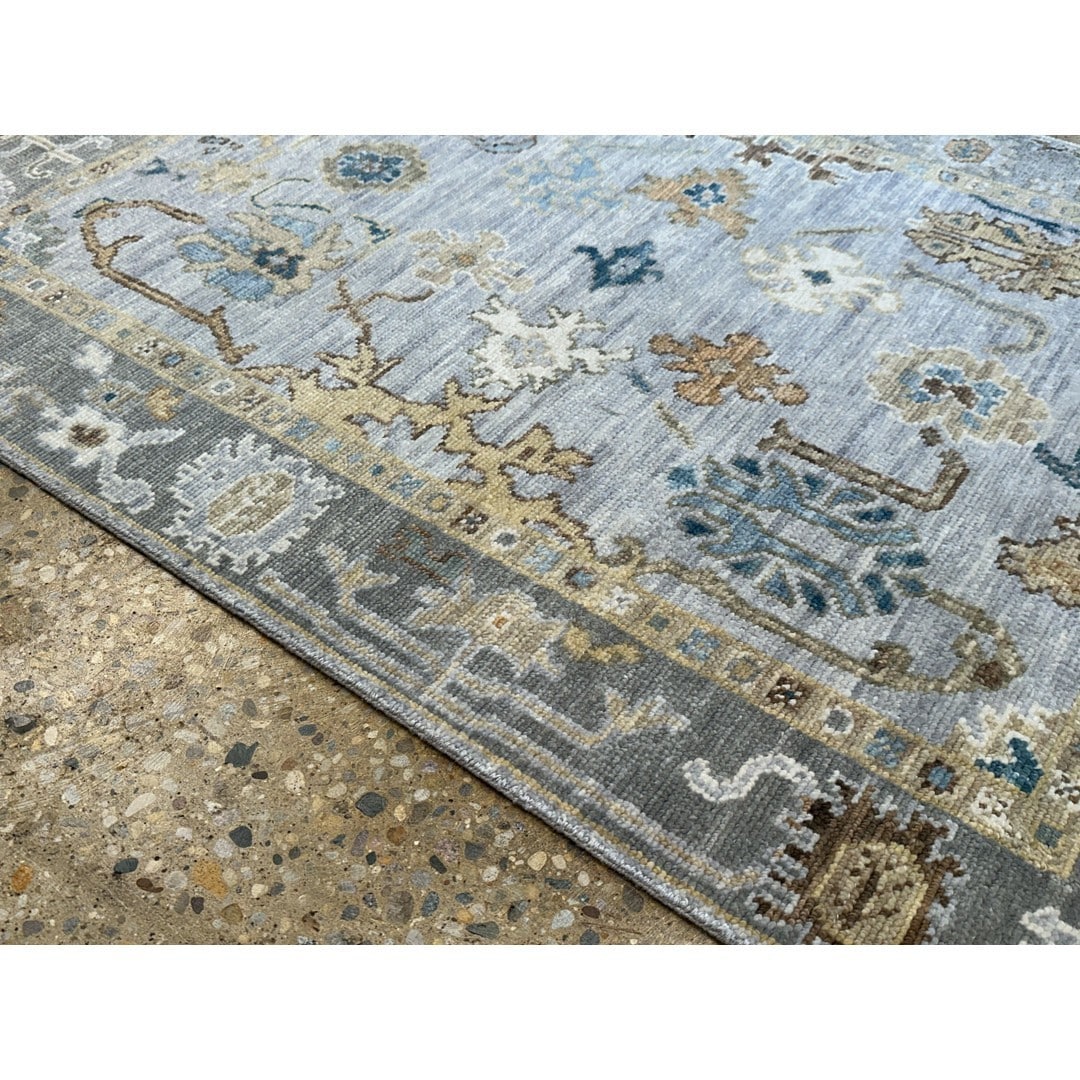
01 / Tonal shifts
Look within the blue ground, beyond the floral motifs.
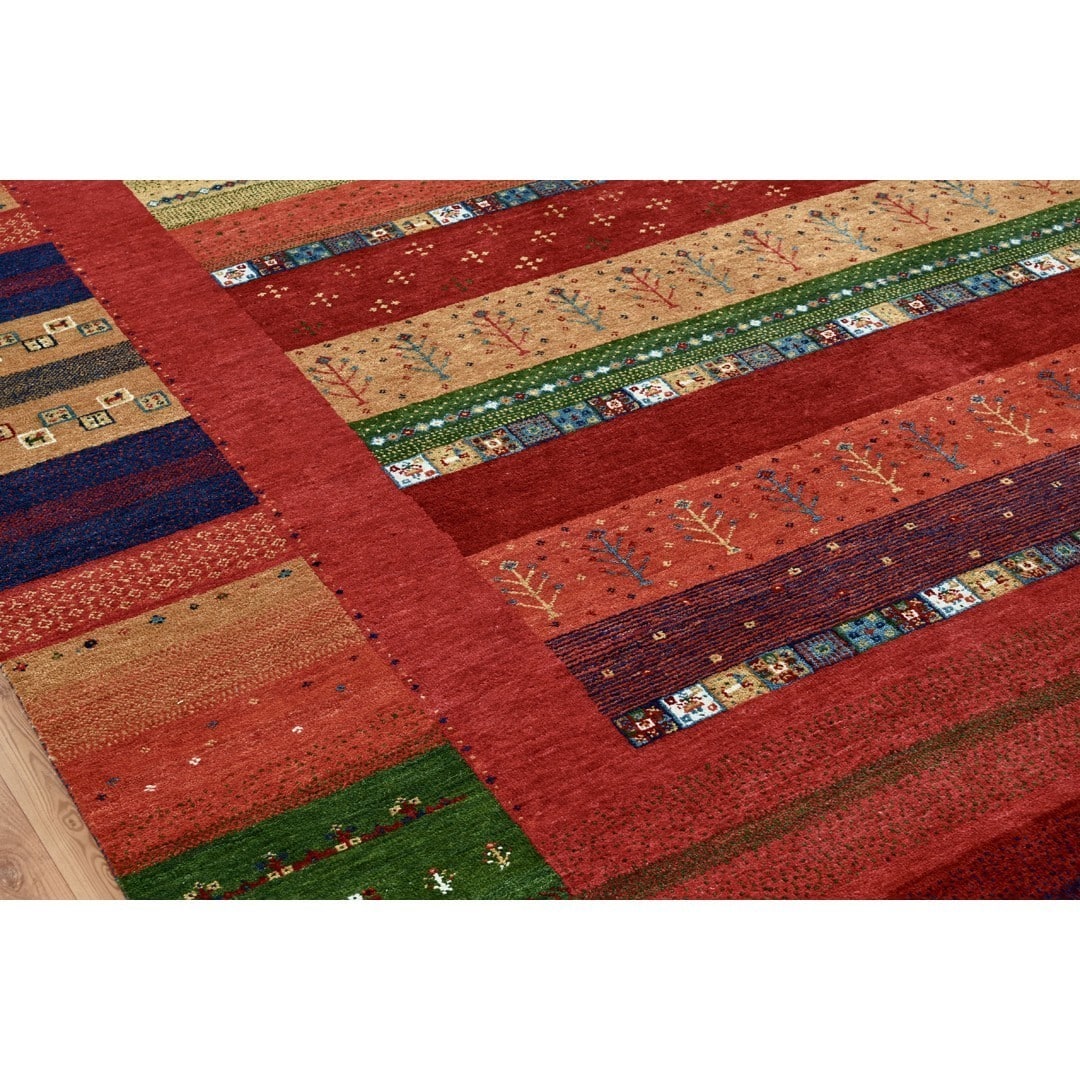
02 / Planned pattern
Separate the woven stripes from variation within a stripe.
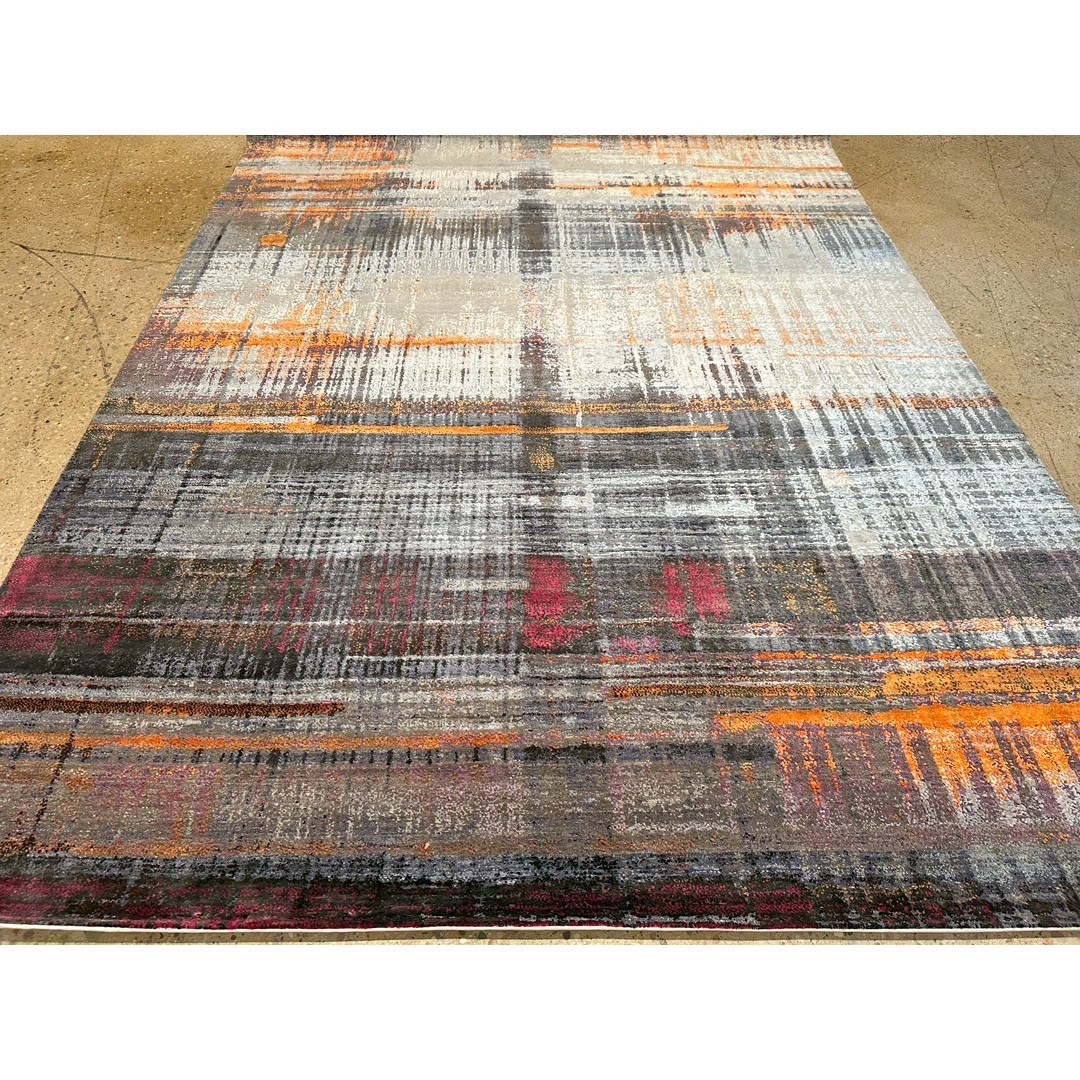
03 / Modern interpretation
Compare decorative texture with the making of the yarn.
Abrash, fading or pile shading?
A rug can look uneven for several reasons, and more than one can occur in the same piece. Use these clues to decide what to ask about, rather than treating a photograph as a diagnosis.
| What you see | Typical clue | What may be happening | A useful next step |
|---|---|---|---|
| Abrash | Tone shifts within a color, sometimes in bands across the weaving. | Yarn or dye-lot variation. | Ask for an overall view and close-ups of the transition. |
| Light fading | Color loss that may relate to exposed areas or an old furniture position. | Changes after light exposure; light damage is cumulative. | Compare older photographs and ask about the rug’s history. |
| Pile shading | Light and dark areas look different as you change viewing position. | The pile reflects light differently when it lies in another direction. | Walk to the other end and compare under steady lighting. |
| Dye bleed or staining | Color appears where it does not belong, or an irregular mark interrupts the pattern. | A different condition issue, rather than proof of abrash. | Ask a rug care specialist to assess it before treatment. |
| Wear or a distressed finish | Less pile, a softened design, or an intentionally aged appearance. | Physical wear or a finishing process may affect what you see. | Request clear pile close-ups and a condition description. |
Clues can overlap. Light and pile-shading guidance: sources 3–4 below. Condition assessment requires more than a screen image.
A SIMPLE CHANGE OF VIEW
Walk to the other end.
If much of the rug looks lighter from one end and richer from the other, the pile’s reflection may explain the difference. The Association of Rug Care Specialists describes this light-and-dark effect as a result of the slant of the pile.4
Try this before assuming the yarn has changed color: keep the lighting steady, walk around the rug and compare the same area. A change in viewpoint can help separate an optical effect from a visible transition in the yarn. It cannot rule out fading, stains or other condition issues.
Does abrash make a rug better?
Abrash is a characteristic, not a quality score. You may enjoy the movement it brings to a plain field, or prefer a more uniform color. Neither preference replaces an examination of the rug’s materials, construction and condition.
Do not use abrash as a shortcut for “antique,” “naturally dyed” or “valuable.” If a seller makes those claims, ask what supports them. Compare the full rug, including its edges, surface and any documented repairs. A beautiful color shift is one part of the decision.
Choose the variation you enjoy.
Check the condition separately.
How can you inspect a color change without treating it?
Start with observation. Avoid trying to “even out” a band with cleaners or dye. The aim is to understand the change before doing anything to the fibers.
- 01
See the whole rug
Look at the entire field and borders. Note where the color transition begins and ends, and whether it repeats.
- 02
Keep the light consistent
Use indirect daylight for comparison. Avoid judging one close-up in warm evening light against another in bright sun.
- 03
Record the same area
Take one overall image, a closer view of the transition and an angled view. Keep filters off and preserve the originals.
- 04
Ask about the history
Ask whether the area was present at purchase, whether the rug was distressed or washed, and whether the change is recent.
- 05
Get a condition opinion
If you see a new mark, color transfer or a change after a spill, ask a rug care specialist before cleaning or attempting recoloring.
What should you ask when buying a rug online?
Ask the seller to photograph the whole rug under even light and to send close-ups of the exact area that concerns you. An angled view can help you read texture, while a straight view makes the design easier to compare. Ask whether a photograph has been edited or is a styled room visualization.
For a specific band, ask: “Is this variation in the yarn, a finish, wear or a condition issue?” Request a written description of known repairs and treatments, and read the current return policy before ordering. Phone screens and cameras change color; photographs are a starting point for questions, not a precise color match.
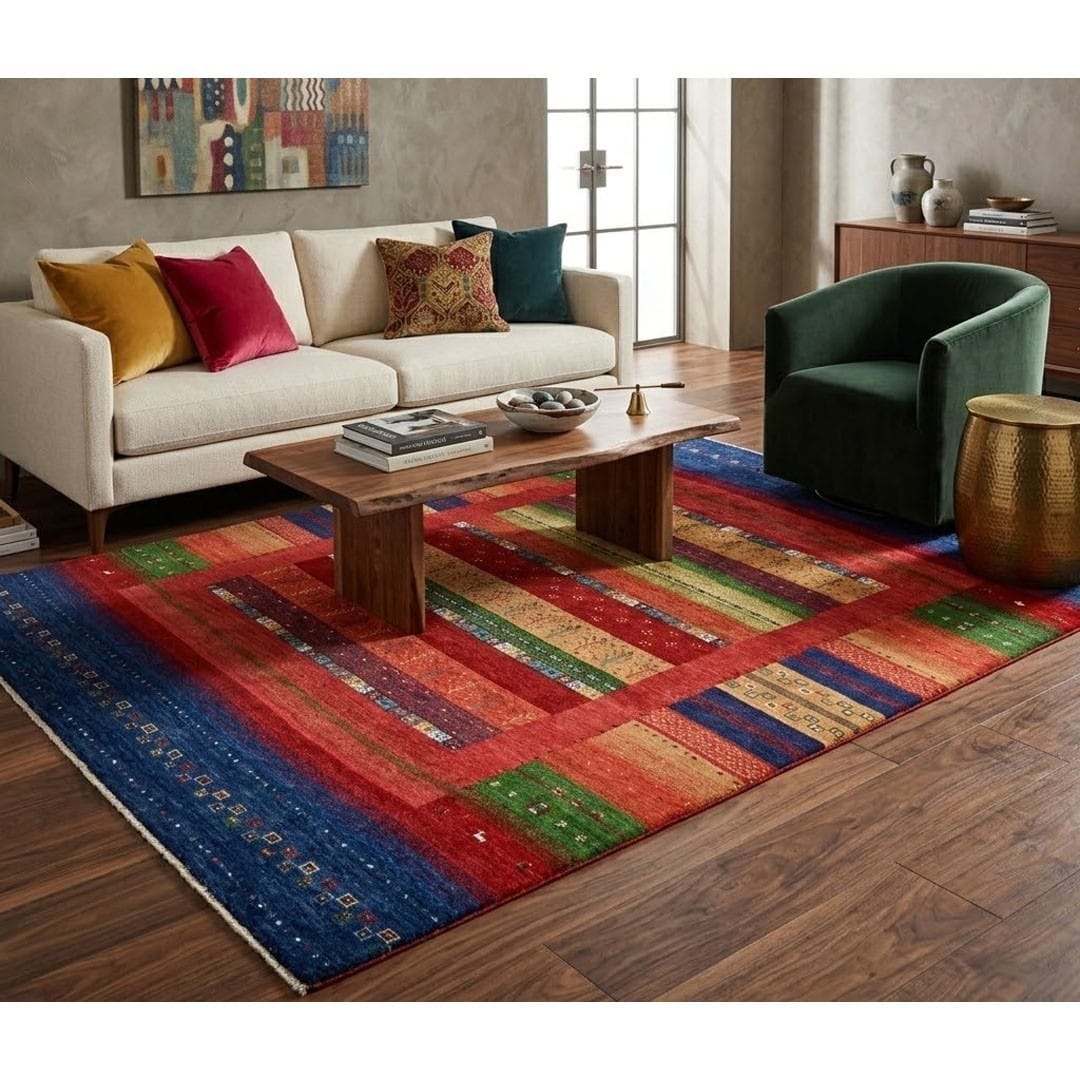
COLOR IN CONTEXT
A different kind of movement.
A striped Gabbeh brings visible rhythm to a room. Its planned blocks of color help show why a pattern and variation within a color are different things.
Room styling images help with palette and placement. For close examination, return to the original product views rather than relying on a styled scene.
FROM THE ROUZATI COLLECTION
Three ways to look at color.
Compare the original catalog photographs below. These are examples for looking at pattern and tone, not laboratory identifications of dyes or condition. Click any photograph to open that exact rug.
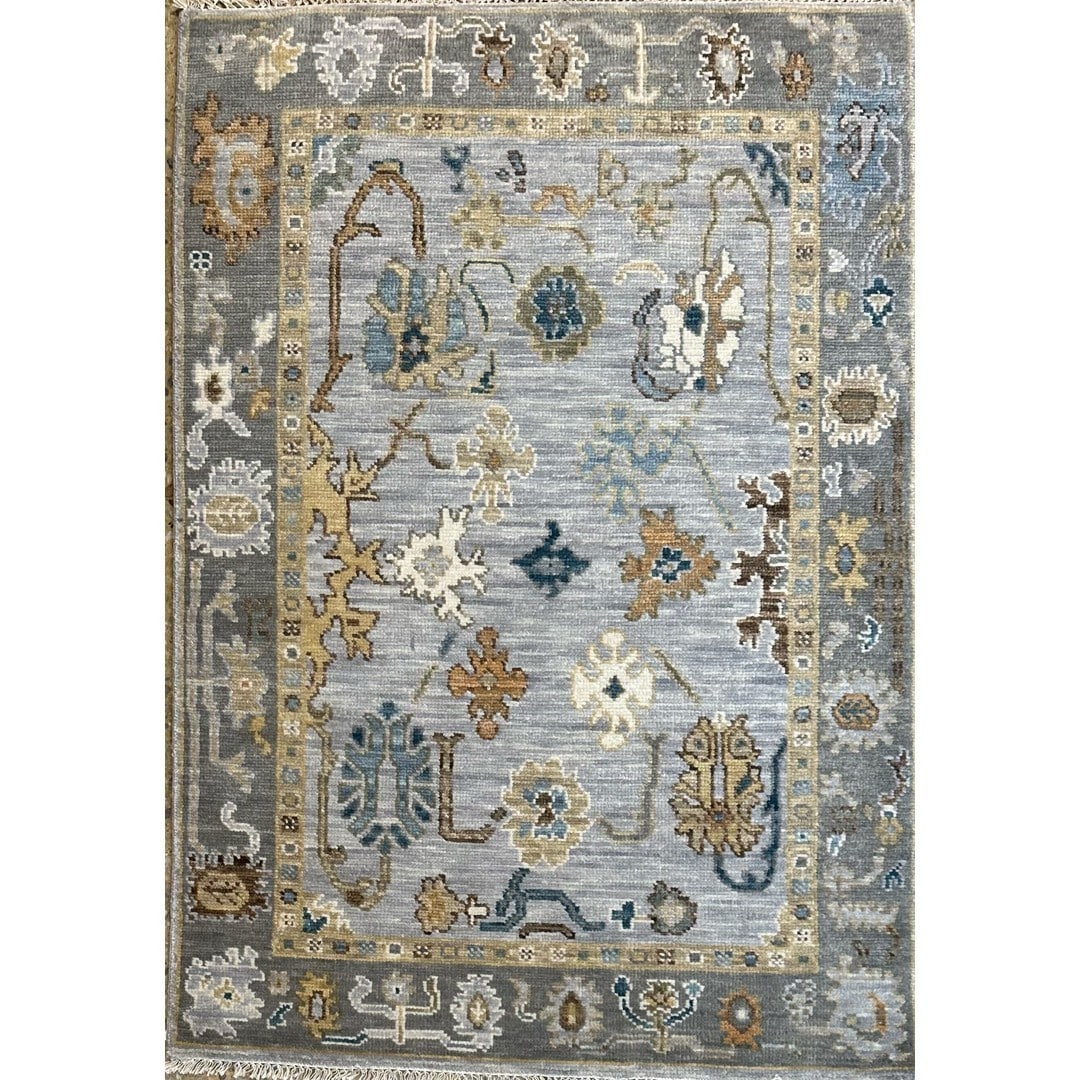
Opulent Oushak
Anatolian Oushak · 4′ × 6′
A traditional floral design with a softly striated blue field. The catalog describes abrash across the field.
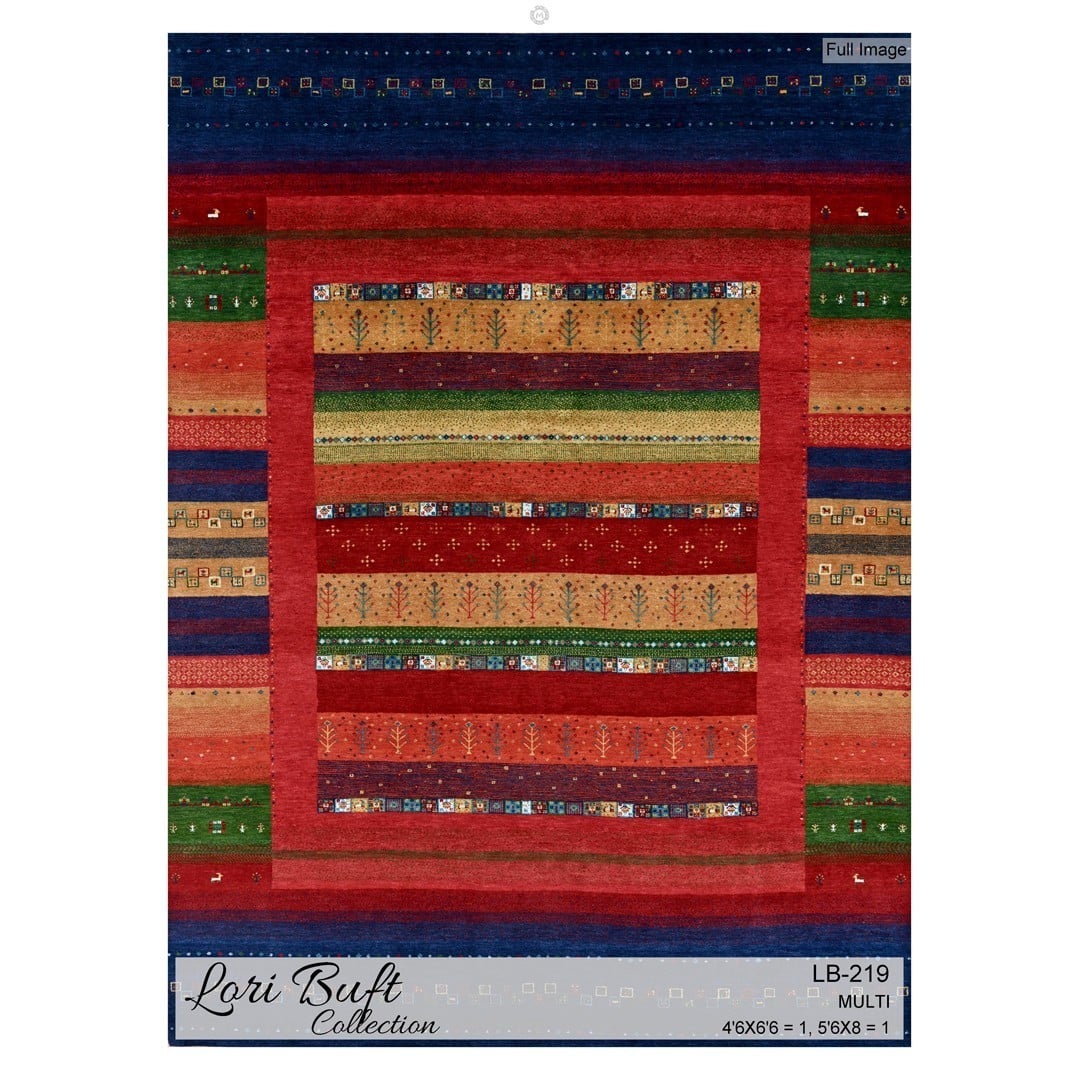
Lovely Lori Buft
Gabbeh · 4′8″ × 6′5″
Bold bands and small motifs make this a useful comparison: a planned stripe is not, by itself, evidence of abrash.
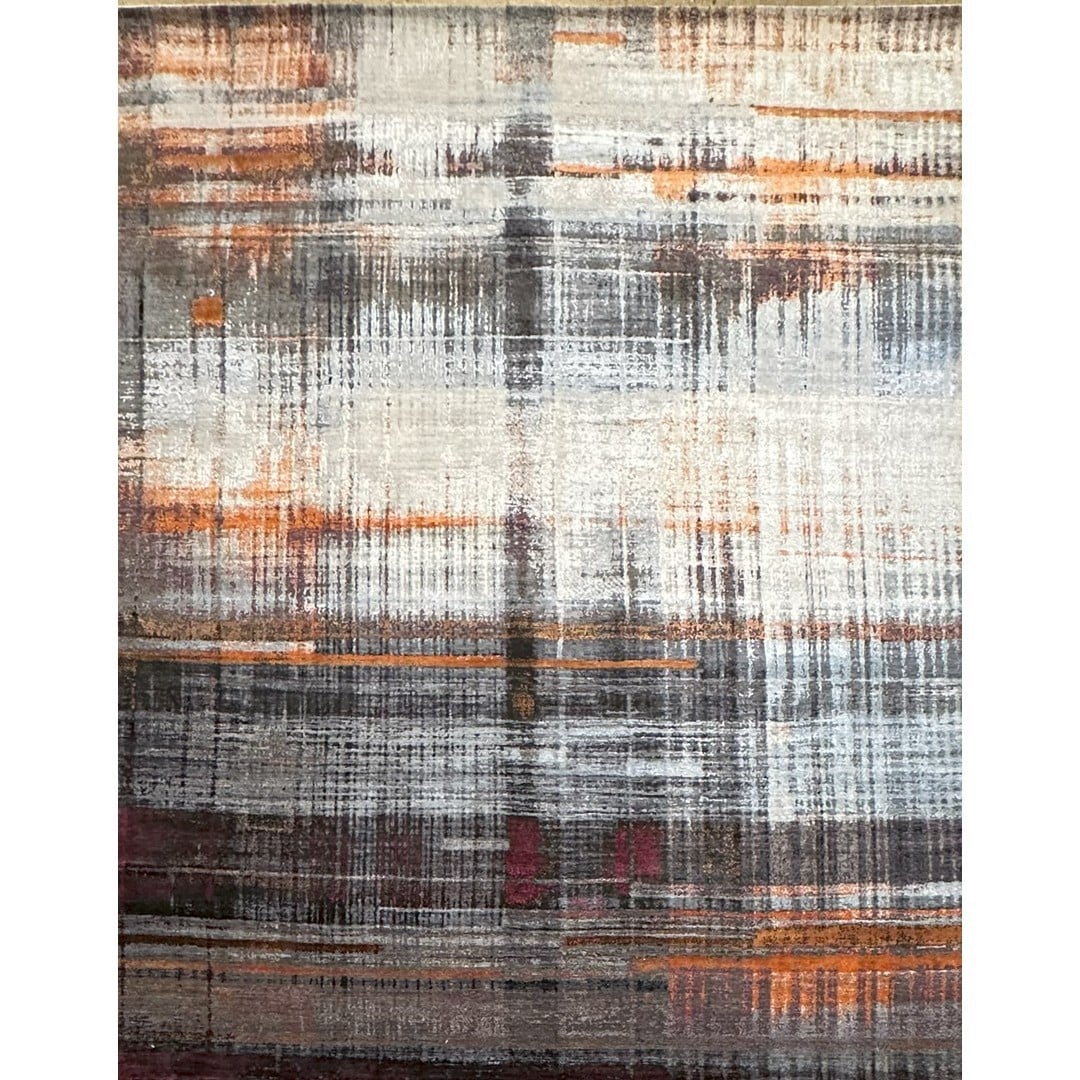
Abstract Abrash
Brooklyn Collection · 7′11″ × 10′1″
A contemporary interpretation of tonal variation. A product name alone does not establish how its colors were created.
Can cleaning remove abrash?
Cleaning is not a way to make original dye-lot variation disappear. A rug with an uneven color should be assessed before any attempt to change it. For an older or delicate piece, avoid experimenting with bleach, homemade dye or repeated wet cleaning.
If the concern is light fading, prevention matters: the Canadian Conservation Institute explains that light damage accumulates and cannot be reversed. Reduce strong light exposure with suitable window coverings. For a related discussion specific to silk, see our guide to silk rugs and sunlight.3 Regular care and a condition assessment serve different purposes; neither should be sold as a promise to restore every original color.
Bring your questions.
Look at the rug up close.
Comparing rugs in person helps you see how color and texture respond to the room. Start with the piece you like, then ask about its materials, finish and condition.
A FEW MORE ANSWERS
Abrash FAQs
Is abrash a defect?
Abrash describes color variation associated with the yarn or dyeing. It is not automatically damage. Decide whether you like the appearance, and assess condition and construction separately.
Does abrash mean a rug uses natural dyes?
No. Visible color variation alone does not identify the dye chemistry. Ask for reliable documentation if the dye type matters to your purchase.
Can a new rug have abrash?
Yes. A color transition can be present when a rug is made. The appearance alone does not establish that the rug is old.
Can abrash and fading occur in the same rug?
Yes. Original variation does not prevent later light damage or wear. A new or unexplained change deserves its own assessment.
How is abrash different from pile shading?
Abrash concerns tonal variation in the yarn. Pile shading is an optical effect caused by the way differently oriented pile reflects light. View the rug from both ends under steady lighting.
Should I avoid a rug with strong color variation?
Choose a rug whose appearance you enjoy. Ask for full photographs, a condition description and the current return terms so the variation does not come as a surprise.
Sources & image notes
- Getty Research Institute: abrash, Art & Architecture Thesaurus (definition and dye lots).
- The Jewish Museum: Bezalel School rug (wool, dye batches and horizontal variation).
- Canadian Conservation Institute: Textiles and the Environment (light damage).
- Association of Rug Care Specialists: Nap Reversal (pile reflection).
Product photographs and the room styling image are from Rouzati Rugs’ own catalog. No colors or patterns have been digitally changed to simulate abrash. Product details and availability can change; check the linked listing. The comparison table is an observation guide, not a condition report.