

Rug Protection & Preservation Services
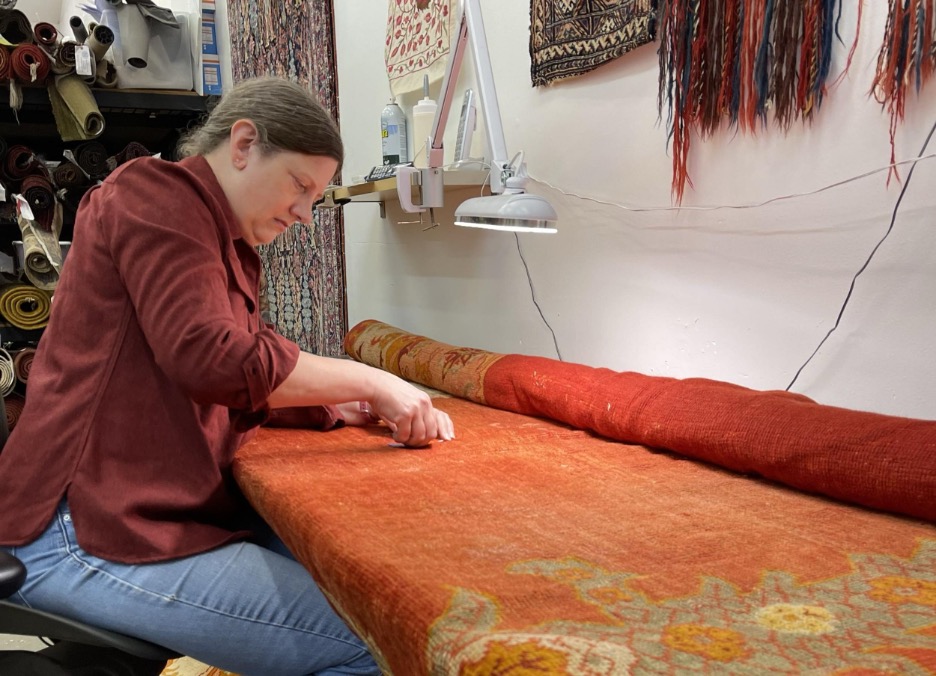
Applying breathable fiber protection as part of long-term rug preservation in Chicago.
Protect Your Rug Before Damage Begins
Rugs rarely fail suddenly. Damage usually develops slowly through repeated stress.
In Chicago and the surrounding North Shore suburbs, rugs experience constant environmental shifts. Humid summers cause fibers to expand. Dry winter heating systems pull moisture out of them. Sunlight fades exposed areas. Foot traffic compresses the same pathways day after day.
Over time, these small forces weaken the structure of the rug. By the time fading, thinning, or curling edges appear, internal stress may already be underway.
Professional rug protection services focus on preventing that structural decline. The goal is not just to repel spills. It is to preserve the life of the rug.
What Rug Protection Actually Means
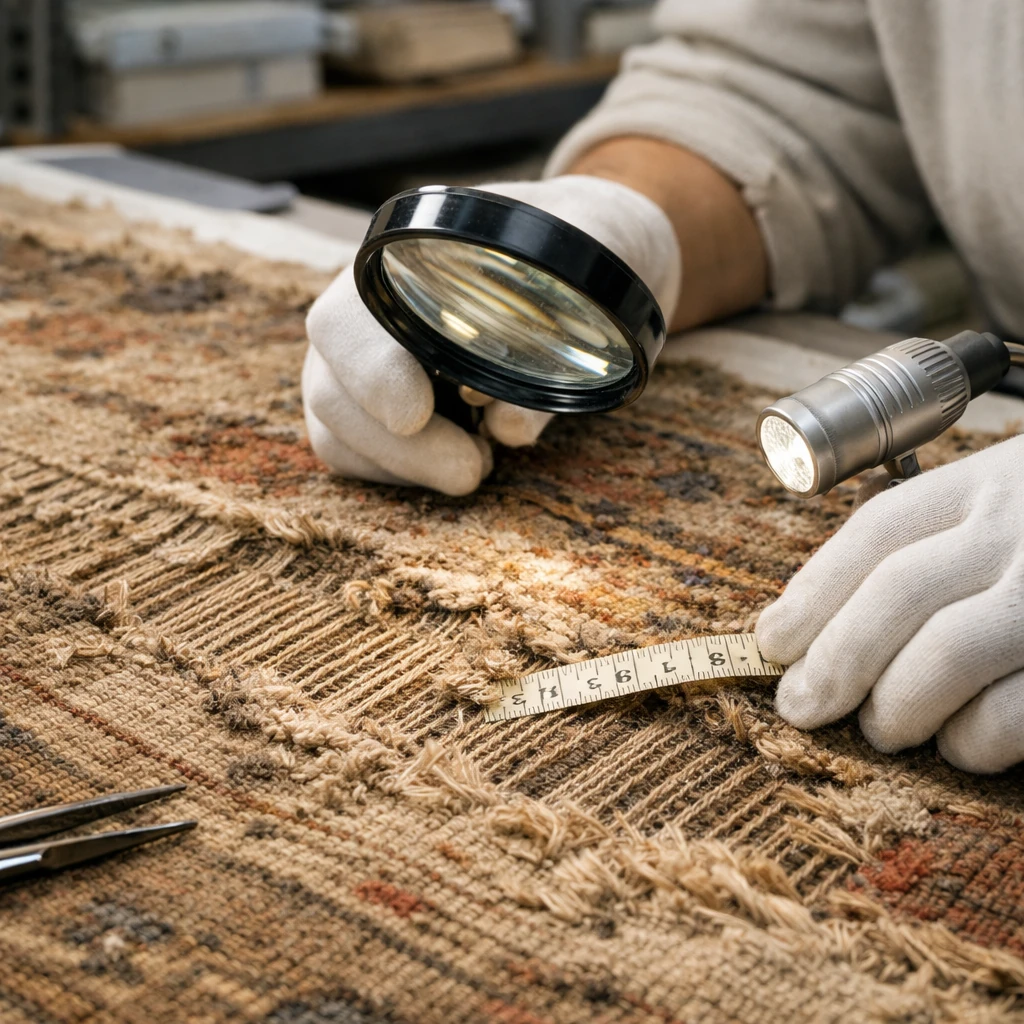
Evaluating warp and weft stability before applying protective treatment.
True rug preservation services go beyond surface treatments.
A rug is built in layers. The foundation consists of warp and weft threads. The pile sits on top as the visible surface. When humidity fluctuates, both layers respond. When soil settles deep into the fibers, it acts like fine grit. When padding compresses unevenly, stress transfers directly to the structure.
Most homeowners seek protection because they want to avoid:
- Permanent staining from spills
- Heavy wear in traffic lanes
- Moth damage in low-traffic rooms
- Sun fading near windows
- Storage-related deterioration
- Structural weakening in antique rugs
Each of these risks requires a different strategy. Protection must match fiber type, construction, and environment.
The Preservation Process
Effective rug fiber protection follows a logical sequence.
First, the rug is evaluated. Fiber composition, dye stability, structural integrity, traffic pattern, and environmental exposure are all considered. Without proper assessment, protection decisions are guesswork.
Next comes soil removal. Even rugs that appear clean often contain embedded dry soil. Under pressure, this soil cuts fibers from within. Removing it protects long-term fiber strength.
If structural concerns exist, stabilization comes next. Loose edges, weakened fringe, or minor tension shifts must be addressed before applying treatment.
Only then is fiber-appropriate protection applied. The objective is to reduce absorption and slow fiber breakdown without trapping moisture.
Finally, environmental planning ensures the rug’s surroundings support preservation. In Chicago homes especially, airflow, padding quality, and humidity swings directly affect outcomes.
Protection is proactive. Restoration is reactive.
Surface Treatment vs Structural Preservation
Spill resistance has value. But spill resistance alone does not protect a rug’s structure.
Structural preservation considers:
- Pressure distribution across the rug
- Airflow beneath the backing
- Seasonal humidity changes
- UV exposure over time
For example, upgrading padding can significantly reduce concentrated wear. Climate-controlled storage can protect internal threads during long-term storage.
In a climate like Chicago’s, managing moisture often matters more than adding a surface barrier.
Fiber-Specific Protection Strategies
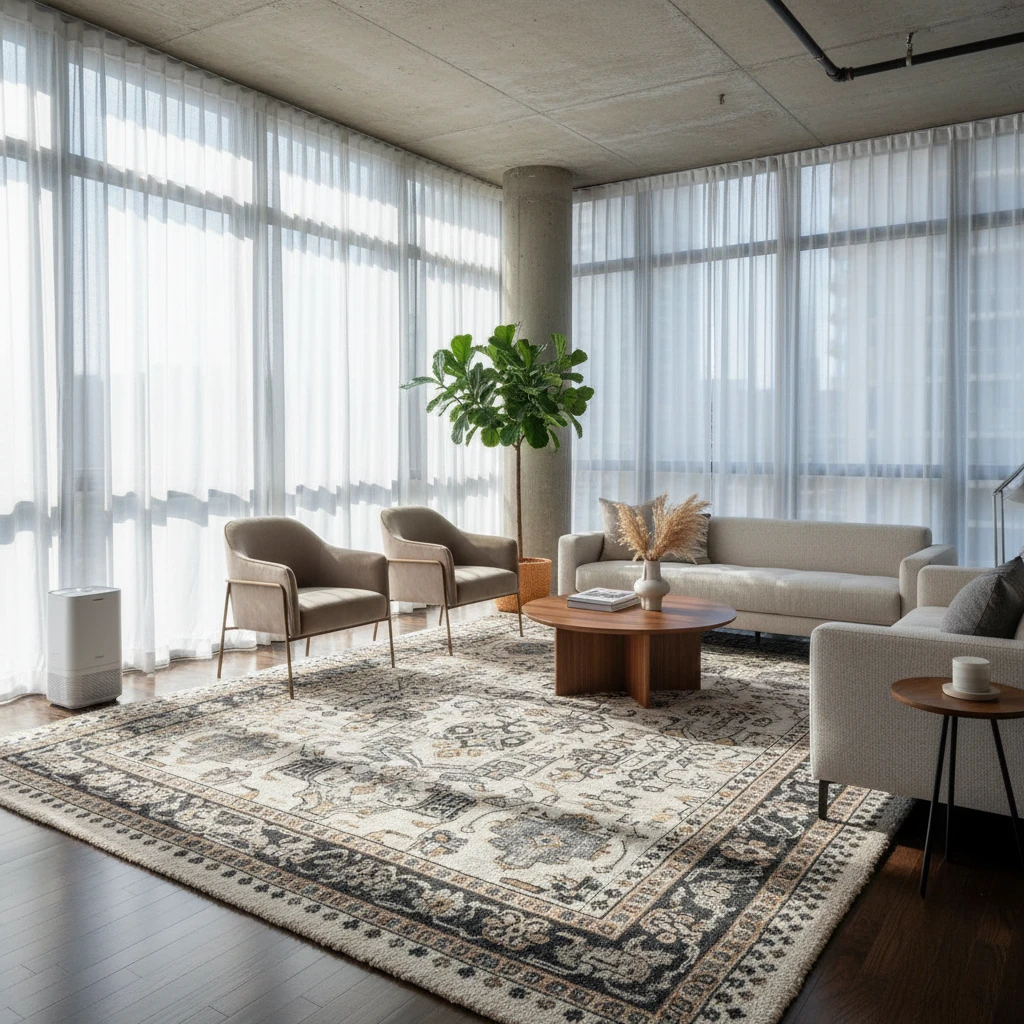
Managing sunlight and humidity exposure to prevent long-term rug damage.
Wool Rugs
Wool naturally absorbs and releases moisture. During humid summers it expands slightly. During dry winters it contracts. Over years, this movement weakens fiber memory, particularly near heating systems.
Effective wool rug protection focuses on breathable treatments, proper soil removal, and, when necessary, moth prevention.
Learn more about our approach to Wool Rug Protection.
Wool performs best when airflow is preserved.
Silk Rugs
Silk fibers are finer and more sensitive to abrasion and moisture. High traffic or improper treatment can permanently flatten the pile or cause dye migration.
Professional silk rug protection requires dye testing and carefully controlled application methods.
Our process for Silk Rug Protection prioritizes stability over speed.
Silk demands precision.
Antique & Handmade Rugs
Hand-knotted rugs rely on structural tension. Thousands of knots depend on stable warp and weft threads. If that framework weakens, damage spreads.
Proper antique rug preservation begins with structural inspection before any surface treatment is considered.
Explore our structural-first philosophy in Antique Rug Preservation.
Protect the structure first. The surface follows.
Synthetic & Modern Rugs
Machine-made rugs often include latex or adhesive backings. Excess moisture can accelerate delamination and hidden breakdown.
Professional synthetic rug protection includes backing evaluation and low-moisture techniques.
Our full methodology is outlined in Synthetic Rug Protection.
Sometimes protecting the underside protects everything.
Why Chicago’s Climate Matters
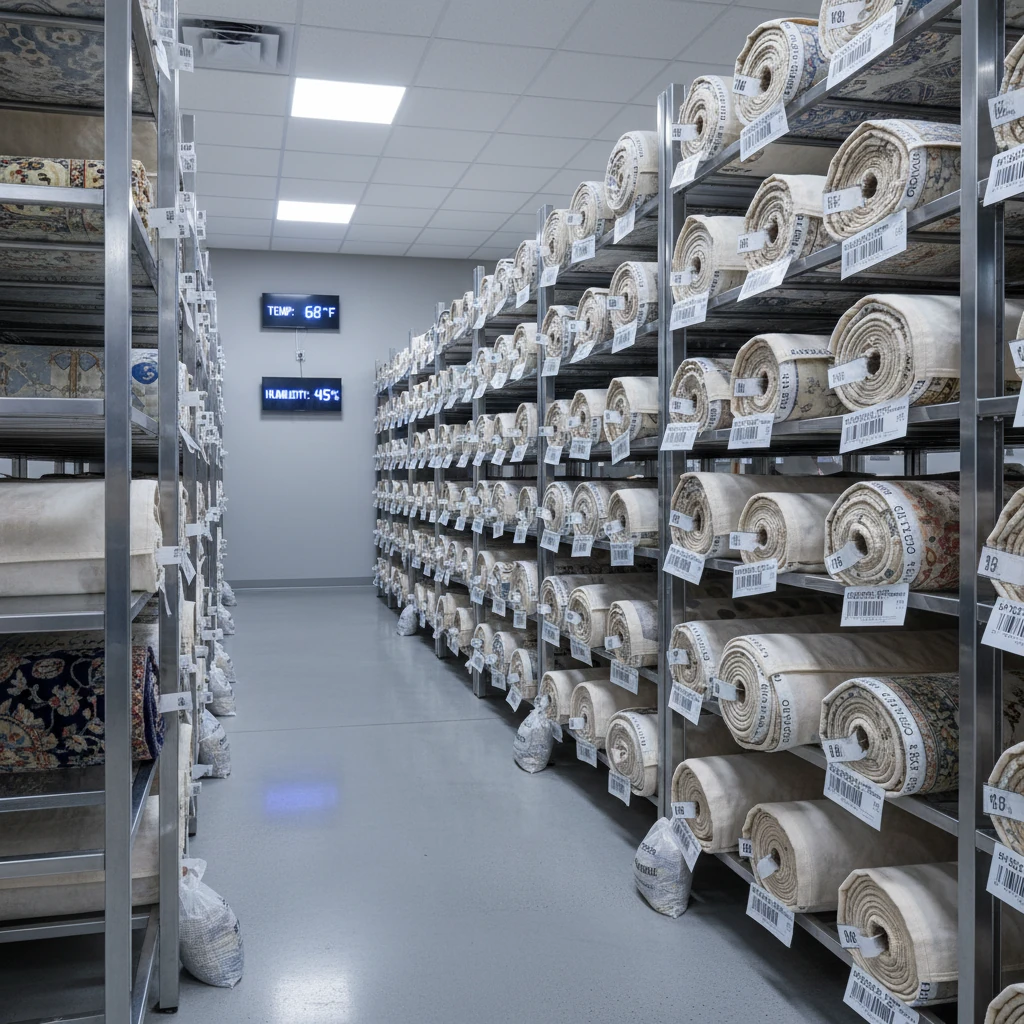
Proper storage prevents moisture-related structural weakening.
Chicago’s seasonal swings create repeated stress cycles. Dry heated air in winter pulls moisture from fibers. Humid summer air reverses the process. Over time, this expansion and contraction loosens internal threads.
Basement storage increases moisture risk. Plastic wrapping during humid months can trap condensation. Large windows intensify UV exposure.
Climate is not a minor detail. It directly affects rug longevity.
A Preventable Failure
A homeowner stored a wool rug tightly wrapped in plastic in a basement. It appeared secure and protective. But summer humidity accumulated inside the sealed wrap. Without airflow, moisture weakened the internal threads.
By the time unraveling was visible, restoration was required.
Breathable storage and humidity management would have prevented the damage entirely.
Small decisions protect long-term value.
When Protection Should Wait
Professional preservation sometimes means delaying treatment.
Protection may need to pause if:
- Fibers show brittleness or dry rot
- Dye stability testing is incomplete
- Structural repairs are required first
- Storage conditions are unsafe
Timing matters as much as technique.
Simple Prevention Guidance
If a rug sits in heavy sunlight, rotation and UV management should be prioritized.
If traffic is concentrated, padding upgrades reduce structural stress.
If storing long term, climate-controlled storage is safest.
If the rug is antique, begin with structural inspection.
Preservation works best when matched to the rug’s environment.
About the Author
This guide was developed by the textile preservation specialists at Rouzati Rugs to bridge the gap between technical rug conservation and everyday home protection.
Technical SEO and editorial governance by Keyvelopers.