

Should you apply rug protector on a wool rug?
Yes, but only if you use a protector specifically designed for wool rugs. A quality rug protector can help resist stains and spills without damaging the natural wool fibers.
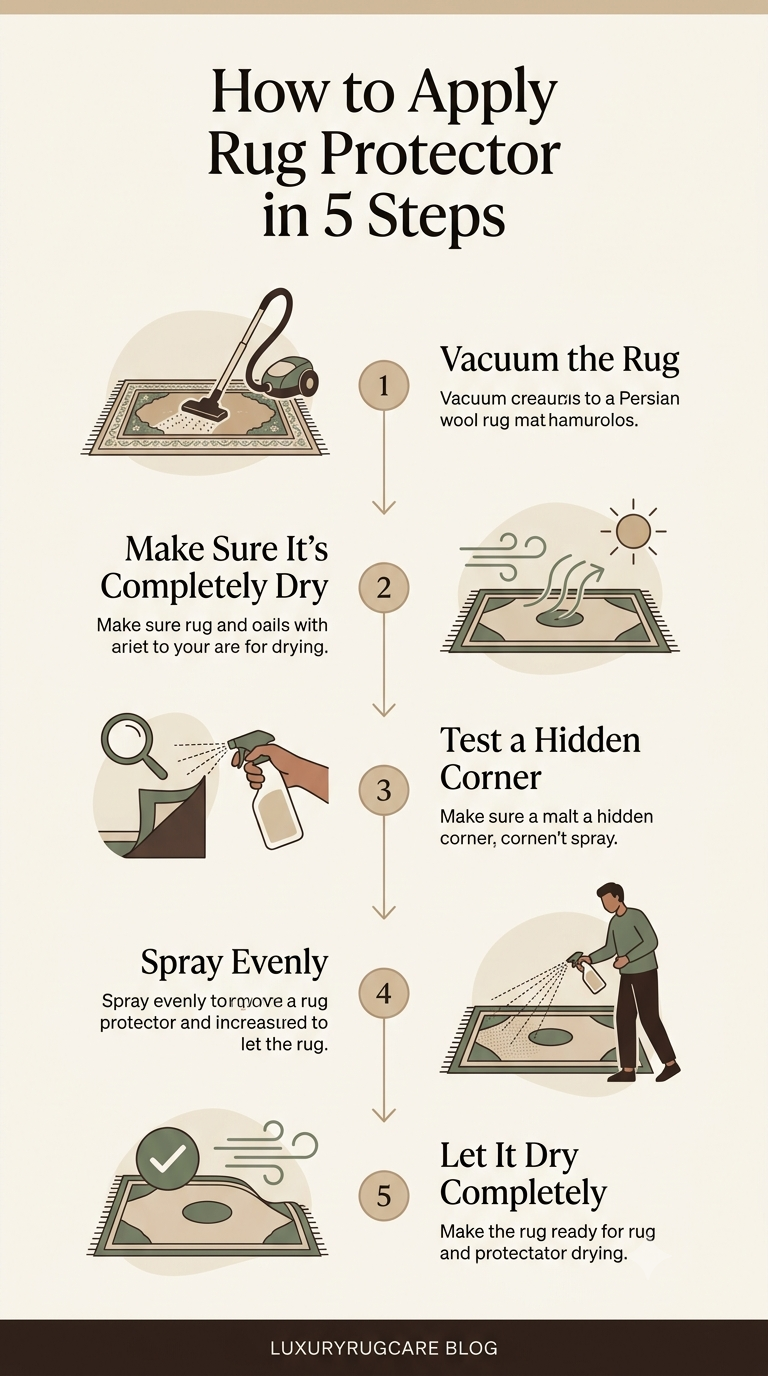
Before Applying Rug Protector
- ✓Vacuum the rug
- ✓Make sure it’s completely dry
- ✓Test on a hidden corner
- ✓Use a wool-safe protector
- ✓Apply evenly
- ✓Let it dry completely
| Benefits | Drawbacks |
|---|---|
| ✔ Helps prevent stains | ✘ Must be applied correctly |
| ✔ Makes spills easier to clean | ✘ Needs reapplication over time |
| ✔ Protects high-traffic areas | ✘ Cheap products may affect fibers |
| ✔ Extends rug life | ✘ Not a substitute for regular cleaning |
Common Mistakes When Using Rug Protector
- ✕Using a protector made for synthetic carpets
- ✕Applying too much product
- ✕Spraying a dirty rug
- ✕Skipping the manufacturer’s instructions
- ✕Assuming protection lasts forever
Expert Tip:⭐
Always test the rug protector on a small hidden area before applying it to the entire wool rug.
Does Wool Already Have Natural Protection?
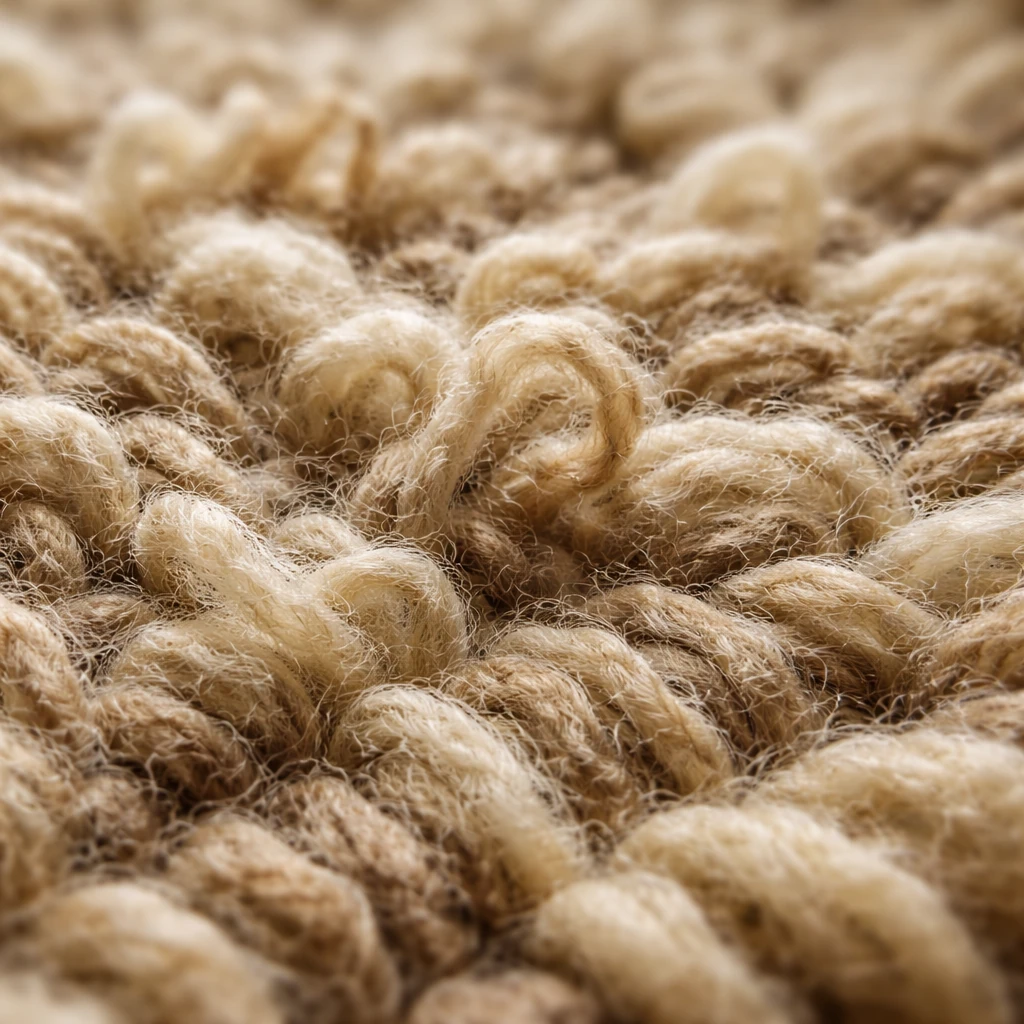
Wool contains natural lanolin, which offers mild moisture resistance.
Lanolin helps repel small amounts of liquid and allows wool fibers to recover from compression. However, this natural resistance is limited. Heavy spills or repeated exposure can overwhelm wool’s built-in defense. Understanding this balance is essential before adding external treatments.
What Does a Rug Protector Actually Do to Wool Fibers?
A rug protector creates a surface barrier that slows liquid absorption.
Unlike synthetic fibers, wool can absorb both moisture and chemical treatments. If applied correctly, a protector may help delay staining. If applied heavily or repeatedly, it can stiffen the pile and alter how the rug feels underfoot.
Over-application may also interfere with the fiber’s natural breathability.
Can Protective Sprays Strip Lanolin?
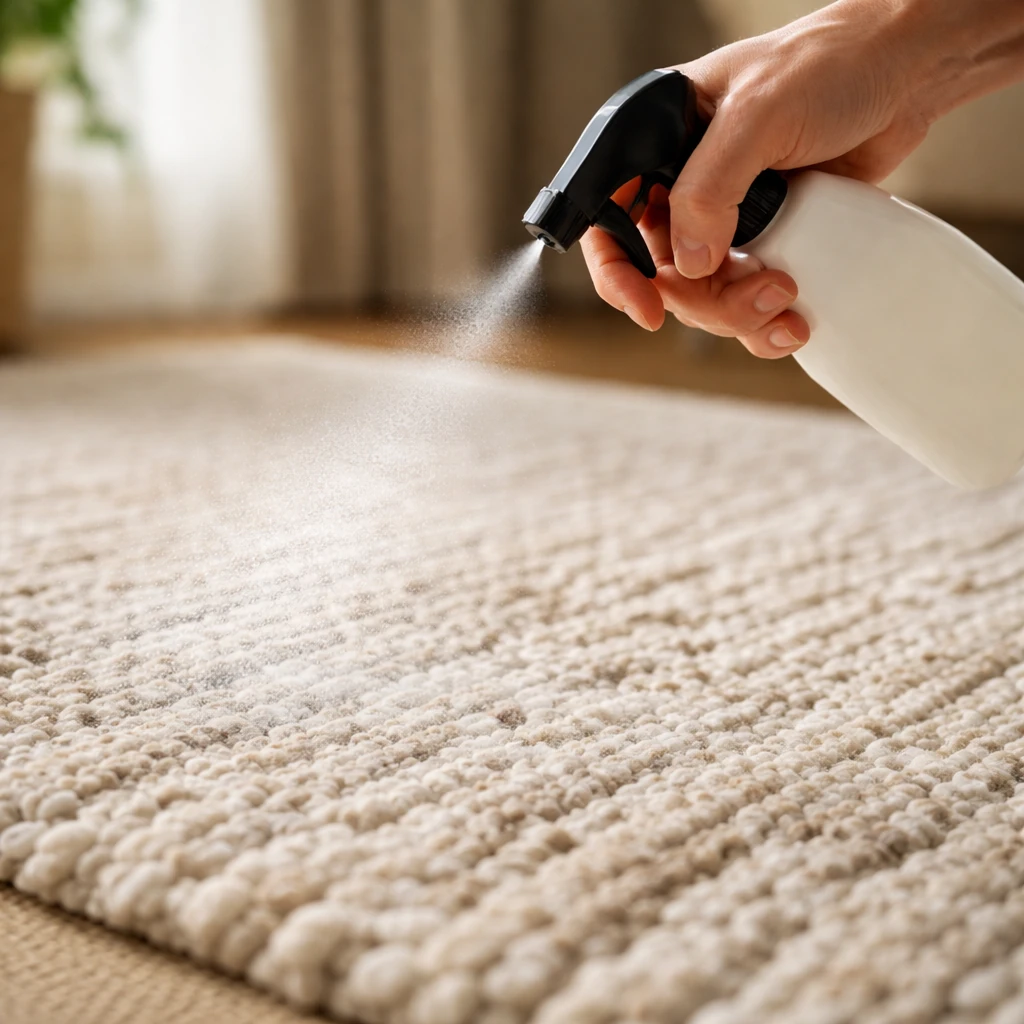
Some aggressive cleaning or solvent-based products can reduce lanolin content.
While most modern protectors are designed to be fiber-safe, improper preparation before application can affect wool’s natural oils. Excessive chemical exposure may increase long-term dryness or brittleness.
Protection decisions should consider both spill risk and fiber integrity.
For broader protection strategy, see wool rug protection
What Actually Happens When Homeowners Apply Rug Protector
In real situations, homeowners in Chicago often:
Mistake 1
Apply thick, repeated coats assuming more equals better protection.
Mistake 2
Spray rugs before they are fully dry after cleaning.
Mistake 3
Use general carpet protector without confirming wool compatibility.
These mistakes occur because protective sprays are marketed as simple upgrades. In reality, wool responds differently than synthetic fibers. Over-application can create uneven texture and residue buildup.
What Needs to Be Confirmed Before Applying a Protector
- Confirm the rug is 100% wool or a wool blend.
- Ensure the rug is fully clean and completely dry.
- Evaluate spill frequency and household conditions.
- Review product compatibility with natural fibers.
- Consider long-term cleaning plans.
Treatment decisions should reflect actual exposure risk, not generalized advice.
When a Rug Protector May Not Be Necessary
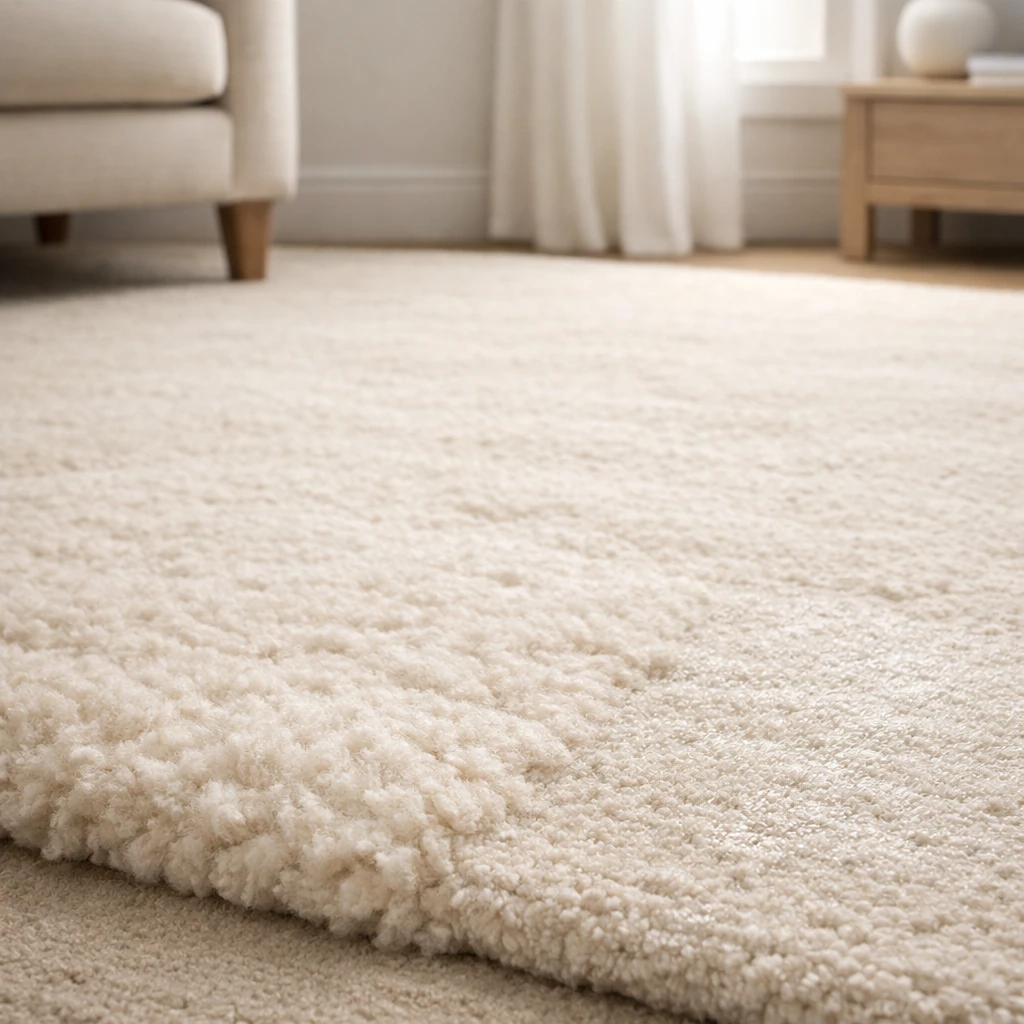
If the wool rug is placed in a low-traffic room with minimal spill exposure, additional coating may provide limited benefit.
If the rug already feels stiff or shows residue from prior treatments, adding more product may worsen texture. In controlled environments, routine maintenance and prompt spill response may be sufficient.
Decision Recap
- If spills are frequent and traffic is high, light application may help.
- If the rug is in a formal or low-use room, treatment may be unnecessary.
- If unsure about fiber content, confirm before applying product.
- If the rug is damp, delay application.
- If previous buildup exists, reassess before reapplying.
Frequently Asked Questions
Can rug protector damage wool rugs?
No, as long as you use a protector specifically made for wool rugs.
How long does rug protector last?
Most rug protectors last 12–24 months, depending on use and cleaning.
Is Scotchgard safe for wool rugs?
Some Scotchgard products are safe for wool, but always check the label before use.
Should you apply rug protector after professional cleaning?
Yes. Applying it after professional cleaning helps protect the freshly cleaned fibers.
How often should you reapply rug protector?
Reapply every 1–2 years, or sooner in high-traffic areas.
Does rug protector change the feel of a wool rug?
A quality rug protector should not noticeably change the rug’s texture or appearance.
Can you remove rug protector later?
Most protectors gradually wear off over time and don’t require manual removal.
Is rug protector worth it for expensive Persian rugs?
Yes. It can help protect valuable Persian rugs from stains and everyday wear.
About the Author
This guide was developed by the textile specialists at Rouzati Rugs to help homeowners understand when specialized rug restoration decisions matter.