

ROUZATI RUGS · BUYER’S GUIDE
Persian vs. Turkish Rugs: A Practical Buyer’s Guide
Compare origin, pattern, construction, and everyday use—and choose the individual rug that fits your home.
The quick answer
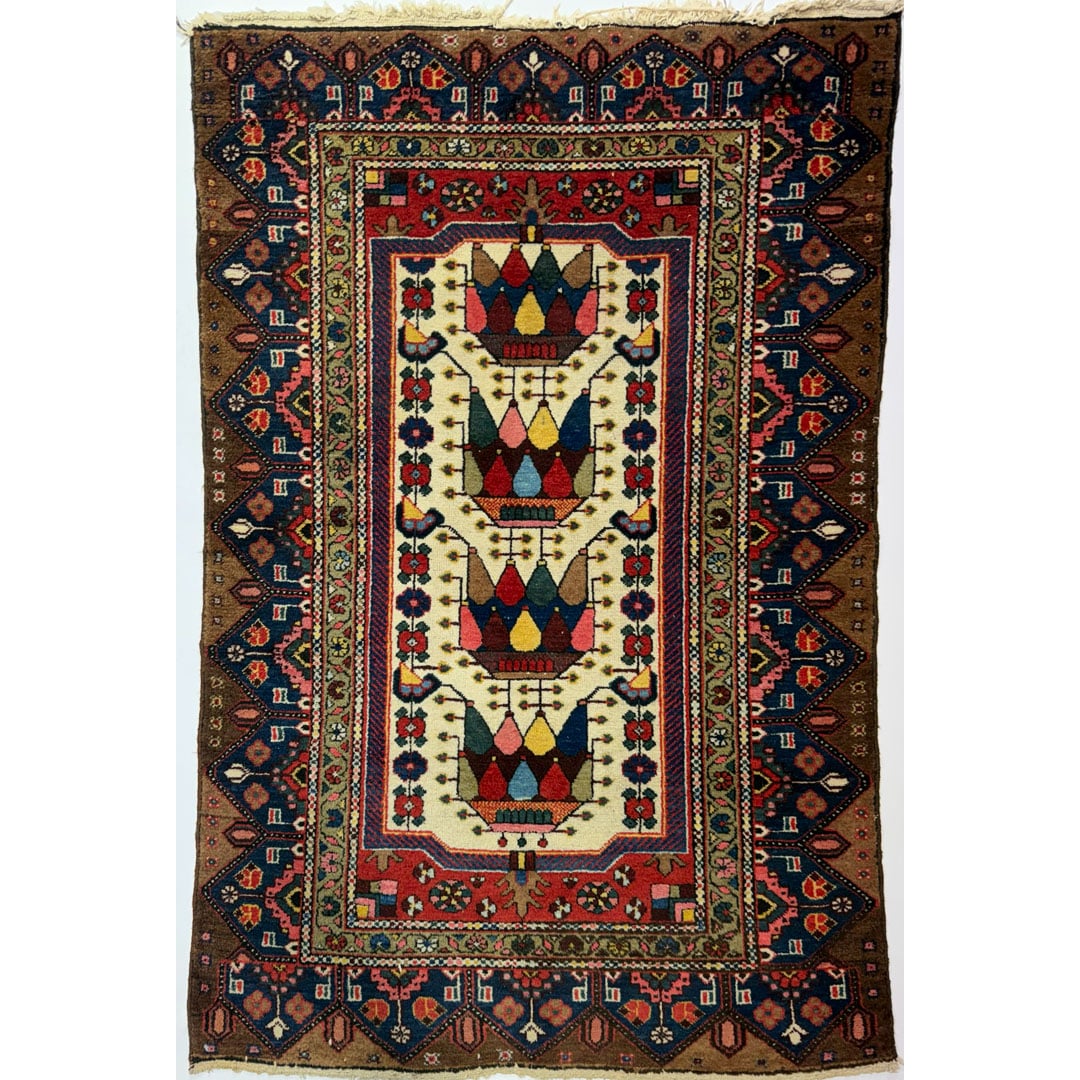
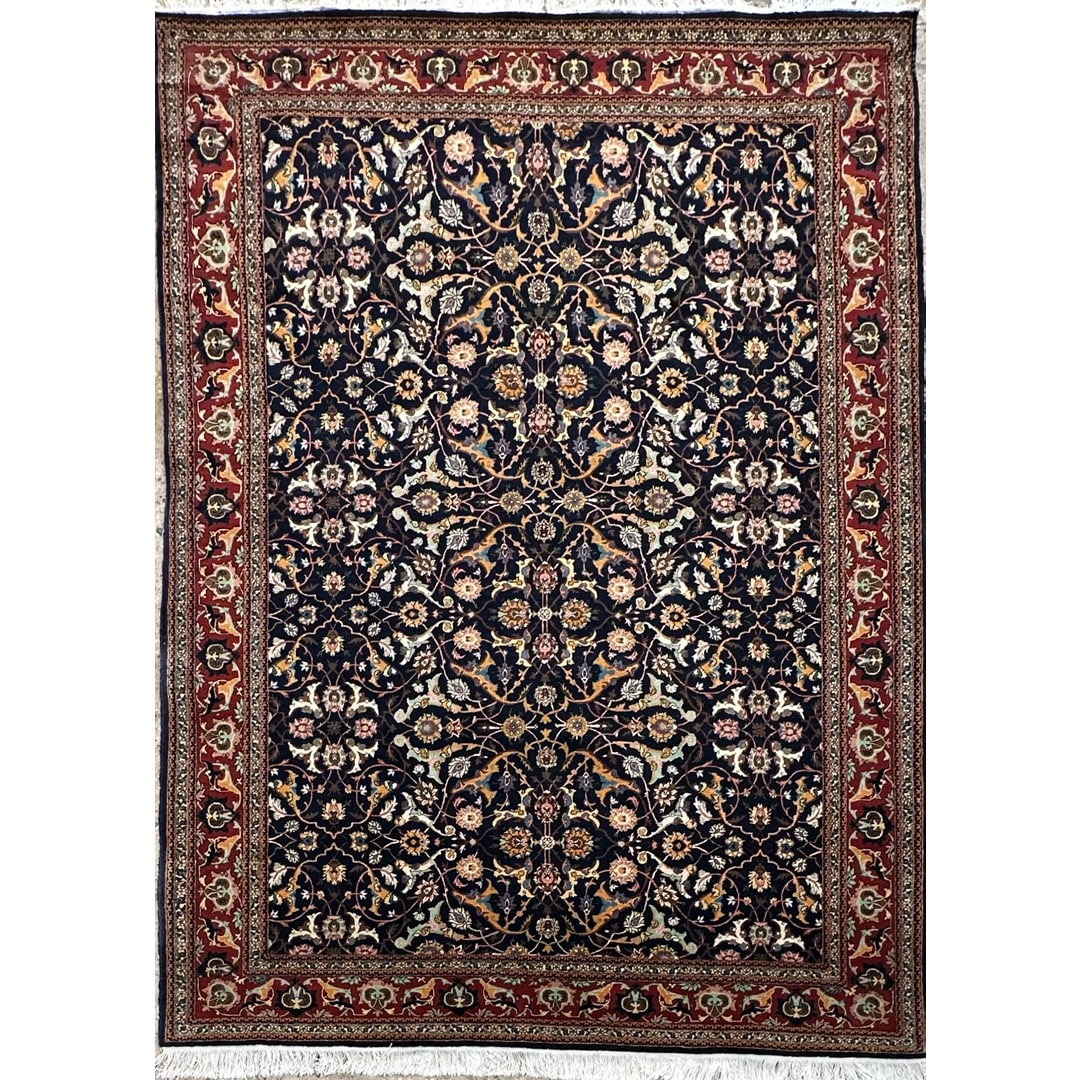
Persian rugs originate in Iran; Turkish rugs originate in Turkey. Both traditions include a wide range of designs and construction styles. The better choice depends on the particular rug’s materials, condition, dimensions, and how you plan to use it. Country of origin alone does not establish quality, durability, or value.
Start with the rug, not the stereotype. A floral design is not automatically Persian, a geometric design is not automatically Turkish, and a knot’s name is not proof of where a rug was woven.
Persian and Turkish rugs at a glance
| What to compare | Persian rugs | Turkish rugs |
|---|---|---|
| Geographic origin | Iran, historically Persia | Turkey, including Anatolian weaving traditions |
| Design range | Floral, medallion, geometric, village, and tribal designs | Geometric, medallion, floral, prayer-format, and other regional designs |
| Pile knots | Asymmetrical and symmetrical knots occur; inspect the actual weave | Symmetrical knots are strongly associated with the tradition; exceptions exist |
| Materials | Evaluate the stated pile and foundation fibers of each piece | Evaluate the stated pile and foundation fibers of each piece |
| Everyday performance | Depends on fiber, structure, condition, and care | Depends on fiber, structure, condition, and care |
| Price | Compare age, condition, size, workmanship, and provenance | Compare age, condition, size, workmanship, and provenance |
Compare regional styles, not national labels
Historical carpet design crossed political boundaries. The Metropolitan Museum of Art describes how Ottoman workshops adopted medallions and flowing vegetation alongside established geometric traditions. That history helps explain why a simple “Persian equals floral, Turkish equals geometric” rule falls short. Read the museum’s historical overview.
If you prefer detailed ornament
Look for pieces with the pattern scale you enjoy: fine floral drawing, a central medallion, or a repeating field. Evaluate the actual design from the distance at which you will see it in your room. You can find detailed ornament in more than one weaving tradition.
If you prefer a calmer room
Consider the contrast between field and border, the size of the motifs, and the amount of visible background. A larger-scale pattern can read differently from a dense small-scale pattern, regardless of origin.
“Turkish design” does not necessarily mean made in Turkey
A listing may describe the inspiration for a rug rather than its weaving location. Ask the seller to identify both the country of manufacture and the design tradition. A rug woven elsewhere in an Oushak-inspired style should be described accurately; the style name alone is not evidence of Turkish origin.
Persian and Turkish knots: what the names tell you
The two commonly discussed pile knots are the asymmetrical knot, often called Persian or Senneh, and the symmetrical knot, often called Turkish or Gördes. These terms describe structure. They are useful vocabulary for examining a hand-knotted rug, but they are not a complete authentication method. Turkey’s Ministry of Culture and Tourism describes both knot forms in its weaving guide. See the weaving reference.
Flatwoven rugs require a different comparison: they do not have the same knotted pile structure. Ask whether you are comparing two pile rugs, two flatweaves, or two different constructions before drawing conclusions.
Which rug is better for everyday use?
There is no automatic national winner. A sound rug suited to your household is a more useful starting point than a general claim about Persian or Turkish durability. Consider foot traffic, chairs moving across the surface, door clearance, pets, and the maintenance the individual rug requires.
For a frequently used room, ask the seller about fiber content, existing wear, repair history, and appropriate care. For a delicate or collectible piece, discuss placement before purchase. If materials are unclear, request clarification rather than relying on the color or texture shown in a photograph.
Our rug materials guide explains the wider fiber choices. For placement, see choosing the right rug shape.
Are Persian rugs more expensive than Turkish rugs?
Not as a universal rule. Compare actual pieces with similar dimensions and clearly documented condition. An asking price can reflect age, rarity, workmanship, materials, restoration, and provenance, as well as the seller’s assessment. A national label is not a substitute for that information.
Ask what supports the attribution and age estimate, whether restoration is visible or documented, and which condition details are reflected in the price. If investment value matters, obtain an appropriate independent assessment; appreciation should never be assumed.
Two more pieces to compare
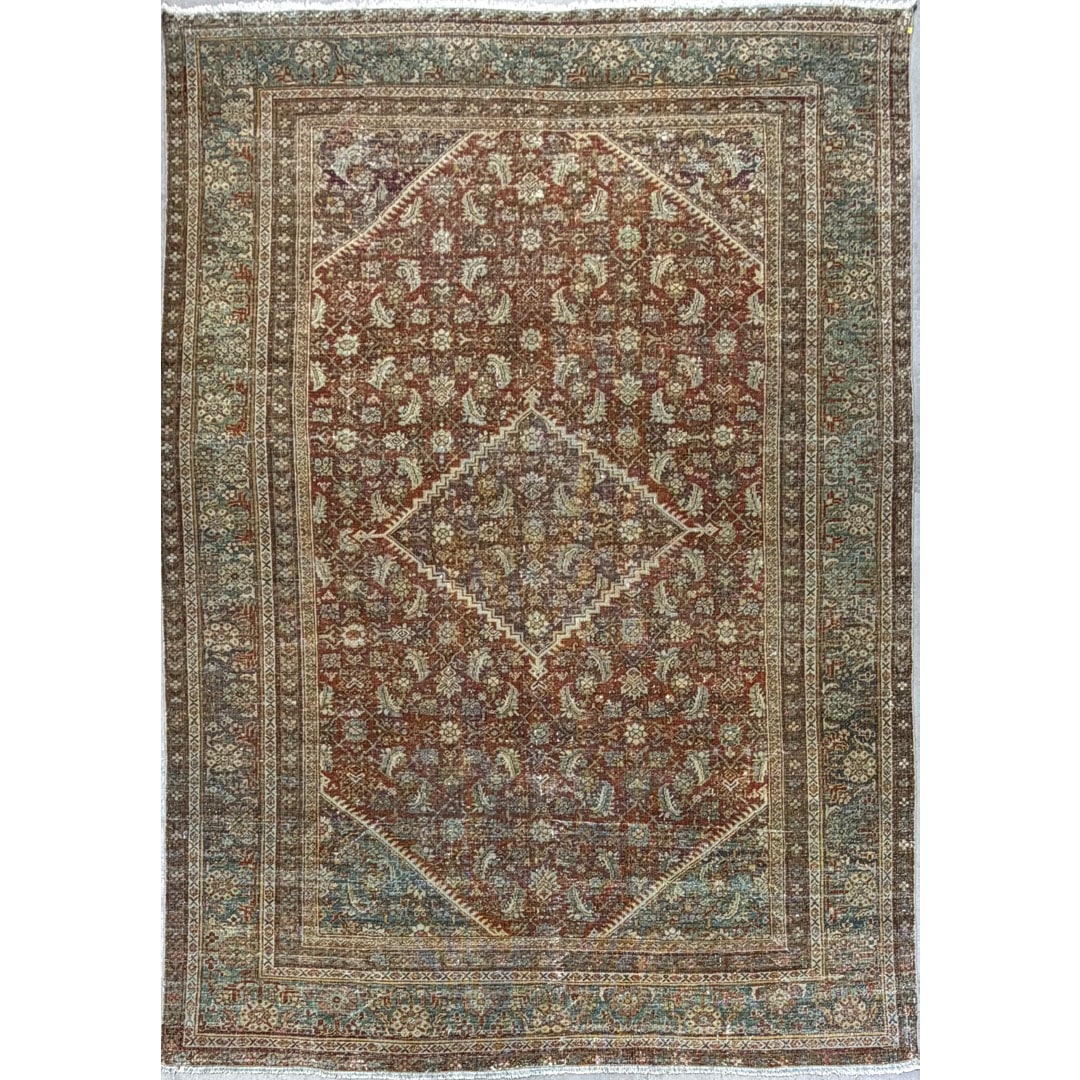
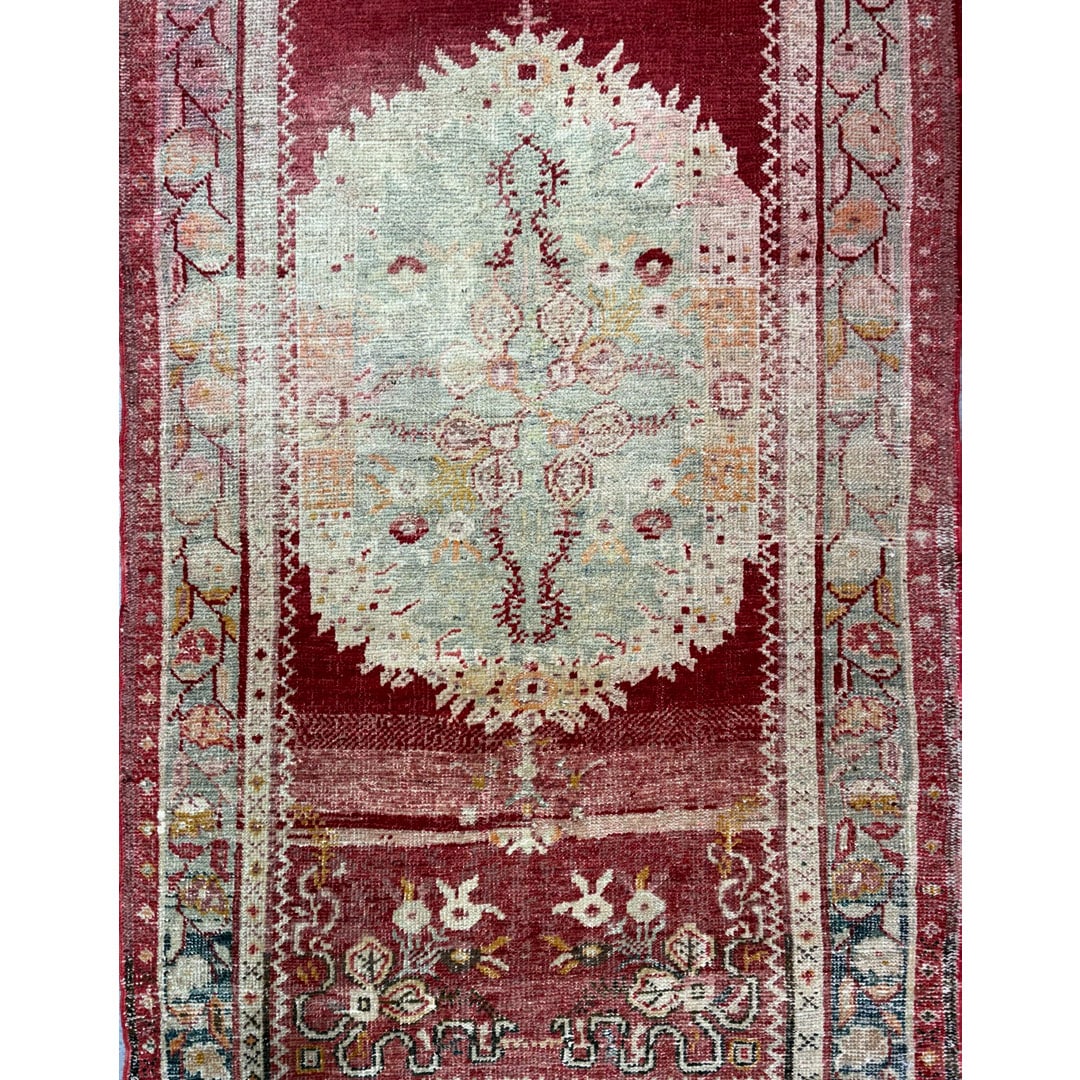
Explore the pattern scale, dimensions, and condition of these individual rugs. The listing names identify a Persian Sultanabad rug and a Turkish Oushak runner; their different sizes also show why origin alone is not enough for a fair comparison.
Seven questions to ask before choosing
- Where was it woven? Separate origin from design inspiration.
- What is it made from? Confirm both pile and foundation where known.
- What are its exact dimensions? Measure your usable space and furniture arrangement.
- What is the condition? Request images of wear, edges, fringe, and the reverse.
- Has it been repaired or altered? Ask about restoration, resizing, and other treatment.
- What supports the age and attribution? Ask which details are documented and which are estimates.
- What are the care and purchase terms? Confirm cleaning guidance, delivery, and applicable return terms with the seller.
For additional identification context, read our antique Persian rug identification guide. Use it as background rather than a substitute for inspecting the specific rug.
Frequently asked questions
Are Persian and Turkish rugs both Oriental rugs?
Both are commonly included within the broad term Oriental rugs. The more specific origin and construction description is usually more useful when comparing individual pieces.
Can you identify a rug’s origin just by its pattern?
Pattern is a clue, not conclusive evidence. Styles travel across regions and are reproduced elsewhere. Attribution should consider construction, materials, design, and available documentation together.
Is a Turkish knot always stronger than a Persian knot?
That is not a reliable buying rule. The rug’s overall structure, yarn, condition, use, and care matter. A knot label alone cannot establish how a particular rug will perform.
Which should I choose for a modern home?
Compare the actual colors, motif scale, dimensions, and condition against your room. Either origin can work; select a piece that supports your furniture layout and the atmosphere you want.
Choose the piece that fits your room
Browse Rouzati Rugs, then ask about the origin, materials, and condition of the pieces you are considering. Bring your room measurements and photographs to make the comparison more useful.