

THE OWNER’S ARCHIVE / A PRACTICAL PHOTO GUIDE
Documenting an Antique Rug
for Insurance
A photo checklist for a record you can find, explain and update.
Start with the whole rug. Add the details that distinguish it.
Keep the pictures beside the paperwork.
YOUR PHOTOGRAPHIC RECORD
Six views.
One organised file.
- Whole front
- Reverse, where safe
- Ends and side edges
- Pattern and texture
- Labels or markings
- Condition and room context
Confirm the insurer’s requirements before treating any checklist as complete.
What should an antique rug insurance record include?
Keep a dated set of photographs, a clear description of the exact rug, its dimensions, purchase or ownership records, and any appraisal or condition documents you have. Ask your insurer which additional information it needs for your particular rug.
The NAIC recommends including antiques in a household inventory, keeping receipts, storing the inventory securely and reviewing it regularly.1
A photo record supports documentation; it does not establish coverage, prove an age attribution or set an insured value. Keep those questions separate. For valuation terminology, read rug appraisal versus purchase price. This guide concentrates on assembling the pictures and records.
Start with a stable identifier
Give each rug an identifier you can use across photographs, receipts and notes. Use an existing rug or stock ID when available, or create a simple household reference such as RUG-01. Keep that reference tied to one piece even if you move it to another room.
Write down what you know and where the information came from. Separate a seller’s description, an appraiser’s conclusion and family history. If a date or origin is uncertain, keep that uncertainty visible rather than copying it as established fact.
ICOM’s Object ID framework highlights descriptive information such as materials, measurements, markings and distinguishing features alongside photographs and secure records.2 This household checklist draws on that documentation approach; it is not a claim of Object ID certification.
THE SHOT LIST
Photograph the piece, not just the room.
| View | What to capture | How to keep it useful |
|---|---|---|
| 01 / Whole front | Show the full shape, design and all sides. | Use a clear view from as square a position as practical; do not hide corners under furniture. |
| 02 / Reverse | Record the underside and any visible construction details. | Only turn or lift the rug when safe. Ask for handling help for a fragile or heavy piece. |
| 03 / Ends and edges | Show the end finishes, fringe if present, side finishes and corners. | Take one wider view for location, then the detail; do not pull threads to expose them. |
| 04 / Pattern detail | Record distinctive motifs, borders and surface appearance. | Keep an unfiltered original. A close-up does not prove the fibre, origin or age. |
| 05 / Labels and markings | Record existing labels, writing or other identifiers. | Include a readable close view and a wider location view. Do not attach a new adhesive label to the rug. |
| 06 / Condition and context | Record areas of concern and a view of the rug in its room. | Date the observation and describe what is visible. Keep uncertain causes as questions. |
A working shot list, not a universal insurance requirement. Add any views or documents requested by your insurer or appraiser.
Use your phone carefully—and keep the originals
Clean the lens, use steady lighting and check focus before finishing. Avoid filters, portrait blur or edits that change the rug’s appearance. Do not rely on a single attractive room photograph when the rug is partly covered.
For a detail, take a wider locating shot as well. If you include a ruler for scale, lay it beside the area on the same plane without pressing or fastening it to the textile. Keep the original file even if you make a separate crop for easier discussion.
The goal is a useful description, not a studio production. Triple-I encourages homeowners to photograph individual belongings and label their records with relevant identifying information.3 A phone image is still not a precise colour reference or a substitute for inspection.
THREE VIEWS OF THE SAME CATALOG RUG
Connect the detail to the whole.
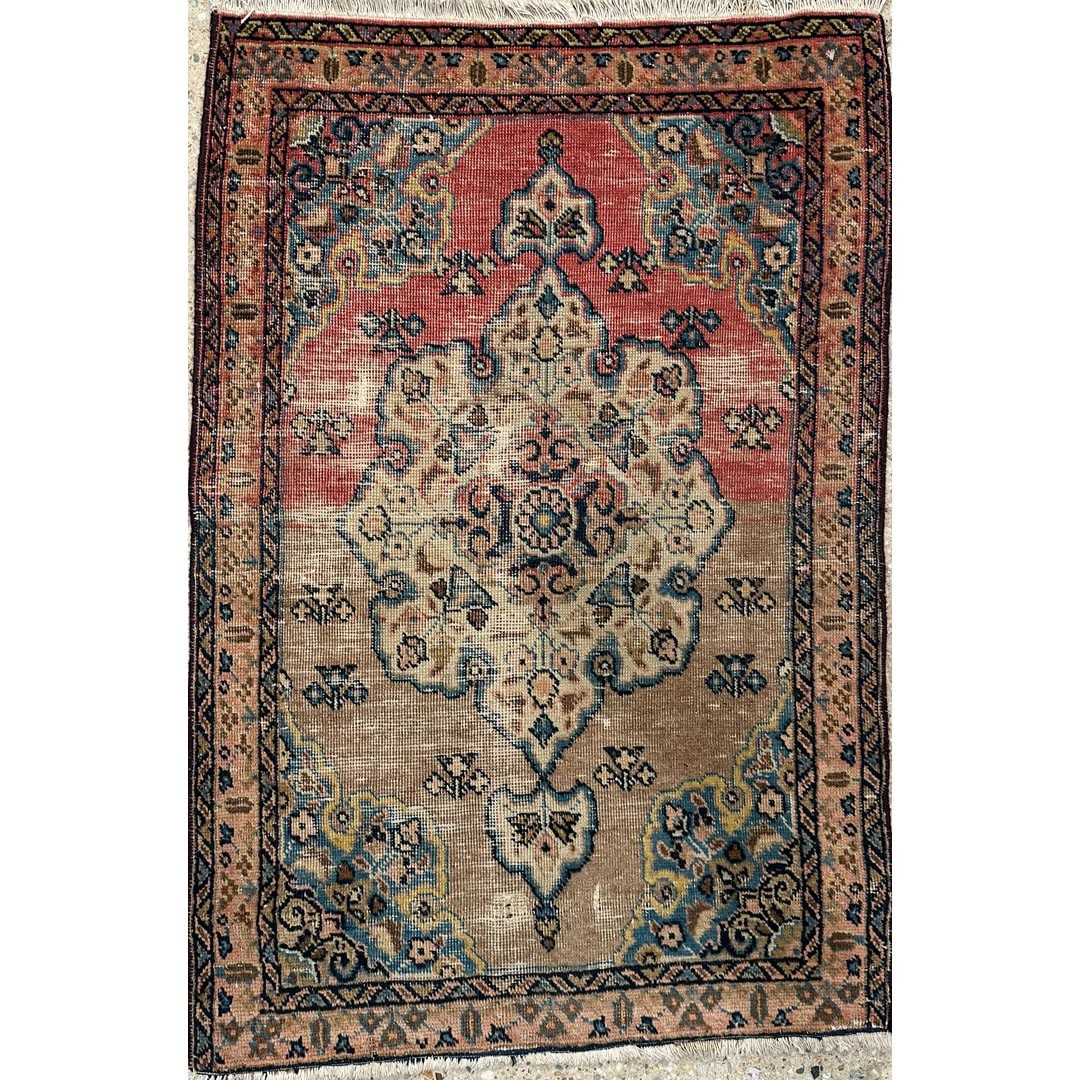
The front view above and the two photographs below belong to Tremendous Tabriz, listed as an 1860s antique Persian rug, 2′5″ × 3′7″ · Rug ID 107503. They illustrate different viewpoints of one item. They are seller catalog photographs, not a current owner’s dated inventory, an appraisal or proof of insurance.
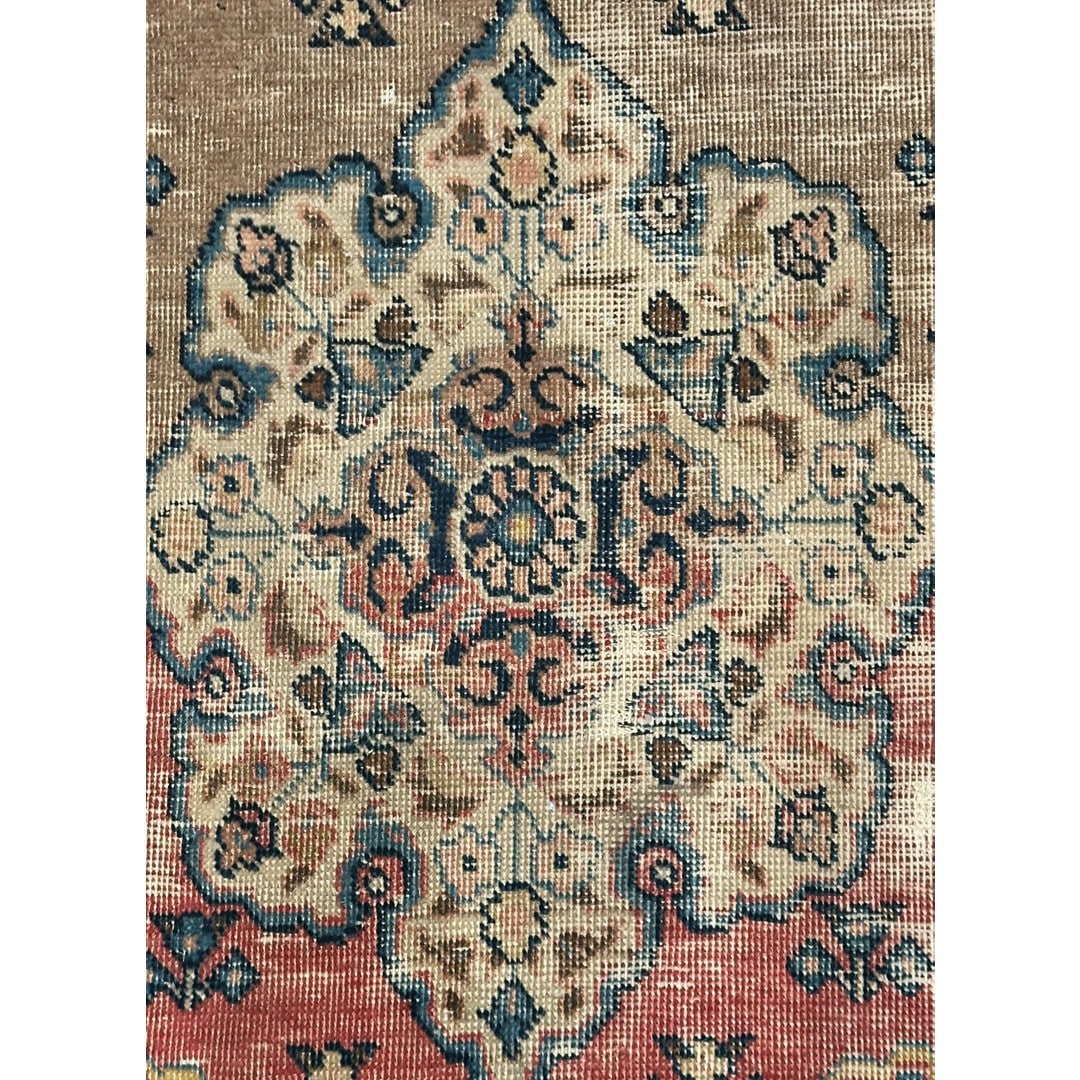
Pattern detail
A closer view helps link a motif to the full rug. Keep your own wider locating photograph so another person can find the same area.
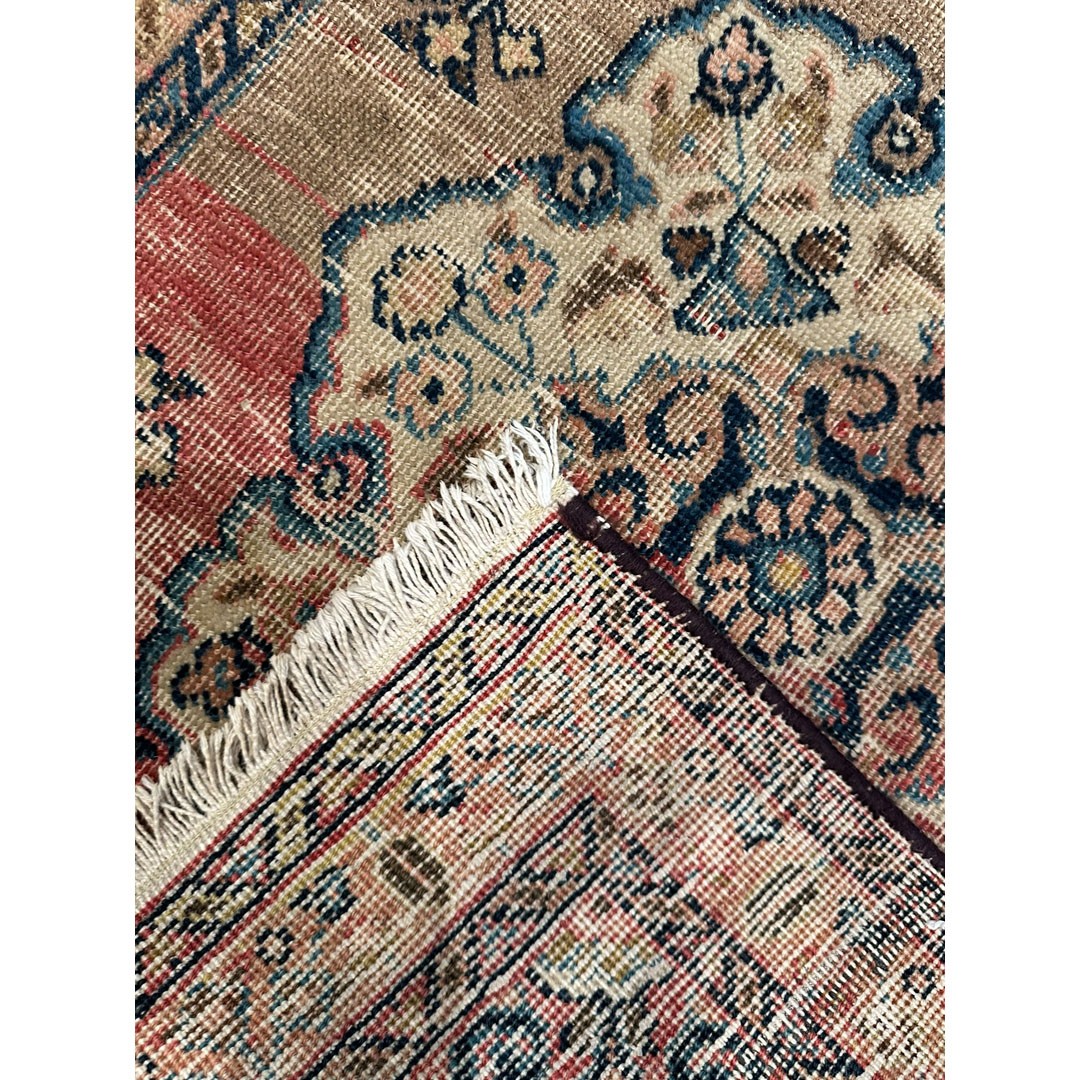
Corner and reverse
A reverse view adds information that a front photograph cannot show. Do not reproduce this folded position if your own rug is fragile or difficult to handle.
Record dimensions without forcing the rug
State the units, the date measured and whether fringe is included. Measure the rug body while it rests naturally; do not stretch an edge to match a nominal size. If the outline varies, note where the measurements were taken.
Ask for help before moving a large piece. The Canadian Conservation Institute advises supporting textiles during handling and getting assistance with large, heavy carpets.4 Do not lift by fringe, a loose edge or an area of loss just to obtain another photograph.
If an outline or end finish raises a question, record the observation and request advice. If part of the rug lifts away from the floor, our guide to why rug corners curl explains what to inspect next.
KEEP THE EVIDENCE CONNECTED
Photos + paperwork + source notes
- Purchase or ownership
- Receipt, invoice, purchase contract, gift record or other available history.
- Descriptions
- Exact listing, rug ID, stated dimensions and the source of any date or origin attribution.
- Professional records
- Existing appraisal, inspection, conservation or repair documents, including their dates.
- Insurance correspondence
- The insurer’s requested documents, the reply received and the date of the conversation.
Use filenames that explain the record
Choose one naming pattern and keep it simple. For example, RUG-01_2026-10-31_front.jpg, RUG-01_2026-10-31_reverse.jpg and RUG-01_2026-10-31_edge-detail.jpg connect the same rug and session. These are illustrative names, not files or records for the catalog products.
Keep a short index listing each photograph and what it shows. If the camera date was wrong or a file came from a seller, note that. A file’s metadata is useful context, but do not rely on it as the only explanation of when or by whom a photograph was made.
Store originals in one folder and make separate copies for sharing or annotation. Keep the dated version of an older record when you add new views, so a later change does not erase the earlier reference.
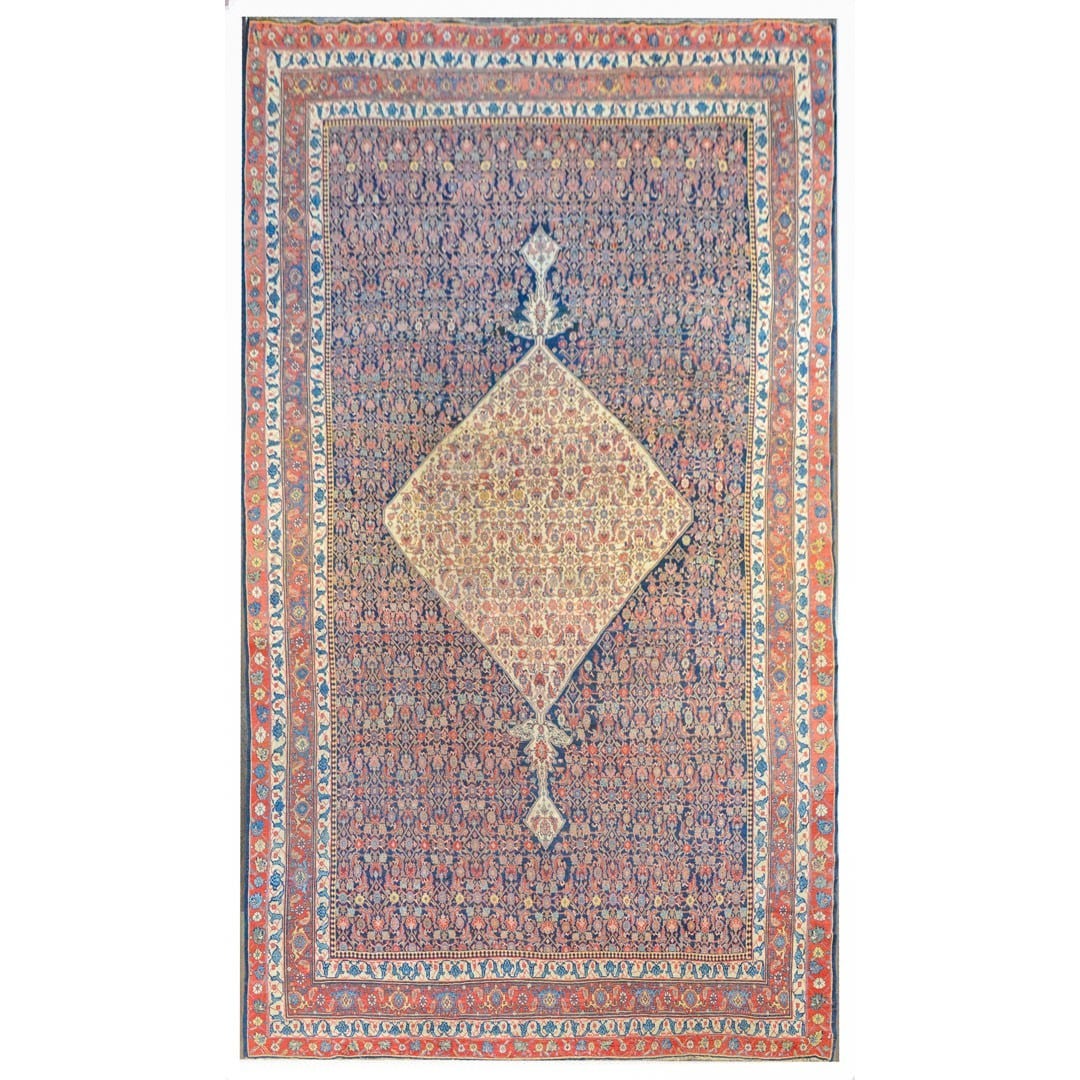
A SECOND ITEM NEEDS ITS OWN FILE
Lovely Large
Listed as an 1880s antique Persian Garous Bijar rug
12′6″ × 21′6″ · Rug ID 102737
A similar pattern or a shared room is not an identifier. Keep this rug’s listing and records separate from those of another piece. The catalog photograph does not establish your ownership, current condition, coverage or a valuation.
Ask the insurer what it needs before there is a loss
Send a concise description of the rug and ask which photographs and documents are needed for its record. Ask whether it needs an appraisal, which valuation purpose is appropriate and whether any additional scheduling or endorsement should be discussed.
Also ask how the policy’s limits, exclusions, deductible and settlement basis apply to the particular item. Keep the written reply with the record. The NAIC advises reading the policy and contacting the insurer or agent about questions; a general checklist cannot determine those answers for you.1
Do not treat a seller’s photograph, a receipt or even a report as a standalone promise of payment. For a broader buying-stage photo request, use our antique-rug online buying checklist.
FINISH THE RECORD
Back it up. Check it. Keep it current.
Keep a protected copy away from the device you used to take the photographs, and confirm that you can open the files. Triple-I recommends backing up digital inventories and keeping a separate copy of records.3
Review the record when you acquire a rug, receive new professional documentation or notice a change. The NAIC recommends an annual inventory review as well as updates for new purchases.1
Share records only with the people who need them. A private household inventory does not need to become a public album showing the location of valuable belongings.
Questions about the photo record
Are photos enough to insure an antique rug?
Ask the insurer. Photos are part of a record, but any required appraisal, item description or additional documentation depends on the policy and assignment.
Do I need a professional photographer?
Not every useful inventory begins with professional photography. Start with clear, well-lit phone images and ask the intended recipient whether additional views or quality are needed.
What if there is no receipt?
Keep the ownership information you have, label its source and ask the insurer or appraiser what further documentation is appropriate. Do not invent a purchase date or price.
Should I clean or repair the rug before photographing it?
Do not alter it just to make the record look better. Record its current appearance and ask for care advice if treatment is needed. Keep before-and-after records when professional work occurs.
Can the catalog images replace my own photos?
Keep catalog images as a dated source reference, clearly labelled. They do not necessarily show the rug’s current condition in your possession, so create your own record where safe.
How many photos are required?
There is no universal number in this guide. Use the six-view plan as a starting point and add the documentation requested for your exact rug.
Keep the record specific.
Use our appraisal and purchase-price guide for valuation terms, the corner-curling guide for condition questions and the rug materials guide for fibre terminology. Keep any uncertain identification as a question for the appropriate professional.
Sources & photo notes
- NAIC: A Consumer’s Guide to Home Insurance — Your Responsibilities
- ICOM: Object ID Documentation Standard
- Insurance Information Institute: How to Create a Home Inventory
- Canadian Conservation Institute: Basic Care – Textiles
Reviewed October 31, 2026. General U.S.-focused documentation guidance; no policy coverage, payment, appraisal requirement or value is determined here. Four original Rouzati catalog images show two products. Their descriptions are attributed to the listings and are not independent authentication. The sample filenames and blank record sheet are organisational examples, not completed evidence for either rug.