

THE OWNERSHIP FILE / 01
One rug.
Different questions
about value.
Rug Appraisal vs. Purchase Price:
What Owners Should Know
A receipt records a transaction. An appraisal answers a defined question about value. Start by knowing which question you need answered.
KEEP THESE TOGETHER
Your rug’s record
01 The purchase receipt
02 The exact rug ID
03 Current photographs
04 A purpose-specific report
ORGANIZE BEFORE YOU VALUEIs a rug appraisal the same as the price you paid?
No. Your purchase price is the amount agreed in a particular transaction. A rug appraisal is an opinion of a specified type of value, for a stated purpose and effective date. Those figures can differ without either being a simple mistake. The International Society of Appraisers explains that the amount paid for an object and its monetary worth are different concepts.1
Before comparing two numbers, compare what each number is intended to measure. An insurance replacement figure should not be read as a guaranteed resale price. This guide helps you prepare for a conversation with an appraiser; it does not value an individual rug.
Four questions to separate
What did I pay?
Look at the invoice and transaction details.
What would replace it?
Define the replacement assignment and relevant market.
What value is supported?
Specify the value definition and effective date.
What would I receive?
Separate a value opinion from an actual offer and selling costs.
A comparison you can actually use
| Term | Question it answers | What to check | Do not confuse it with |
|---|---|---|---|
| Purchase price | The amount paid in one transaction. | Invoice, date, rug ID and separately listed charges. | A universal value for every later purpose. |
| Insurance replacement cost | An estimate to obtain an appropriate replacement under a defined assignment. | Report purpose, replacement description, market and effective date. | The cash amount you can resell the rug for. |
| Fair market value | A value under the applicable willing-buyer / willing-seller definition. | Relevant market evidence and the report’s value definition. | An asking price chosen without supporting evidence. |
| Actual cash value coverage | An insurance basis that takes depreciation into account. | Policy wording and the insurer’s explanation. | The same thing as replacement cost coverage. |
| Offer or sale proceeds | A buyer’s actual offer, or money received after the sale. | Written offer and any applicable commissions or expenses. | A formal appraisal or a promise of future appreciation. |
Definitions must fit the assignment. Insurance coverage and tax uses have their own requirements; confirm them with the relevant professional. Sources 1–4 below.
Why can the figures be different?
Start with the date. A receipt describes a purchase when it happened; an appraisal may address a different date. Then look at the purpose and market. Replacing a rug through an appropriate retail source asks a different question from evaluating it for a particular market transaction.
The IRS describes fair market value in the context of donated property as a willing-buyer and willing-seller transaction, with neither required to act and both having reasonable knowledge of the relevant facts. It also treats cost, selling prices, comparable sales and replacement cost as evidence to assess in context—not interchangeable labels.3
For an owner, the practical next step is to ask: “Which date, value definition and market does this number use?” That is more useful than assuming a larger number proves a bargain, or a smaller number proves the original purchase was wrong.
A HYPOTHETICAL SITUATION
The higher figure
is not a profit forecast.
You buy a rug and later receive an insurance-oriented replacement appraisal with a higher figure. That does not establish that a buyer will pay the higher amount, or that you can immediately sell at a profit.
Ask what the replacement figure includes and which market it reflects. If your next decision is whether to sell, explain that new purpose instead of reusing a document prepared for another question.
Purpose first.
Number second.
Illustrative scenario only. No product in this guide has been assigned an appraised value.
Will an appraisal determine what insurance pays?
An appraisal and an insurance policy do different jobs. The report supports a defined valuation; the policy determines the coverage. The NAIC distinguishes replacement cost coverage from actual cash value coverage, which considers depreciation.4
Before commissioning a report, ask your insurer what documentation it needs for this particular rug and whether a separate schedule or endorsement is relevant. Ask how limits, deductibles and settlement conditions apply. Keep the reply with your records rather than assuming the report alone guarantees a payment.
Confirm the insurer’s requirements before paying for an appraisal. An owner preparing documents for a donation, estate or another formal use should likewise check the applicable requirements with the responsible professional. A general insurance report is not automatically suitable for another assignment.
Choose a rug specialist, then agree the scope
Look for both appraisal training and experience with the type of rug involved. The Appraisers Association of America identifies antique and Oriental rugs, carpets and tapestries among its specialist areas; its directory can help you begin a search.5
Use the first conversation to explain why you need the report, who will rely on it and any deadline. Ask how the appraiser will inspect the rug, what information is missing and what limitations would apply if an in-person examination is not possible.
ASA recommends asking about qualifications, relevant experience, professional standards, report contents and fees before signing an agreement. It also warns against value-based percentage fees and undisclosed interests in the item.2
Six questions to take to the appointment
- Experience
What experience do you have with rugs similar to mine?
- Assignment
Which value definition and effective date fit my purpose?
- Inspection
Will you inspect it in person, and what will you record?
- Evidence
How will you explain the market evidence and assumptions?
- Cost & timing
What is the written fee estimate, scope and delivery date?
- Independence
Do you have any buying, selling or other interest to disclose?
Build a useful file before the conversation
Create one folder for each rug, named with a clear identifier. Put the receipt, existing reports and any written history together. Record which statements came from the seller, which came from an older report and which remain uncertain. An attributed origin or date should not quietly become a verified fact as records are copied.
Photograph the full front and back, the ends and edges, any labels, and areas of concern. Include a size record and notes on known repairs or changes. Keep original image files, rather than only compressed screenshots. These records help you explain what you own; photographs alone do not supply an appraised value.
This is a preparation checklist, not a substitute for the appraiser’s instructions. If the rug is fragile or difficult to move, ask how to document it safely before lifting or turning it.
CATALOG EXAMPLES / NOT VALUATIONS
Keep the record tied to the exact rug.
These two Rouzati catalog listings illustrate useful identifying details: a name, dimensions and a rug ID. Their photographs do not establish a current appraisal, condition assessment or investment return. Open each exact listing for current product information.
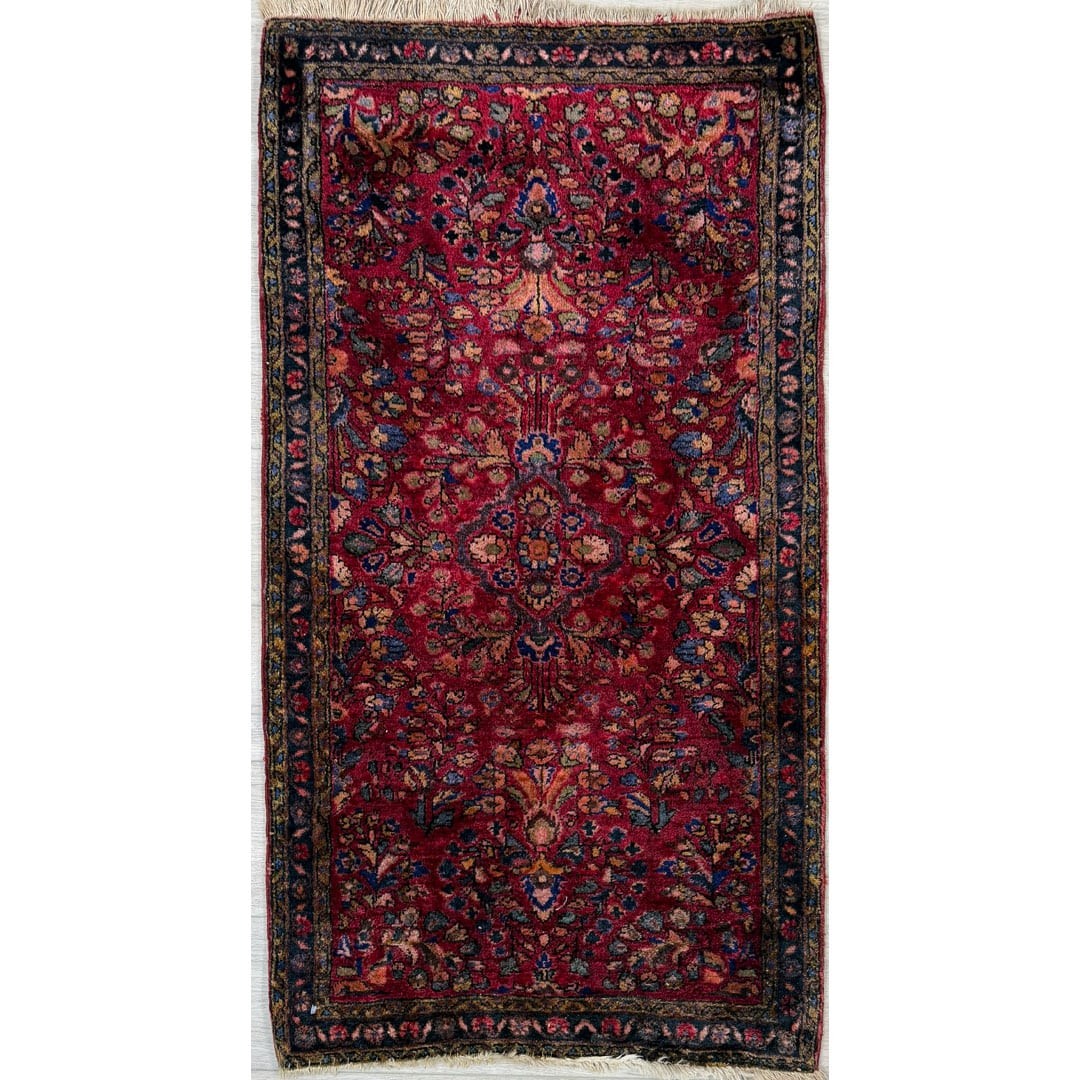
Splendid Sarouk
Listed as a 1920s antique Persian wool accent rug
2′1″ × 4′ · Rug ID 109184
Save the precise listing and invoice with the rug’s record. Keep the seller’s description distinct from an independent appraisal conclusion.
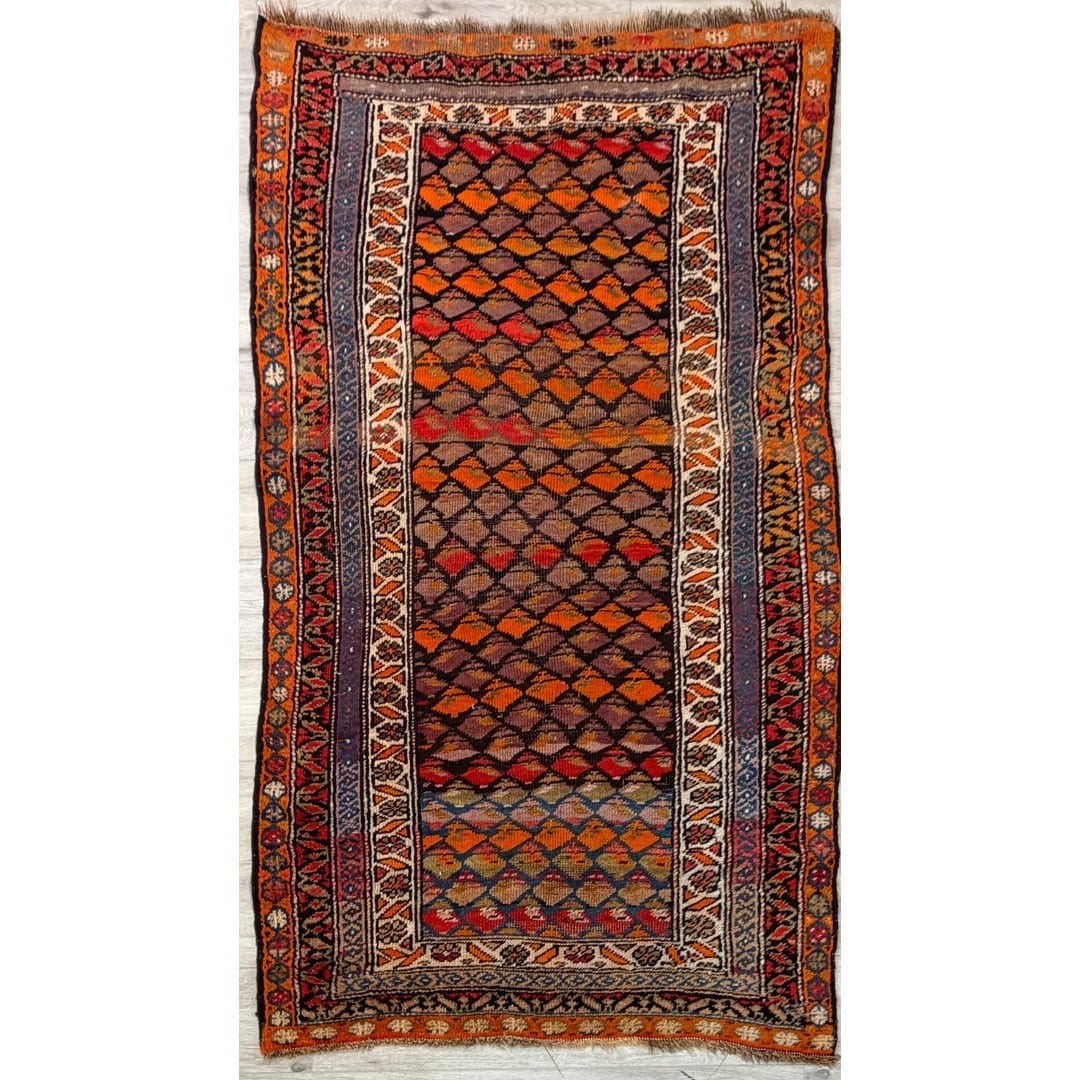
Kurdish Kaleidoscope
Listed as a rare antique Persian area rug
3′4″ × 6′0″ · Rug ID 108593
Use the rug ID when requesting details. A similar-looking piece online is not automatically a suitable comparable for valuation.
How should you read the finished report?
Start with the identification: does the report describe your actual rug? Then check the purpose, value definition, effective date, inspection details and any assumptions or limitations. ASA describes a report as explaining the property, valuation procedures and the responsible appraiser’s qualifications and signature.2
If a conclusion surprises you, ask for clarification of the evidence and reasoning. Keep the explanation with the report. When the purpose changes or the rug’s condition changes, ask whether the existing report remains suitable instead of treating its conclusion as permanent.
There is no update interval in this guide that fits every rug. Ask the appraiser and the intended recipient when a review would be appropriate for your circumstances.
Owner questions, answered
How much does a rug appraisal cost?
Request a written estimate for your rug and assignment. Inspection, research, report scope and related expenses can differ. This guide does not quote a universal fee.
Can I use my purchase receipt instead?
A receipt records your purchase. Whether it meets a particular documentation requirement depends on the recipient and purpose. Ask before ordering additional work.
Does a higher insurance appraisal mean I made a profit?
No. A replacement-oriented valuation does not promise a resale buyer or a sale at that figure. Check the report’s purpose before comparing it with your receipt.
Can an appraiser work from photos?
Ask what inspection is appropriate for your assignment and what limitations a photo-based report would have. Do not assume photographs reveal everything needed.
Will every antique rug increase in value?
No appreciation is promised. Age or an antique label alone does not establish a future selling price. Choose a rug for your needs without treating a valuation as a return guarantee.
Can I use an insurance report for a donation or estate?
Do not assume the purposes are interchangeable. Ask the responsible adviser and appraiser which value definition, date and documentation the new use requires.
Continue exploring
Before buying, read our guide to buying an antique rug online for photographs and questions to request. Planning where it will live? Browse our living room rugs guide and bedroom rugs guide. For a practical condition concern, read why rug corners curl before trying a quick fix.
Sources & editorial notes
- International Society of Appraisers: Replacement Cost
- American Society of Appraisers: Consumer FAQs
- IRS Publication 561: Determining the Value of Donated Property
- NAIC: Actual Cash Value and Replacement Cost Coverage
- Appraisers Association of America: Areas of Specialization
Sources reviewed October 26, 2026. General U.S.-focused owner education; no individual valuation, coverage determination or tax conclusion is provided. Product descriptions are attributed to the Rouzati catalog. Product photographs are original catalog images and are used only as identifying examples.