

THE MATERIAL EDIT / EVERYDAY LIVING
Wool vs. Wool-and-Silk Rugs
Choosing for everyday use.
Compare the surface you love with the care your room needs.
Two materials. Two catalog examples. A more useful way to choose.
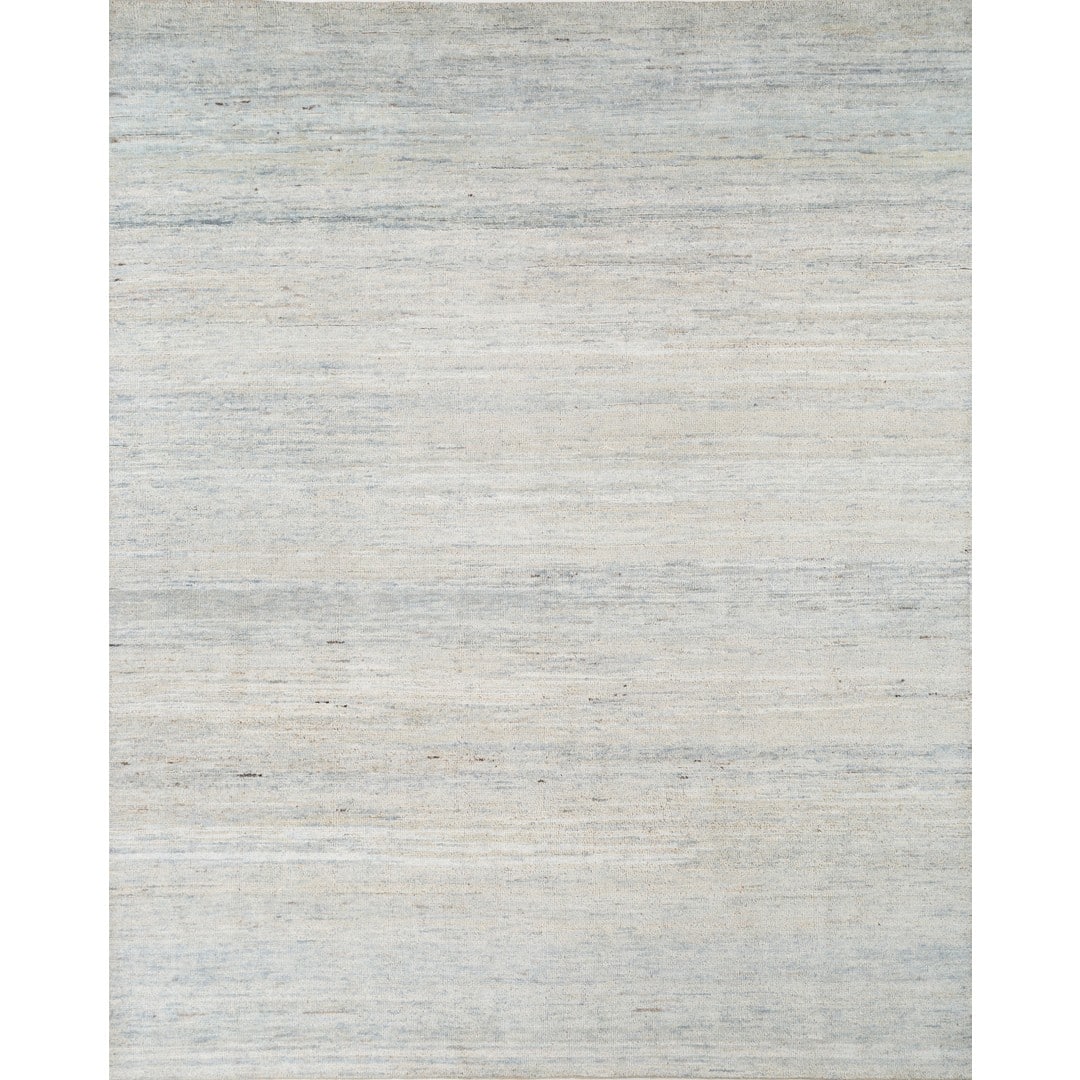
01 / WOOL
Minimalist Mist
Modern wool carpet · 9′11″ × 13′11″
Rug ID 107288
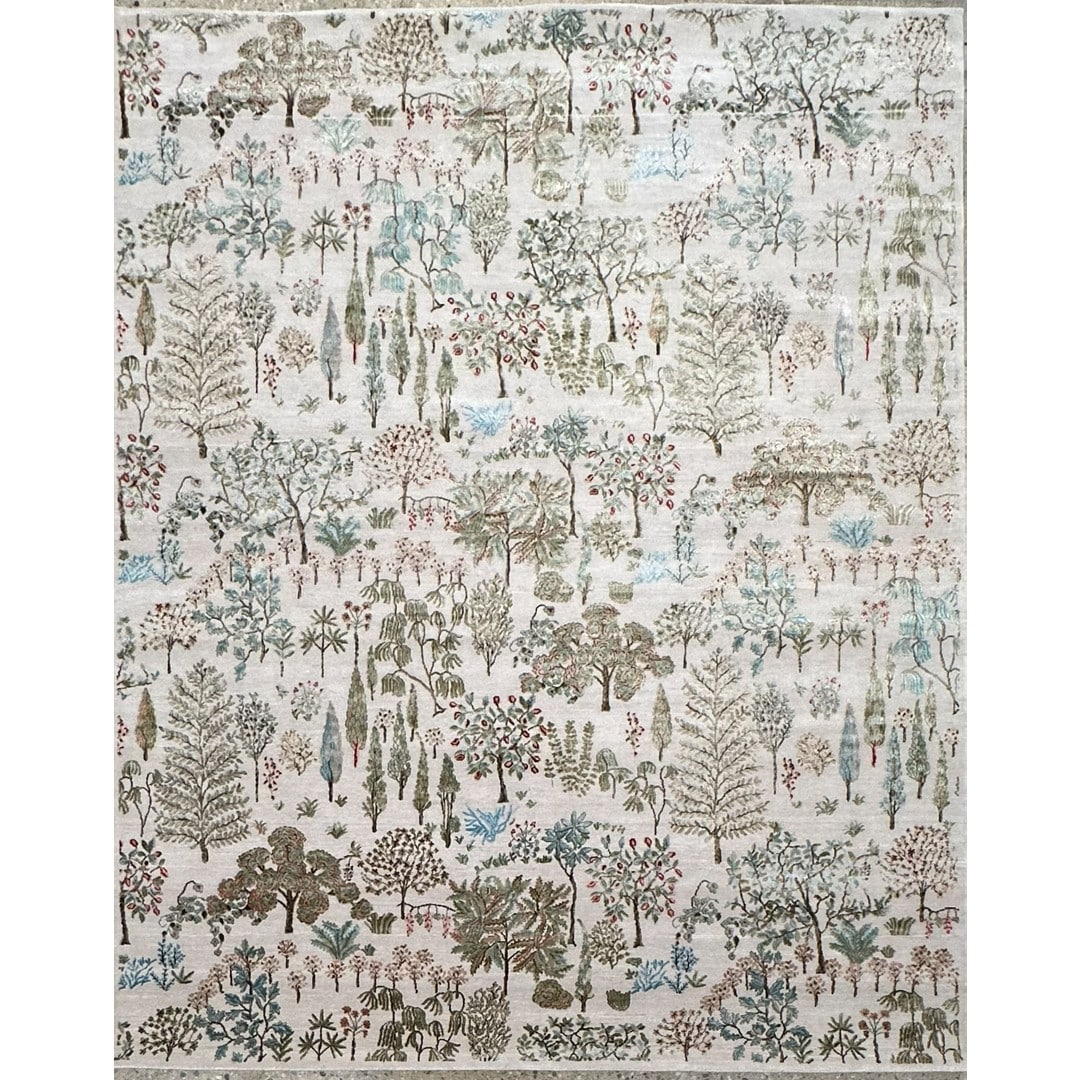
02 / WOOL & SILK
Botanically Blended
Modern pictorial area rug · 8′1″ × 10′0″
Rug ID 108181
Which is the better starting point for everyday use?
If you want a practical starting point for a frequently used room, begin your shortlist with wool. If visible sheen and a more decorative surface matter most, consider wool-and-silk—after confirming the exact materials and care requirements. This is a buying approach, not a guarantee that every wool rug will outperform every blend.
Construction, pile, condition and the way a room is used all matter. A material name alone cannot tell you how a particular rug will handle your household. The right comparison is between two documented rugs, not two broad promises.
For the wider range of natural and manufactured fibres, start with our material-by-material rug guide. Here, we focus specifically on wool and wool combined with genuine silk.
BEFORE YOU COMPARE
Ask what is in the pile.
Then ask where it is.
“Wool-and-silk” does not tell you the ratio, whether fibres share a yarn, or whether silk is used only in selected motifs. Ask for the pile composition, foundation materials and any available percentages in writing.
In the examples shown here, the live catalog lists Wool for Minimalist Mist, and Silk (Pure Silk), Wool for Botanically Blended. No percentage is stated in this guide, and we have not independently tested either rug.
What does wool bring to the comparison?
Wool is valued in floor coverings for resilience. British Wool links the bounce-back of its carpet wool to natural crimp and elasticity. That fibre-level advantage is a useful reason to consider wool, while remembering that a finished rug’s construction and condition also affect its performance.1
Do not translate “wool” into “maintenance-free.” Ask how the specific rug should be vacuumed, how its edges and fringe should be handled, and what cleaning method is suitable. A densely woven wool rug and a loosely textured wool rug can call for different day-to-day decisions.
What changes when silk is part of the surface?
Silk can introduce a lustrous appearance that makes parts of a pattern catch the light. Compare the actual rug from several positions rather than judging a blend by its brightest photograph. Ask which areas contain silk; a detail image can help you discuss the surface, but cannot certify fibre content.
Silk also makes placement and treatment important questions. The FAO’s silk manual describes silk as sensitive to prolonged light exposure and weaker when wet. Those are fibre properties, not a forecast of the service life of a specific rug.2
Adding silk does not automatically make a rug unsuitable for a home. It means you should make the care conversation part of the buying decision rather than assuming that the wool component cancels every other material’s needs.
SIDE BY SIDE
Compare your needs, not just the labels.
| Decision | Wool | Wool-and-silk | What to do before buying |
|---|---|---|---|
| A busy everyday room | Start here when practical use is the priority; inspect construction and condition. | Ask how the specific silk-containing surface fits the expected traffic. | Describe the actual walking route, not just the room name. |
| Light and surface appearance | Can have tonal shifts; wool is not automatically flat or matte. | May show more lustrous accents, depending on the silk’s location and finish. | Look at the same rug from several positions and in consistent light. |
| Spills and cleaning | Needs a suitable wool-care plan; the fibre name does not mean washable. | Confirm a method suitable for every material in the rug. | Request written care guidance before purchase. |
| Direct sunlight | Protect colour and fibres from prolonged exposure. | Give particular attention to silk’s light sensitivity. | Check where the sun falls throughout the day. |
| Children or pets | Assess texture, loops, fringe and the household’s spill routine. | Assess the same features, plus how you will maintain silk areas. | Avoid treating either option as snag-proof or stain-proof. |
| Choosing between two rugs | Compare the whole rug, its documentation and intended placement. | Compare the whole rug, including composition and available care support. | Do not infer quality or lifespan from the blend label alone. |
Buying considerations, not test scores. Fibre and care background: sources 1–5. Individual rug suitability requires product-specific information.
LOOK CLOSER / ORIGINAL CATALOG DETAILS
Texture first. Claims second.
The closer catalog views below belong to the same two products shown above. They reveal pattern and surface appearance. They are not laboratory images, a controlled sheen comparison or proof of which visible yarns are silk.
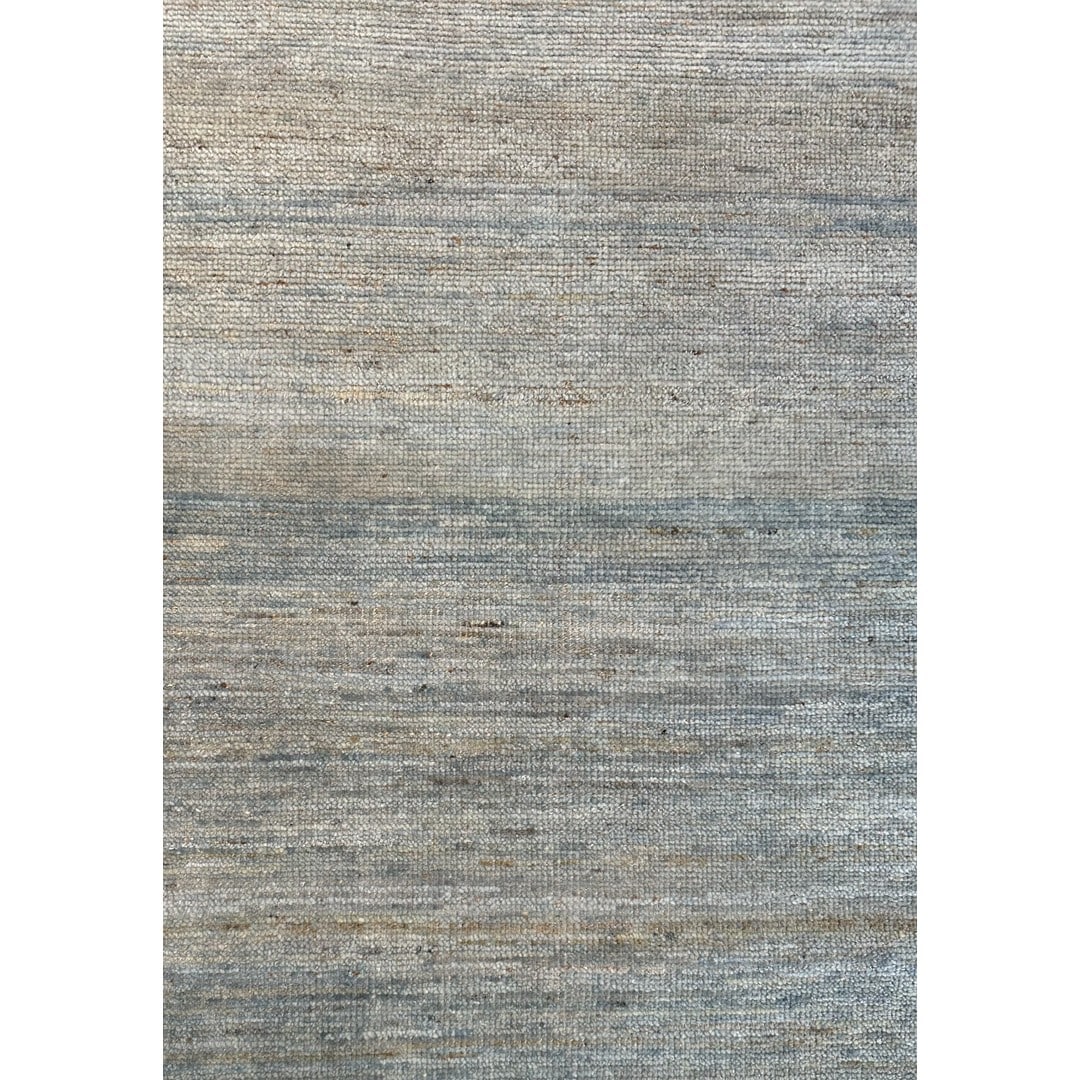
Follow the quiet texture.
Use the closer view to ask about pile height, surface texture and care. The catalog identifies this rug as wool; the photograph alone does not establish its wear rating.
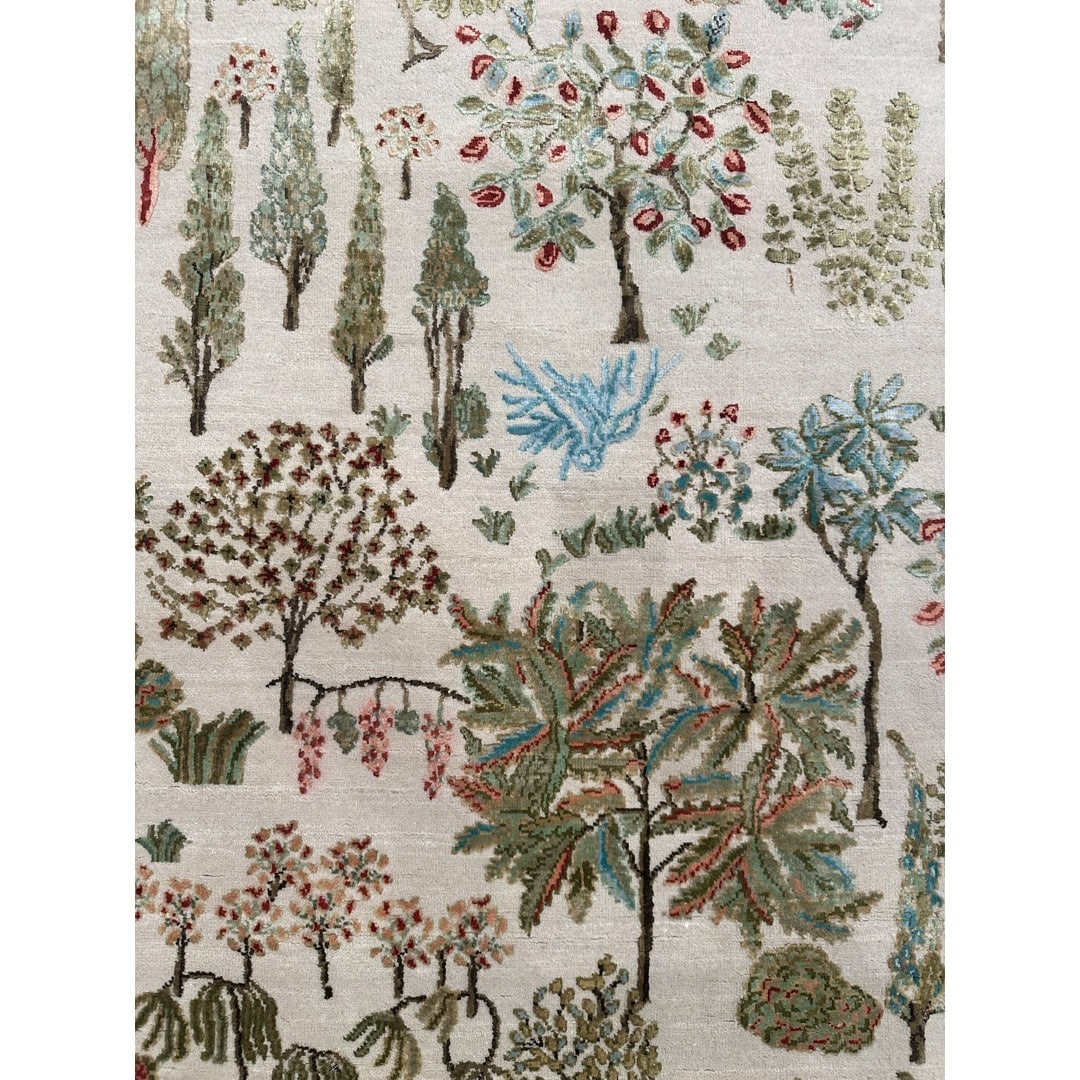
Follow the pattern.
Use the botanical detail to ask where silk appears in the design. We have not assigned fibre types to particular motifs from their appearance.
Match the rug to the way the room works
Walk through the room before choosing a material. Note the route from the doorway, where people turn, whether chairs move across the rug and where drinks or food usually sit. A quiet bedroom and a frequently used dining space create different practical questions.
For a room that must be easy to live with, give documented care requirements more weight than a dramatic photograph. If a blend appeals to you, ask whether its specific construction and intended use match the space. Browse our living room rugs guide or bedroom rugs guide for placement ideas alongside the material decision.
Check sunlight separately. CCI explains that light damage to textiles is cumulative and can be irreversible. A rug does not become protected simply because one fibre is mixed with another. For more on placement, read silk rugs and sunlight exposure.3
CARE COMES WITH THE CHOICE
Build the care plan before the first spill.
WoolSafe’s owner guide recommends removing gritty dirt through regular vacuuming and responding promptly to spills. Its advice is for wool and wool-rich floor coverings; do not assume that a wool-safe product is automatically suitable for every other fibre, dye or finish in a mixed-material rug.4
For an uncertain spill, start by gently absorbing liquid with a clean white cloth. Do not scrub, flood the area or improvise with household cleaners. Follow the rug’s specific instructions and ask a qualified rug-care specialist when the material or treatment is unclear.
CCI notes that heat, moisture and friction can felt wool, and that chlorine can damage both wool and silk. This is a reason to avoid experiments—not a home-cleaning recipe.5
Six questions worth asking
- Composition
Which fibres are in the pile, and which are in the foundation?
- Silk location
Is silk used in selected areas, and is a percentage available?
- Daily use
Is this exact rug suitable for my traffic, chairs and household routine?
- Routine care
Which vacuum setting or attachment is appropriate?
- Spill response
What should I do immediately, and when should I stop?
- Appearance
Can I see a full view and closer views under consistent lighting?
A few final material questions
Is wool-and-silk always better than wool?
No. It may offer a surface appearance you prefer, but “better” depends on the exact rug, room and care you can provide. Compare documented products rather than assuming a blend is an upgrade for every household.
Does every wool-and-silk rug have the same silk percentage?
No percentage can be assumed from the label. Ask the seller for the composition and how silk is used in the individual rug.
Can I identify silk from a shiny photograph?
No. Lighting, finish, pile direction and other fibres can affect sheen. Use written material information and appropriate professional identification when certainty matters.
Can I clean a blend with my usual wool cleaner?
Do not assume so. Confirm that the method is suitable for all fibres, dyes, finishes and construction in that rug. Follow its own care instructions.
Which is better with children or pets?
There is no universal winner from the label alone. Start with your spill and traffic routine, then assess the particular rug’s surface, fringe, construction and care needs.
Is a wool-and-silk rug washable?
The material label does not establish washability. Do not machine-wash or wet-clean it without explicit guidance for the exact rug and its condition.
Choose the rug you can enjoy living with.
Shortlist by room, compare the real surfaces and get the care details in writing. Let the exact rug—not an assumed ranking of materials—make the final case.
Continue with the complete rug materials guide or our guide to photos and questions to request when buying online.
Sources & photograph notes
- British Wool: Wool in Carpets
- FAO: Silk Reeling and Testing Manual, Chapter 2, Properties of Silk
- Canadian Conservation Institute: Basic Care – Textiles
- WoolSafe: The Safe Way to Care for Your Wool Carpets and Rugs
- Canadian Conservation Institute: Natural Fibres, Notes 13/11
Reviewed October 27, 2026. Conservation references explain material vulnerabilities; they are not performance tests of these products. British Wool’s statements concern its own wool; no British origin is claimed for either featured rug. Product names, dimensions and material descriptions are from Rouzati’s catalog and live listings. The four photographs show two rugs only; no colour edits or simulated damage have been added. Ratios, fibre locations and service life have not been independently established.