

A patterned sofa already brings movement and color into a living room. The rug should give that fabric a setting: sometimes a quiet textured ground, sometimes a second pattern with a different scale. You do not have to choose a plain rug, and the two fabrics do not need identical colors. Start by deciding which pattern you want to notice first. This guide compares six approaches, with original rug photos and conceptual room examples to help you see the difference.
Choose a Rug by Sofa Pattern
Quick answer: For a bold patterned sofa, begin with a rug that has quieter texture or lower contrast. For a small or subtle upholstery print, a more defined rug pattern can work. Keep at least one color connection, vary the size or shape of the motifs, and leave some nearby surfaces plain.
Look at the sofa from across the room as well as close up. Does its print read as large shapes, fine texture or strong lines? Then compare the rug at the same viewing distance. Two patterns can share colors but still compete if their motifs have similar size, spacing and contrast.
Swipe the table to compare all options →
| Sofa pattern | Rug approach | Why it works |
|---|---|---|
| Large florals | Quiet texture or an understated ground | Keeps the upholstery in focus |
| Broad stripes | Soft abstraction or low-contrast texture | Avoids repeating strong parallel lines |
| Small checks | Looser motifs with different spacing | Breaks up the repeated grid |
| Small geometric print | Larger traditional motifs | Creates a deliberate change of scale |
| Tonal botanical print | A rug with a stronger focal pattern | Lets the floor carry more detail |
| Fine blue florals | Blue and ivory motifs on a deeper ground | Connects color without copying the fabric |
1. Give Large Florals a Quiet Ground
Swipe to explore the three rugs →

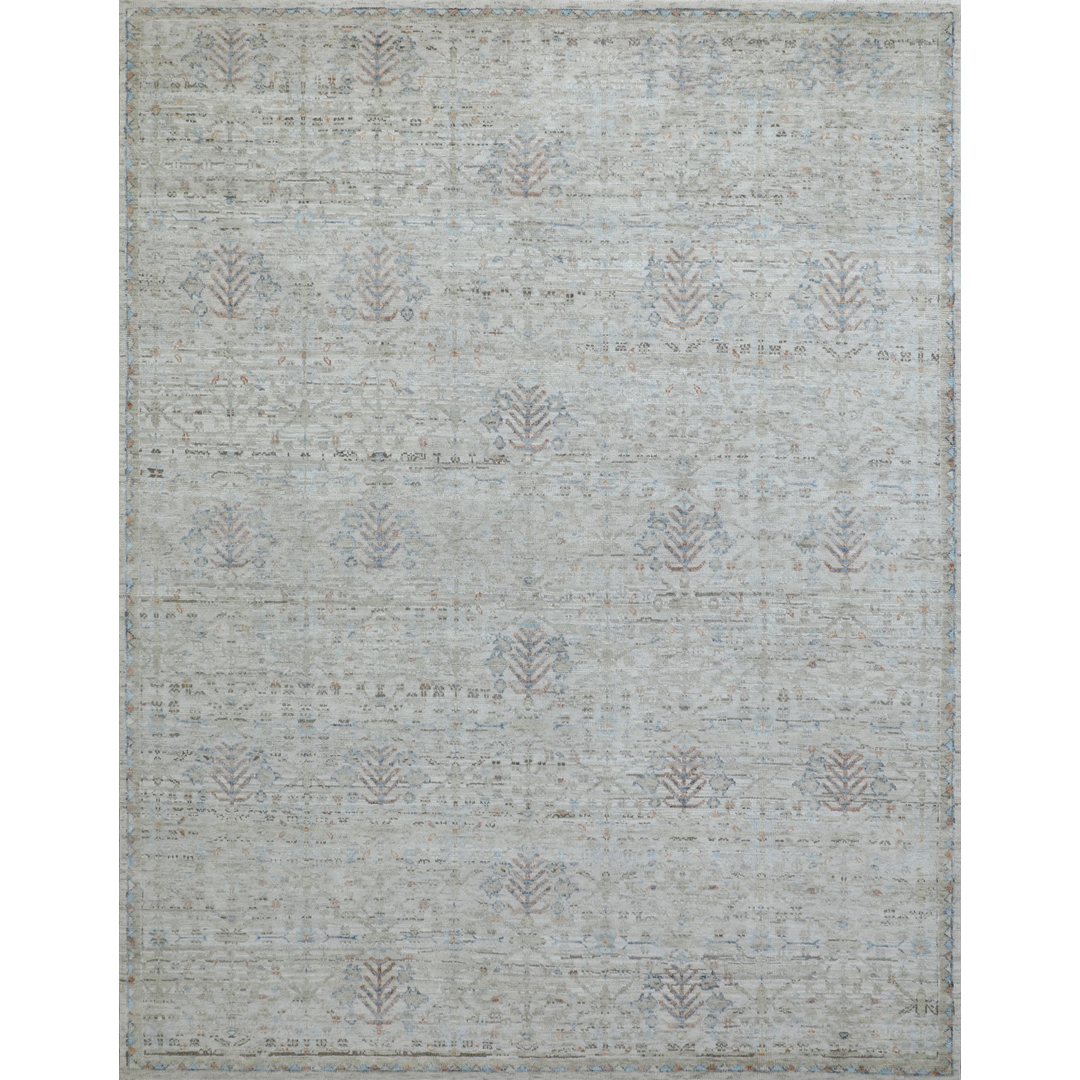
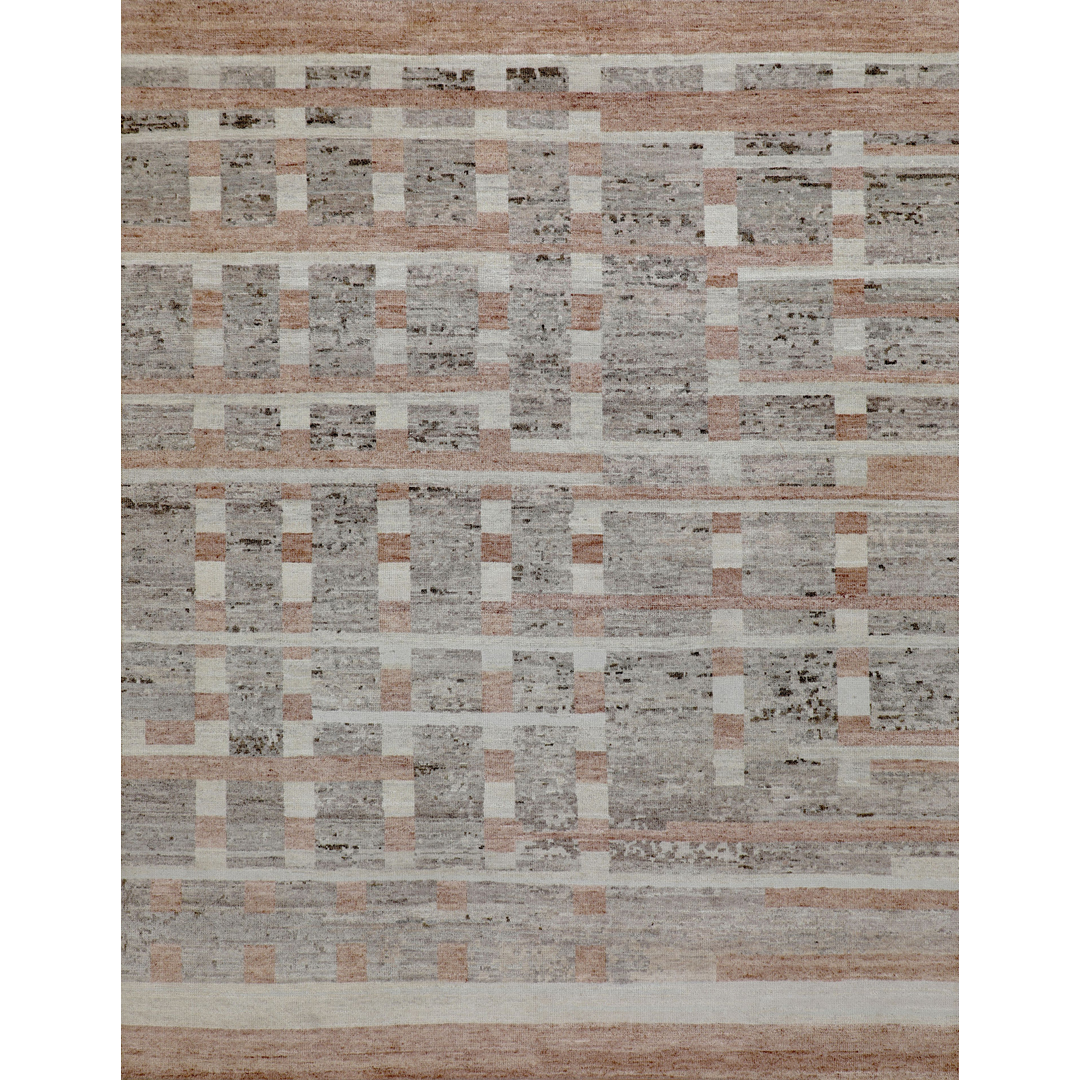
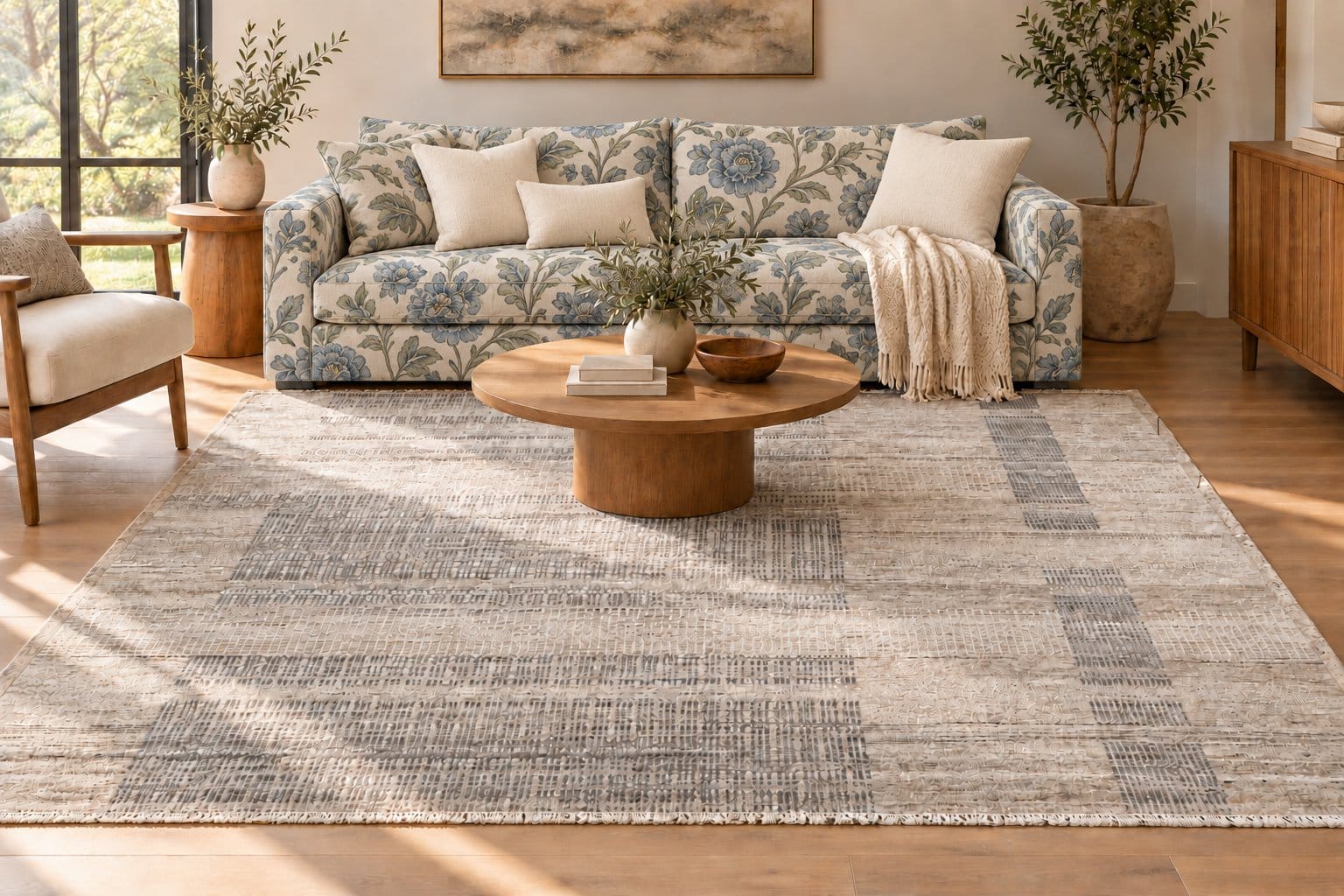
A quiet rug lets large floral upholstery remain the main pattern in the room. Look for soft striations, gently broken color or a low-contrast weave rather than another equally bold flower print. Beige or ivory can pick up the background of the sofa fabric, while a little gray or blue can connect its leaves and petals. The rug does not have to be completely plain; its details simply need to read more softly from the doorway.
Example pairing: Large blue and sage flowers on ivory fabric with a lightly patterned beige rug.
What to adjust: If the room still feels busy, remove patterned cushions first. Plain curtains and a simple coffee table give the eye space between the sofa and floor.
If the window fabric is floral too, compare our guide to pairing rugs with floral curtains.
2. Soften Broad Stripes with Texture
Swipe to explore the three rugs →
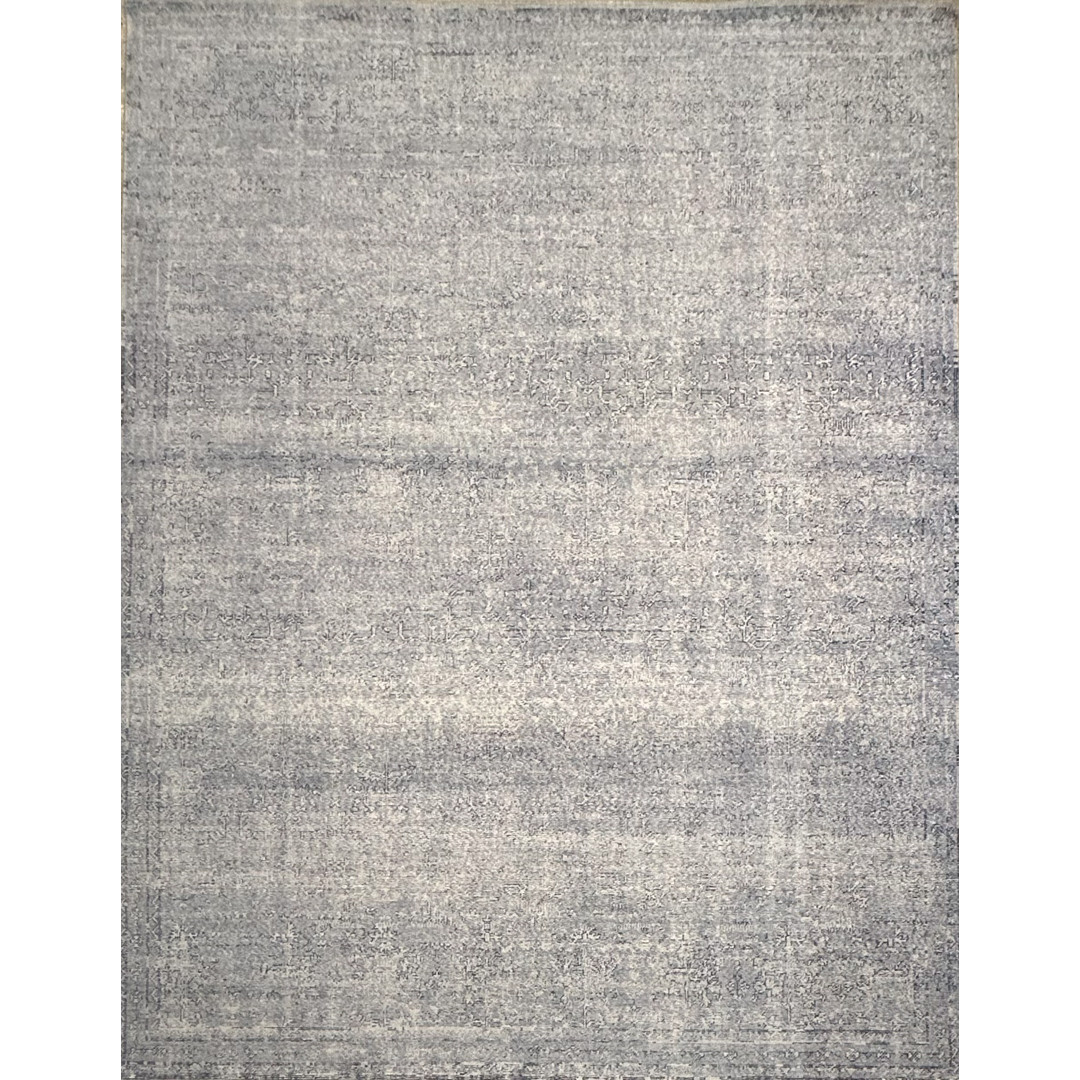
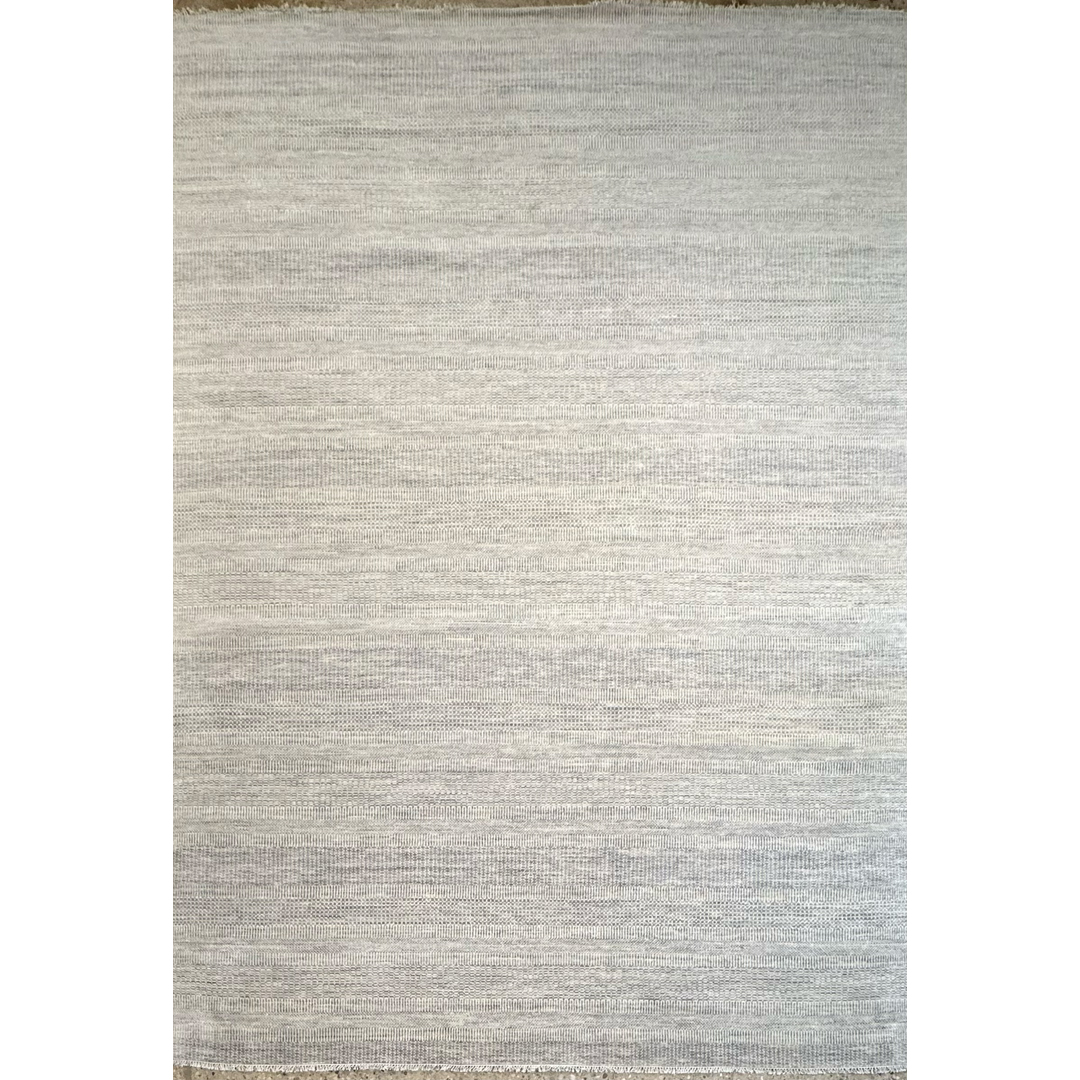
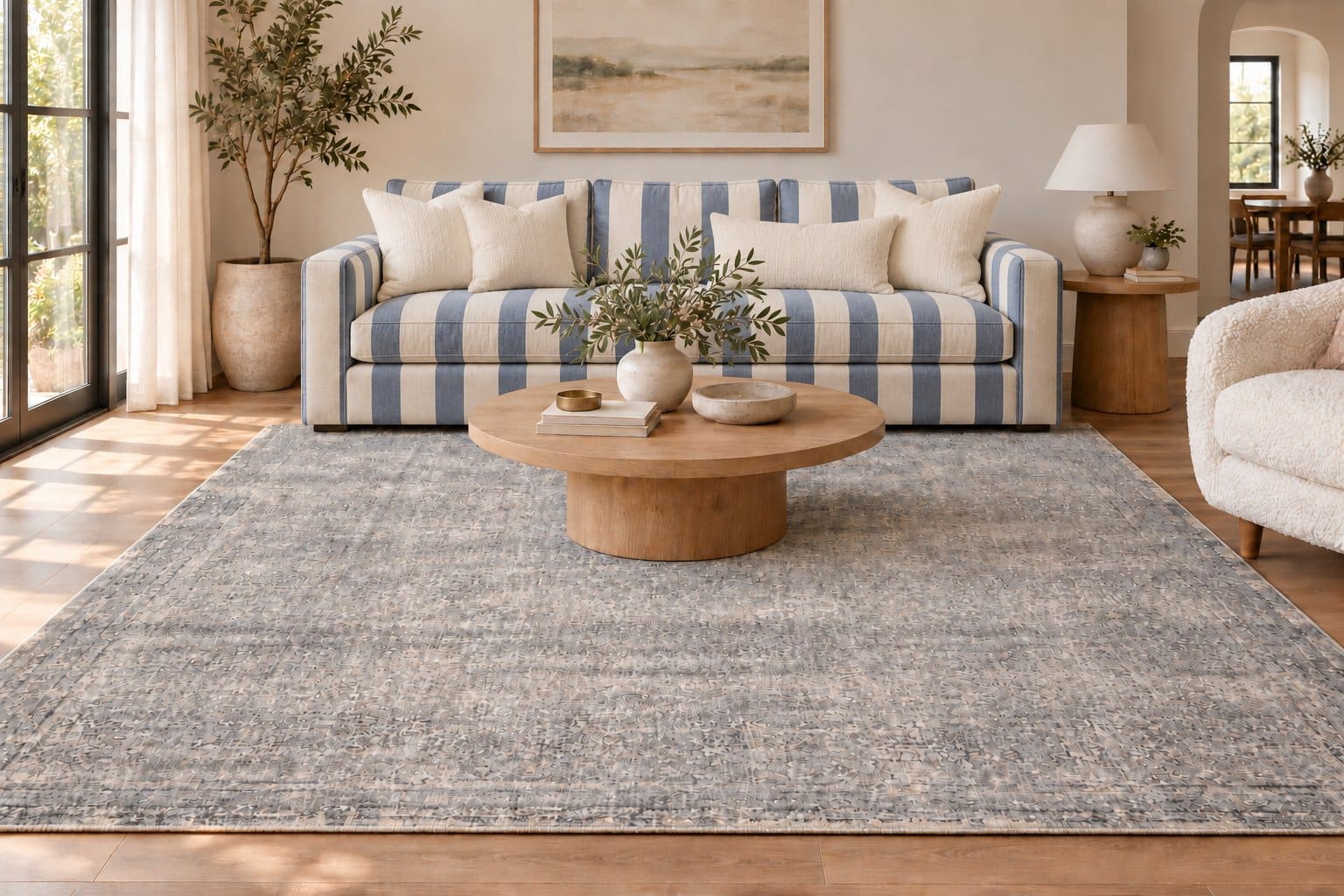
A softly textured rug can balance the strong direction of a striped sofa. Broad stripes create a clear rhythm, so a rug with equally bold parallel lines may repeat it too closely. Consider a pale gray rug with diffuse marks or a subtle woven effect. Pull gray, ivory or blue from the upholstery, then compare the floor tone so the rug remains visible. This is a useful route when you want the room to feel orderly without making every surface geometric.
Example pairing: Broad blue and ivory sofa stripes with a softly mottled light gray rug.
Try this test: View a room photo at a small size. If the sofa and rug look like one continuous set of lines, compare an option with less directional movement.
For more help with the blue palette, explore rug colors for a blue couch.
3. Break Up Small Checks with Looser Motifs
Swipe to explore the three rugs →


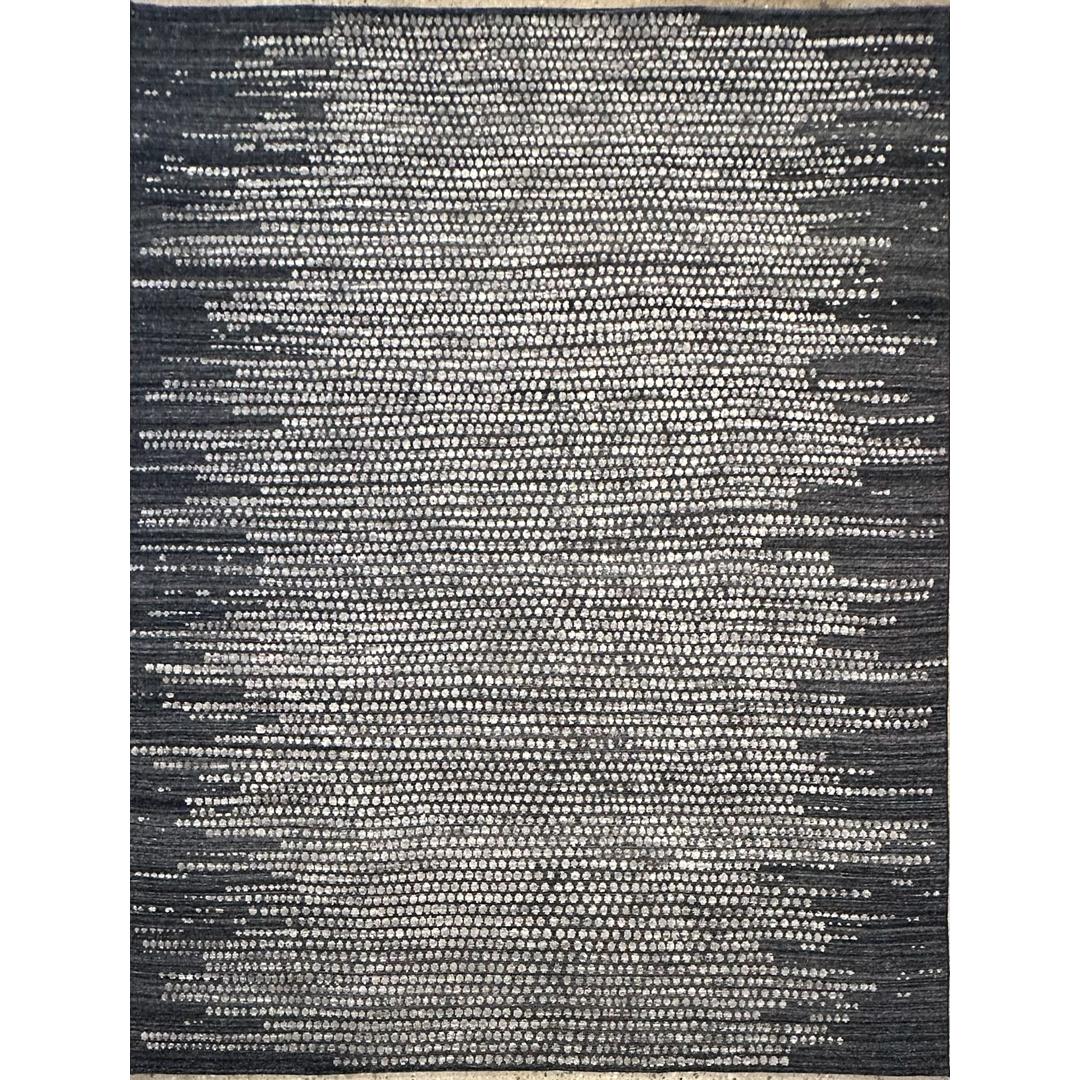
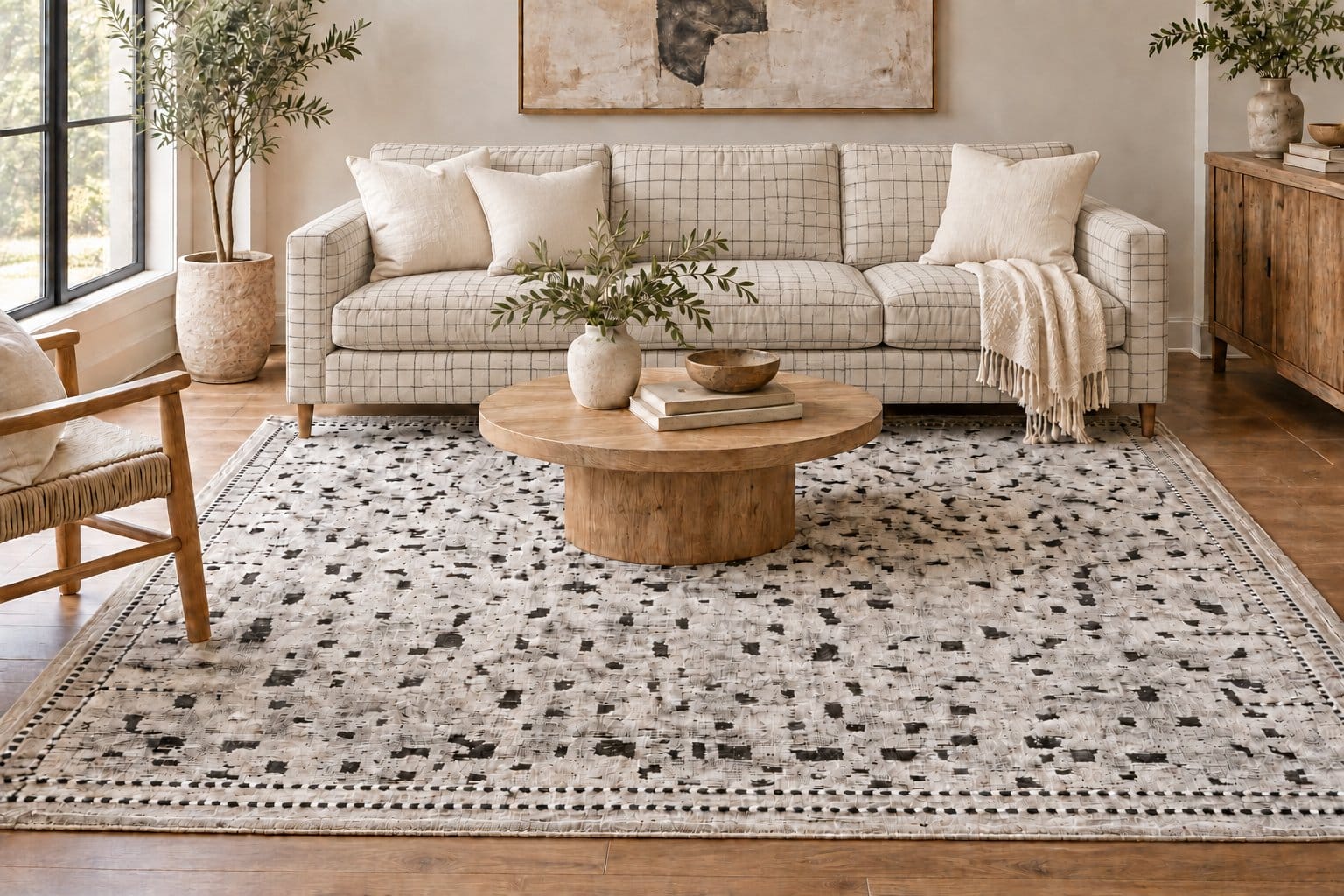
A looser rug pattern can interrupt the regular grid of a checked sofa. Small windowpane checks often read as texture from a distance, leaving room for irregular marks or abstract shapes on the floor. Keep the palette connected, but compare spacing carefully: tightly packed checks and tightly packed dots can still feel repetitive. A light ground with scattered charcoal details is one possibility, especially when walls and curtains are quiet.
Example pairing: Fine charcoal checks on ivory upholstery with irregular black-and-ivory rug motifs.
Watch for: A rug with a much darker ground changes the balance even if its colors match. Compare both contrast and motif spacing, rather than relying on a black-and-white label.
4. Pair Small Geometry with Larger Traditional Motifs
Swipe to explore the three rugs →
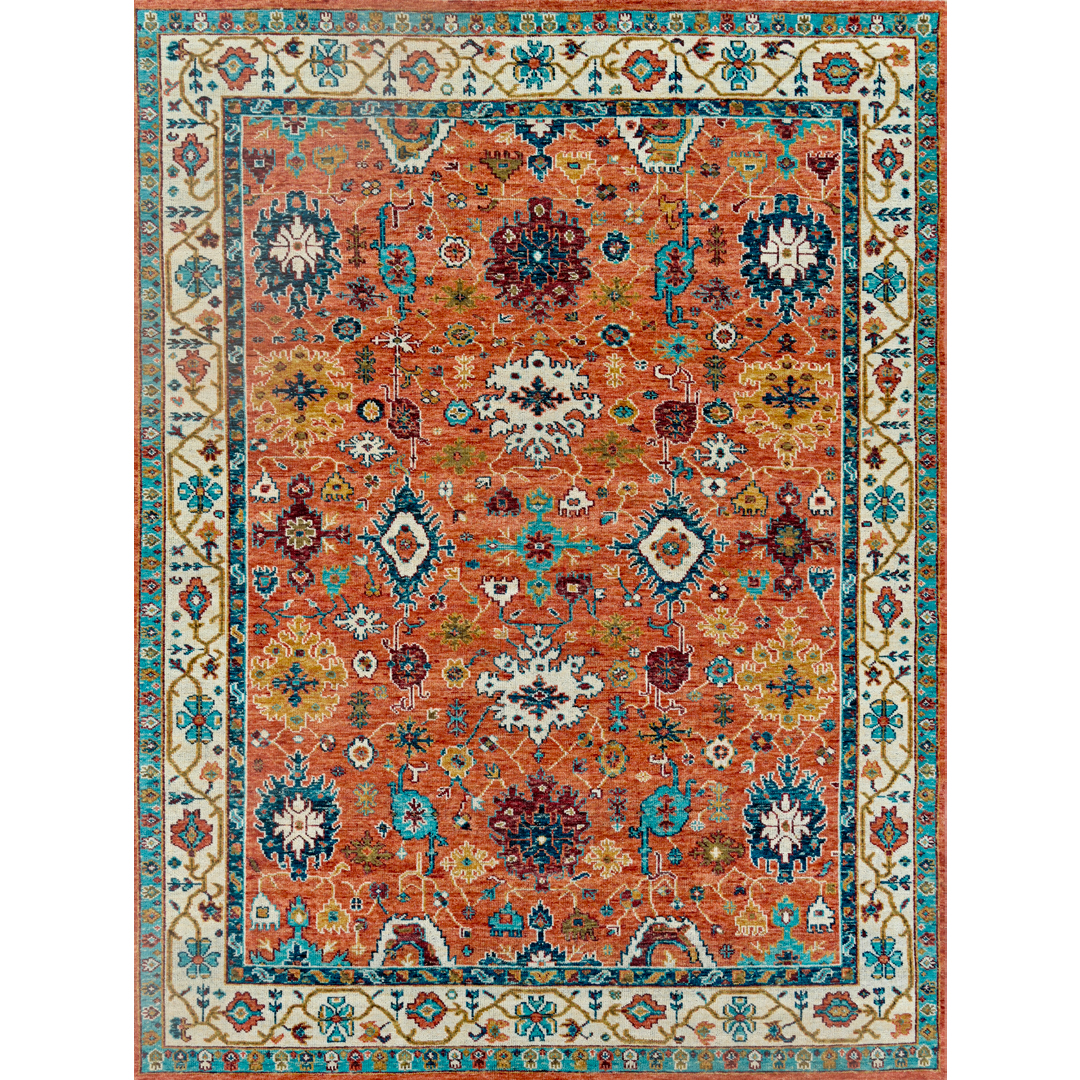
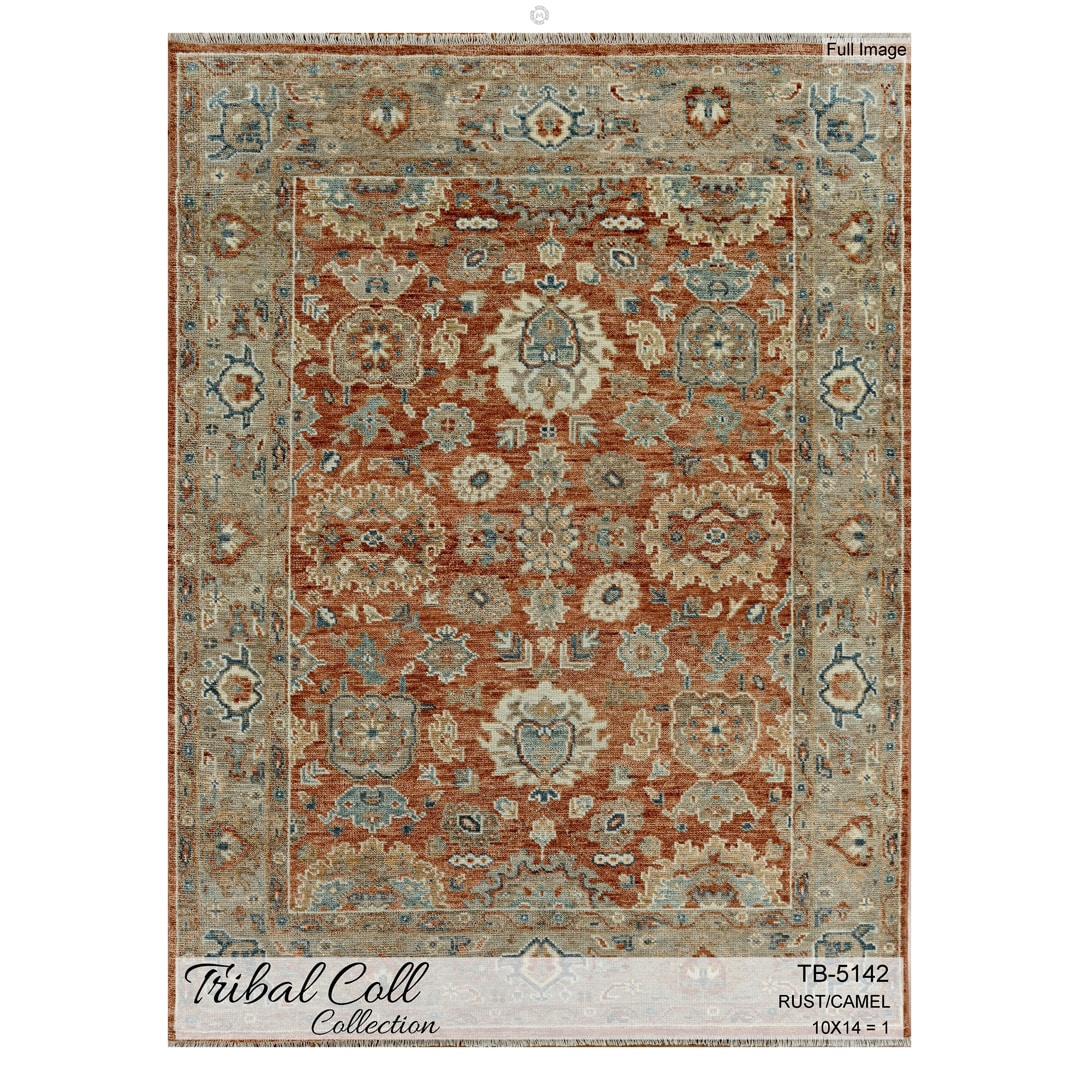
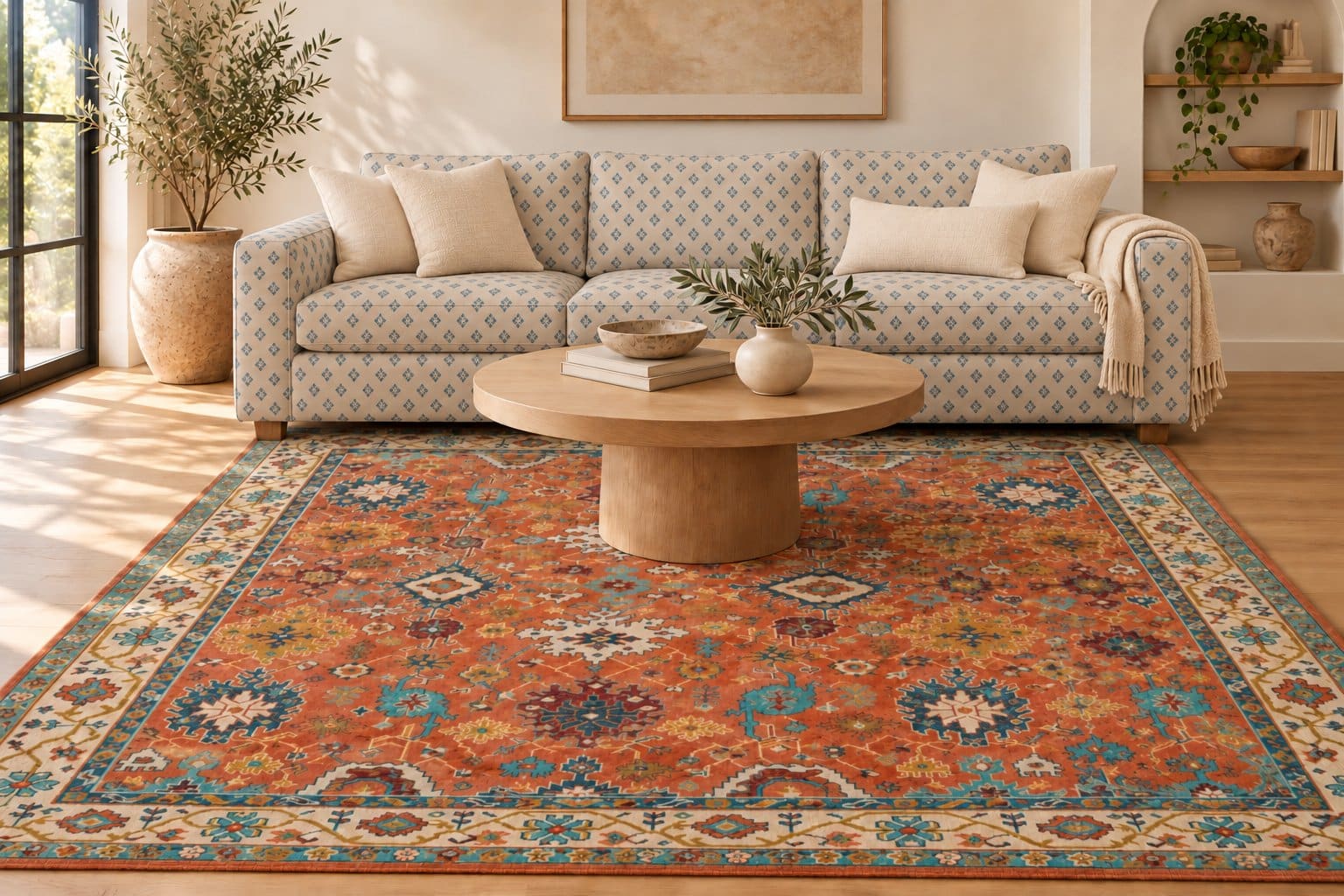
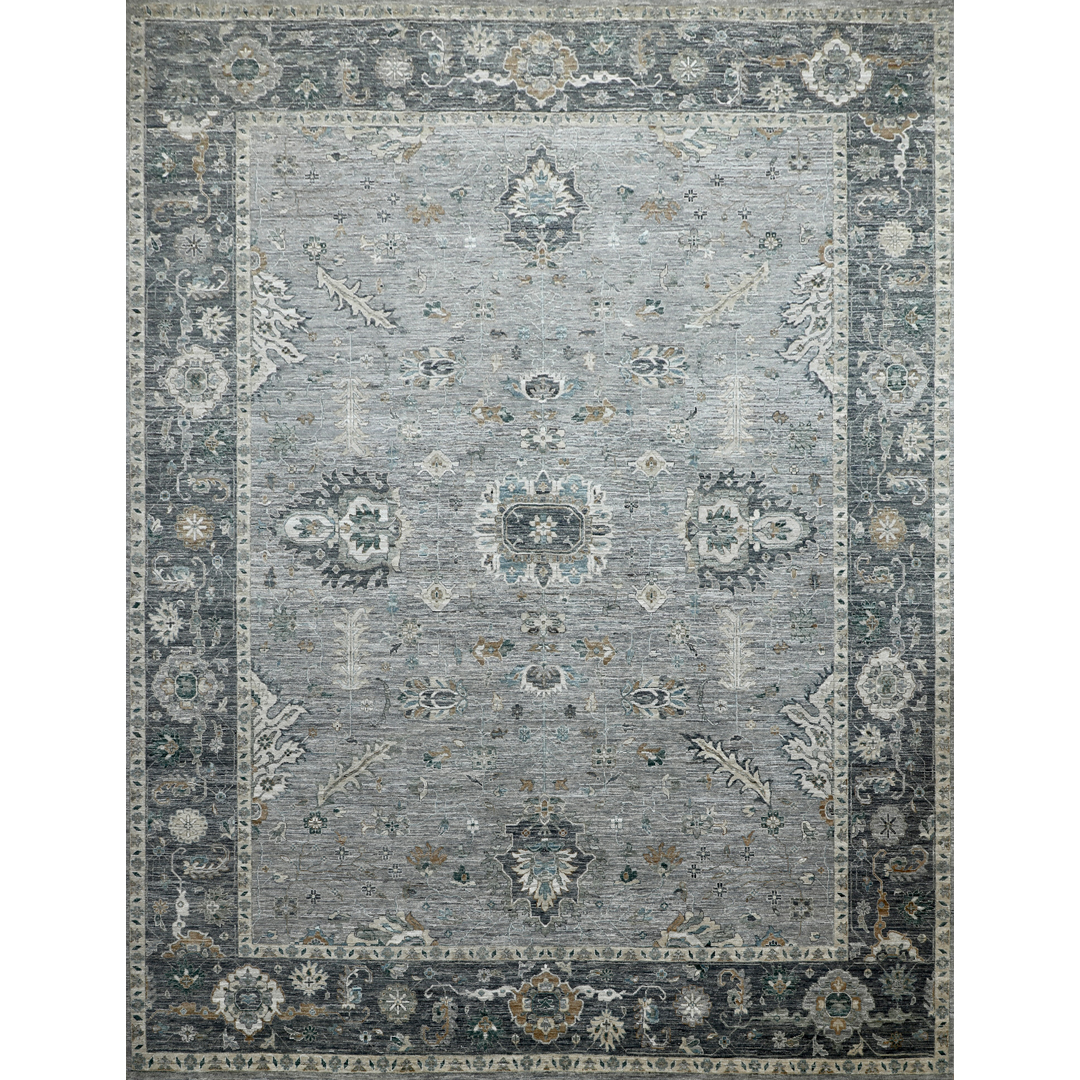
A small geometric upholstery print can sit beside larger traditional rug motifs. The change in scale helps each surface keep its own identity. A repeating blue diamond fabric, for example, can connect with blue details in a rust-and-ivory rug without copying its medallions. Let one pattern lead in contrast; two equally intense surfaces may feel crowded. Keep additional fabrics mostly plain while you decide whether the pairing feels comfortable in your actual room.
Example pairing: Small blue diamonds on a cream sofa with larger terracotta and blue rug motifs.
A useful adjustment: If the rug feels too strong, choose a more muted version or one with a larger neutral ground. Do not judge scale from separate cropped product photos alone.
5. Let the Rug Lead beside Tonal Upholstery
Swipe to explore the three rugs →
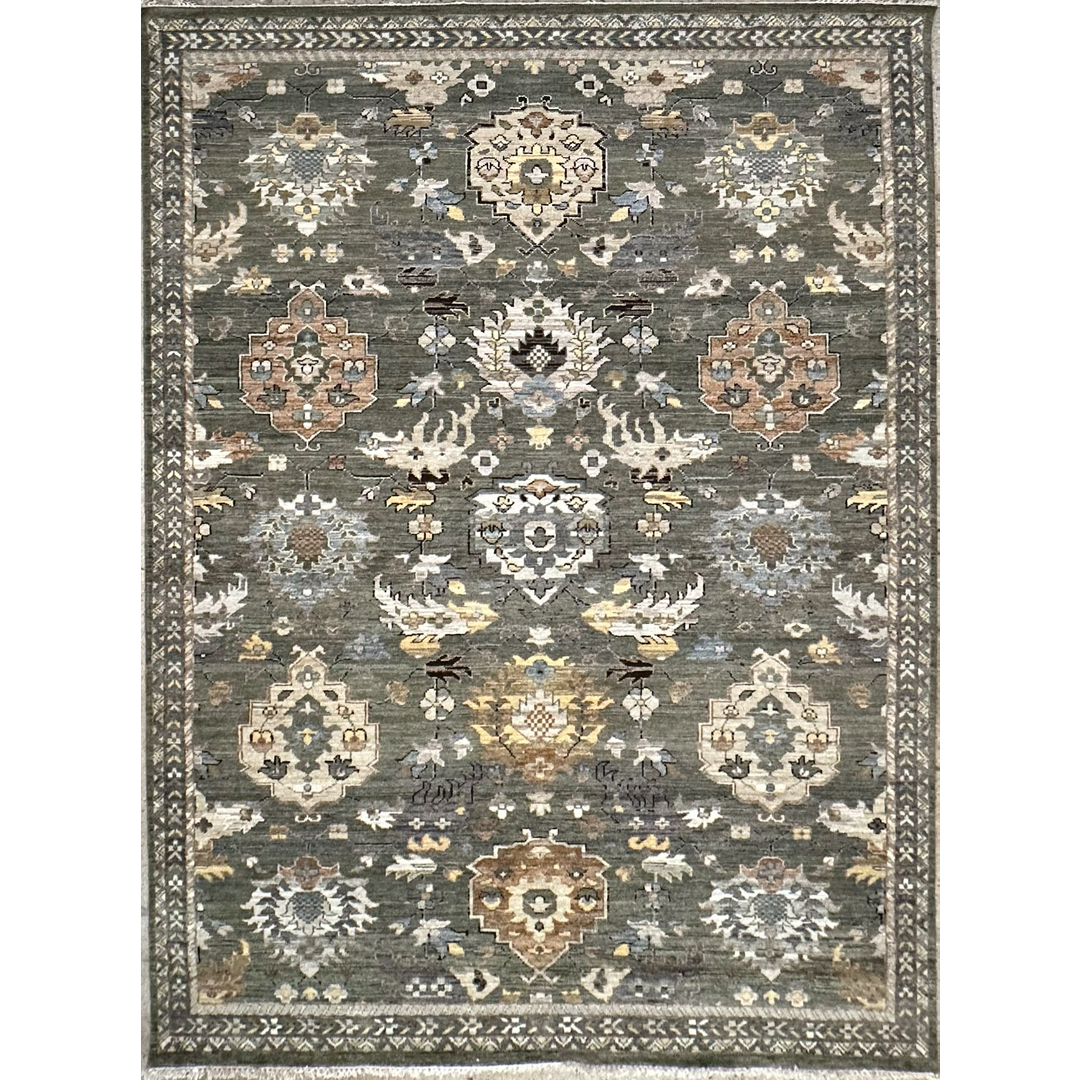
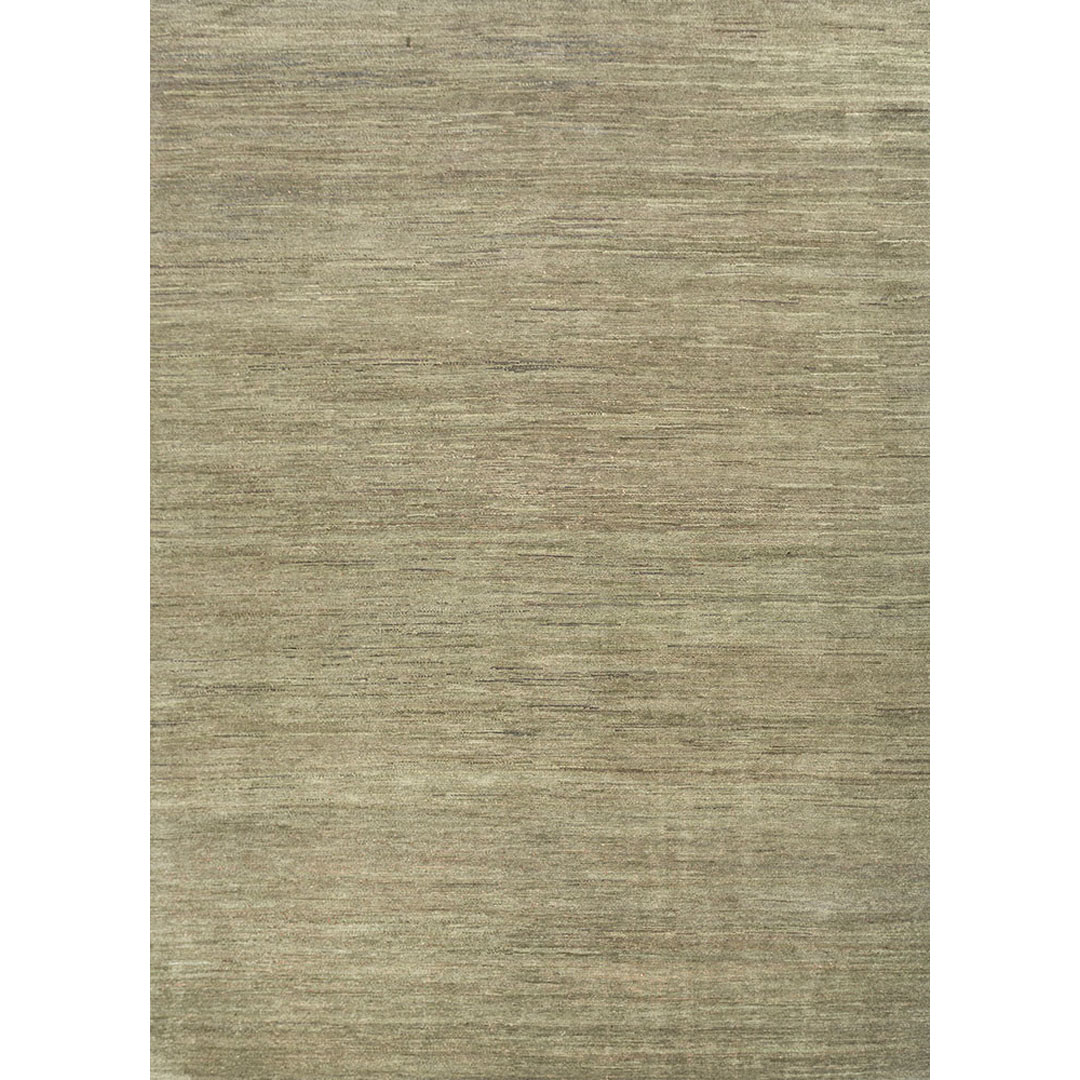

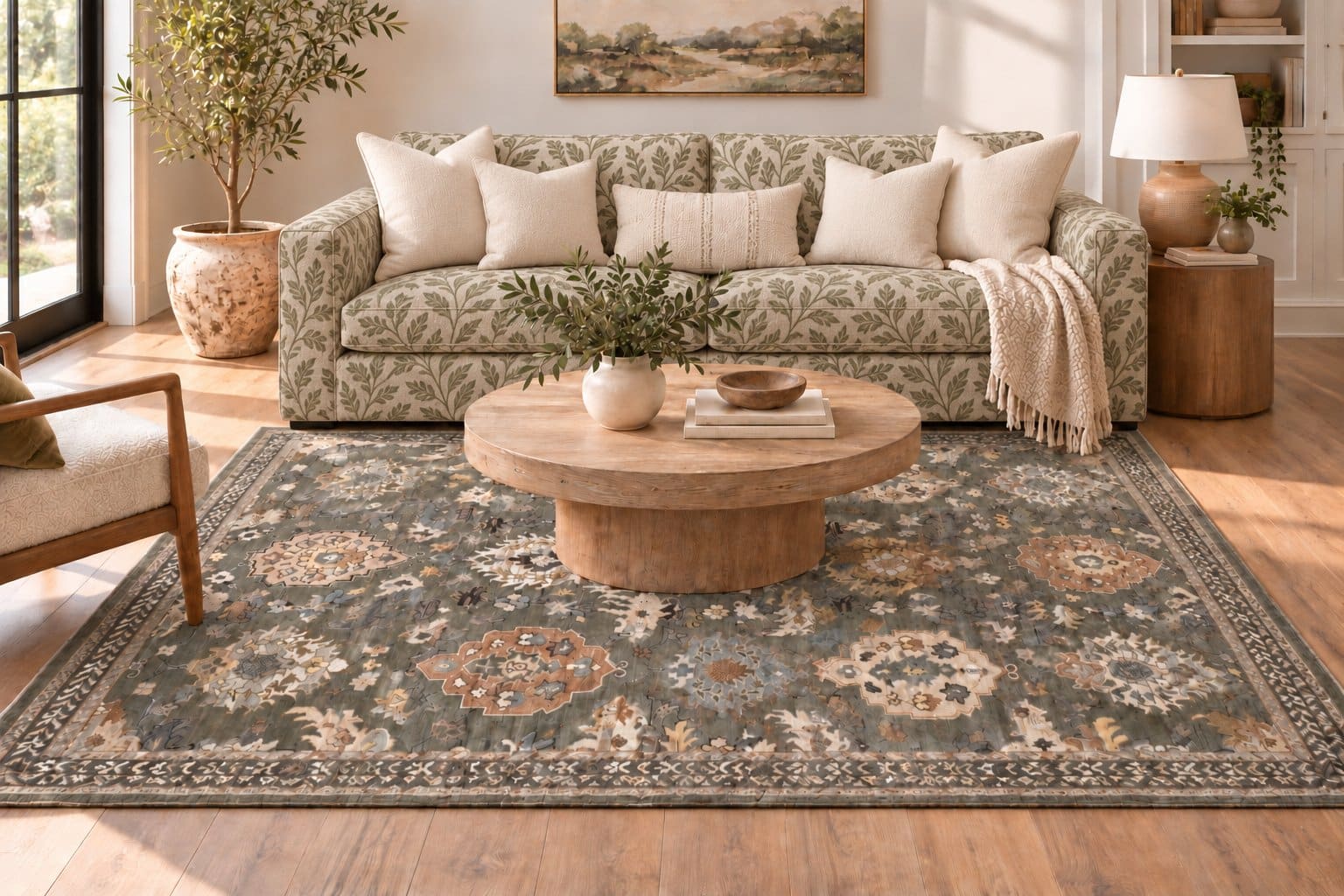
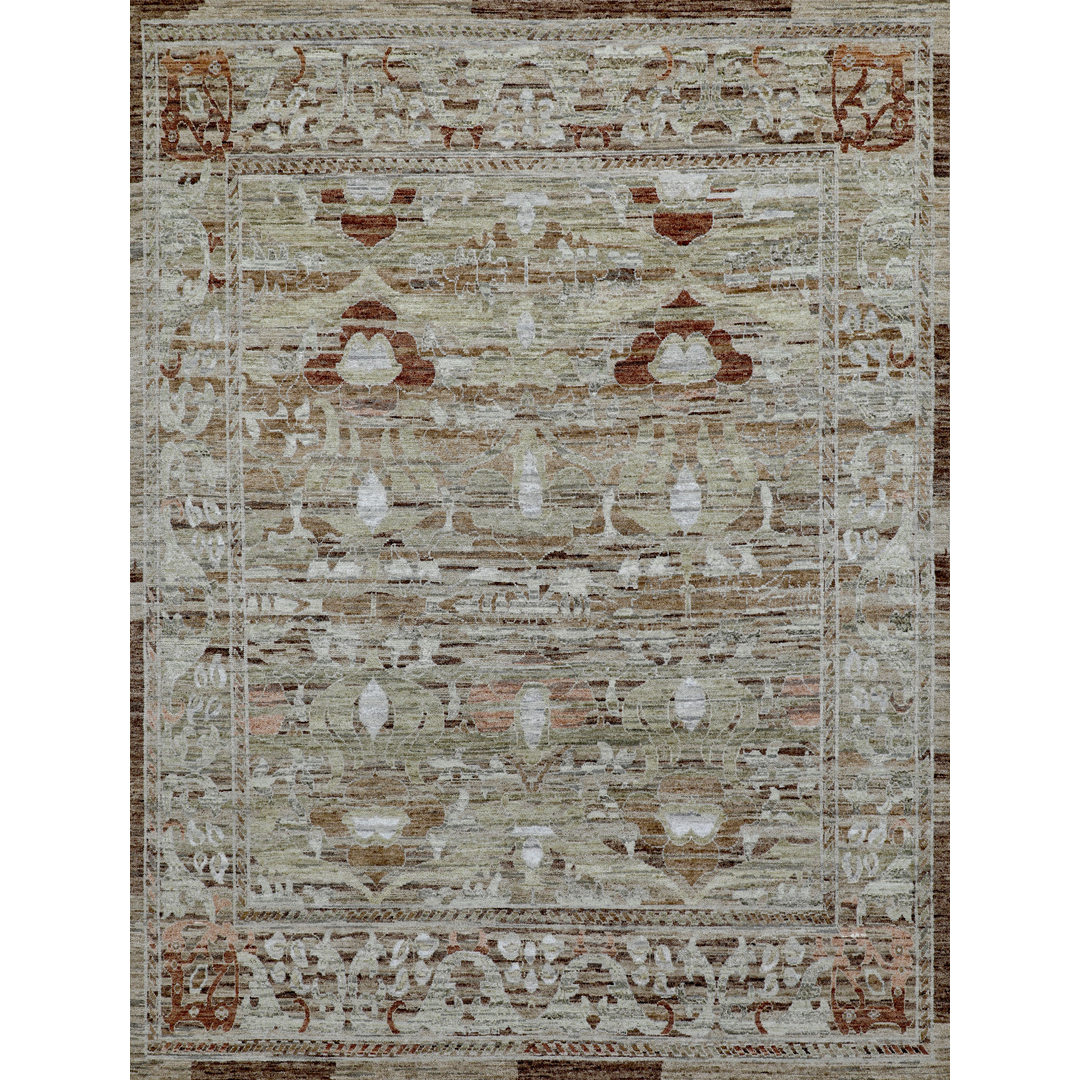
A low-contrast sofa print gives a more detailed rug room to lead. Tonal leaves or woven botanical motifs can read almost like a solid fabric across the room. An olive rug with cream and muted rust details can then provide the main movement on the floor. Repeat one upholstery color in the rug, but allow the rug to introduce another restrained accent. The important comparison is visual strength, not whether both products are described as patterned.
Example pairing: Cream and olive tonal botanical upholstery with a more defined olive traditional rug.
Keep it connected: Use a plain cream throw or a small olive accessory. Adding matching botanical curtains may make the overall pattern level stronger than intended.
6. Connect Fine Florals through Color
Swipe to explore the three rugs →


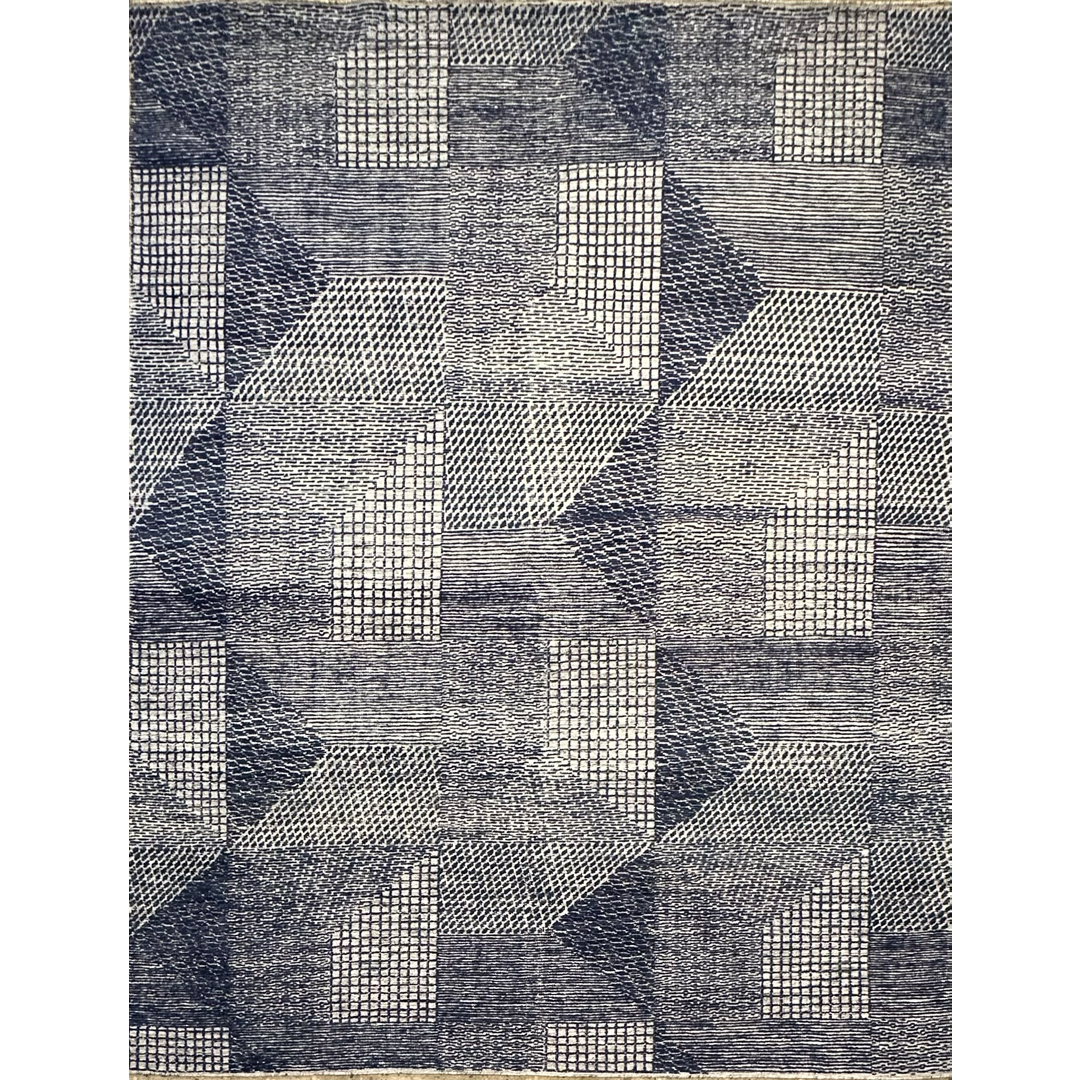
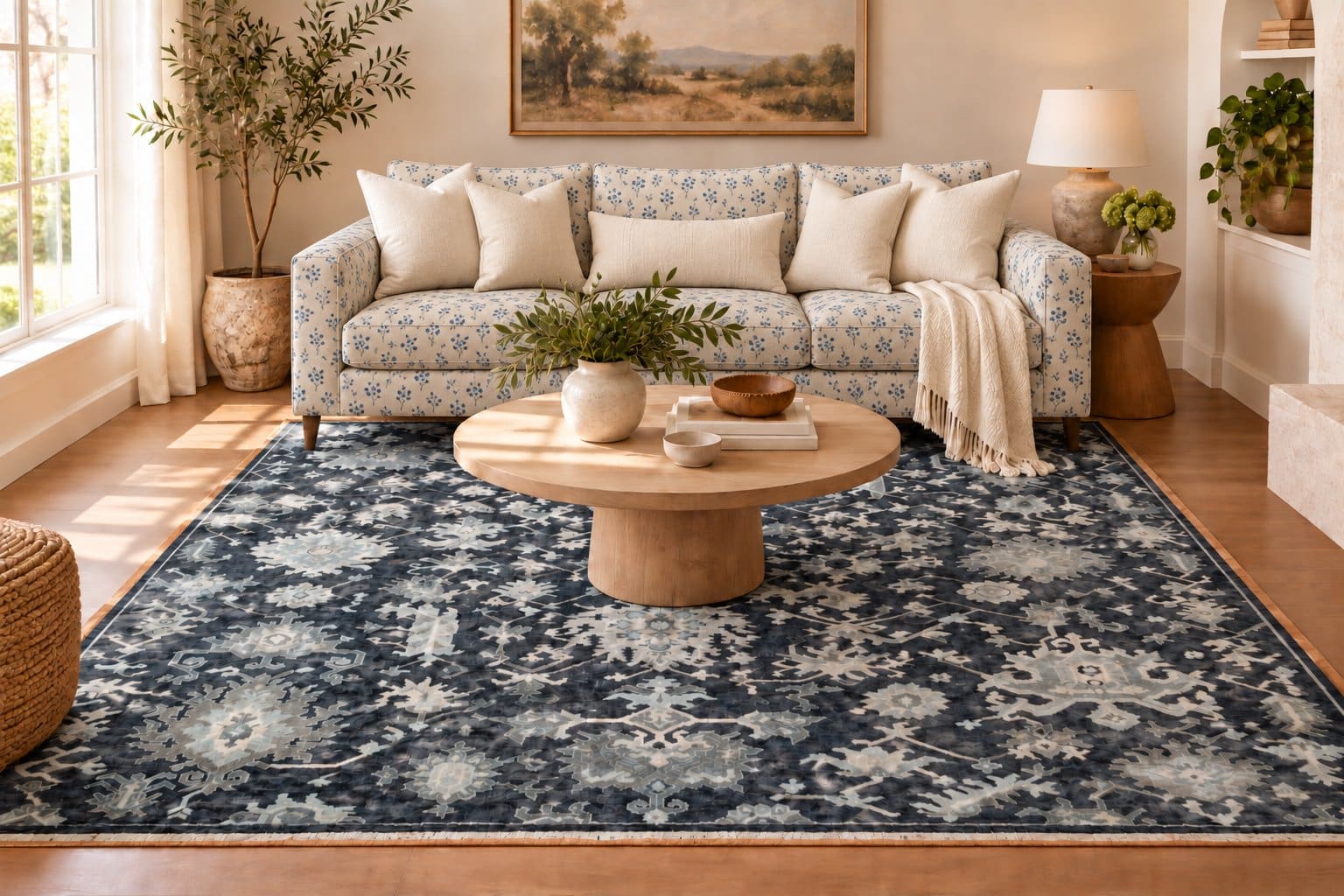
Shared colors can connect two patterns even when their motifs are different. A fine blue floral sofa can pair with a navy-and-ivory rug whose larger shapes read separately. Ivory in both surfaces gives continuity, while the deeper rug ground adds definition. This approach needs enough difference in scale and contrast to avoid looking like an accidental near-match. Test the actual fabric and rug together; blue can shift noticeably beside warm flooring and evening light.
Example pairing: Small scattered blue flowers on ivory fabric with a navy rug and larger pale motifs.
Room balance: Plain walls and cushions keep this two-pattern scheme easier to read. If the floor already has a strong pattern, compare a quieter rug before adding more detail.
For a deeper blue scheme, see our guide to choosing a rug for a navy couch.
Three Pattern Mixing Mistakes to Avoid
Copying the same motif at the same scale
Two similar floral prints or grids can look like an unfinished match. Keep a color connection and compare a different motif size or shape.
Matching the sofa while ignoring the floor
Wood undertones and patterned flooring affect the result. Include a visible strip of floor when comparing a rug sample with upholstery.
Adding pattern to every accessory
A sofa and rug may already provide enough movement. Try plain cushions and curtains before deciding that either main piece needs replacing.
Questions about Rugs and Patterned Sofas
Can a patterned rug go with a patterned sofa?
Yes. Start with a shared color, then compare motif scale, spacing and contrast. A small upholstery print and a larger rug pattern can be easier to distinguish than two nearly identical designs.
Does a floral sofa need a plain rug?
No. A quiet textured rug is a useful starting point for bold florals, but a patterned rug can work if it has a different scale and a connected palette. Compare the whole room rather than the prints in isolation.
Should the rug match the sofa background or an accent color?
Either can work. Repeating the background usually creates a quieter relationship; repeating a petal, stripe or leaf color makes a stronger connection. Check that the rug also works with the floor and walls.
What if the curtains are patterned too?
Include all three fabrics in the comparison. Let one pattern lead and make the others quieter in scale or contrast. If the room feels crowded, simplify an accessory before replacing the sofa or rug.
How to Choose the Right Rug
Use a three-step comparison. First, identify the dominant upholstery color and choose a rug with a related shade or background. Second, compare motif scale: large florals, fine checks and broad stripes should not all repeat at the same size. Third, decide which surface leads in contrast. Place a rug sample on the floor beside the sofa and check from the doorway in daylight and evening light. Measure the seating group as well; a rug that reaches beneath the front sofa legs can connect the furniture more clearly than a small rug floating beneath the coffee table.
Conclusion
The most comfortable pairing usually has a clear relationship and some breathing space. A large floral sofa can benefit from a quieter rug, while a fine or tonal print may support more detail on the floor. Use color to connect the pieces, then vary scale, spacing or contrast so they remain distinct. Choose the combination that works with your flooring, lighting and other fabrics rather than matching the two product photos exactly.
For furniture layout and dimensions, use our rug size guide.
Read Next
Pairing a rug with patterned curtains
Not sure which pattern should lead? Share a room photo, an upholstery close-up and approximate rug dimensions with Rouzati Rugs to discuss suitable options.
The product thumbnails are original catalog photos and link to their corresponding product pages. Room scenes are conceptual illustrations based on a real rug photo; the sofas are illustrative and are not products offered here. Generated scenes may not reproduce every rug detail or color exactly. Confirm dimensions, materials and current availability on the product page.