

ROUZATI / THE MEASUREMENT WORKBOOK
Will the door
clear the rug?
Rug Thickness and Door Clearance:
Measure Before You Buy
Measure the gap. Add the whole stack.
Check the full swing.
Schematic side view, not to scale. C = door-to-floor gap; R = rug; P = pad. Actual doors, floor levels and rug edges vary.
Use one unit throughout. Include any other layer as L. This is a screening calculation, not a guaranteed fit.
What thickness will fit beneath your door?
There is no single rug thickness that fits every doorway. Compare the smallest gap beneath the moving door with the full thickness of the rug, pad and any other layers in its path. Then check the actual combination before committing to it.
Rugs Direct recommends checking the door swing against the rug and pad together. RugPadUSA likewise identifies door clearance as a constraint when choosing cushioning.1, 2
Pile height is not always the same as total rug thickness. Ask whether a published measurement includes the backing or foundation, and whether the edge or binding is higher than the centre. A rug described as “low profile” still needs an actual measurement.
01 / GET THE ROOM READY
Measure the lowest gap,
not just the closed door.
Clear the proposed rug position. Open and close the door slowly over the area it would cover. Note any floor rise, threshold, bottom seal or existing rubbing. Stop if the door binds; do not force it.
Measure the vertical space from the finished floor to the lowest part that would pass over the rug. Check several points through the swing, including where the door first meets the proposed rug edge. Record the smallest reading as C.
A measurement only at the closed position can miss a tighter point farther into the room. Keep a note of exactly where your smallest reading was taken.
Get a complete thickness measurement for the rug
Ask for the full height of the exact rug you are considering. Include the foundation or backing under the pile. Ask about the thickest edge or binding that the door would cross, not just a centre measurement.
If you can inspect the rug, rest it normally on a flat surface. Measure its height without pressing it flat to make the number smaller. For an uneven or textured surface, record the highest relevant area in the door’s path and ask how the seller measured it.
Keep the rug ID with that answer. A thickness estimate for a similar design or another size is not a measurement of your particular piece. Photos help identify what is being discussed, but do not establish a millimetre value.
Add the pad and every other layer
The pad belongs in the calculation even when it is marketed as thin. Record the selected pad’s stated thickness as P, then verify how the actual rug-and-pad stack sits together. Include any additional layer or gripper that raises the area crossed by the door as L.
A lower-profile pad may help with a tight space. RugPadUSA describes RugPro as a low-profile gripping pad; that is an example of choosing pad function and thickness together, rather than assuming maximum cushioning is always preferable.3
Confirm pad compatibility with the rug and the floor manufacturer’s instructions. Do not solve a height problem by ignoring slipping, an unsuitable backing or another installation concern. Our rug pad cutting guide covers pad dimensions; this check is about the extra height it adds.
02 / RUN A SCREENING CALCULATION
A worked example.
No product measurements assumed.
Imagine a measured gap of 15 mm, a rug of 8 mm, a pad of 4 mm and another layer of 1 mm. The total stack is 13 mm, leaving 2 mm in the arithmetic.
That does not certify that the door will clear in use. Measurement uncertainty, a higher edge or movement of the rug could use up that space. Check the real stack and follow any product-specific clearance guidance.
15 − (8 + 4 + 1)
2 mmcalculated space left
Not a universal clearance allowance.Read the result with care
| Check | What can be missed | What to do |
|---|---|---|
| Pile height only | Foundation, backing or a higher finished edge may be missing. | Request full thickness at the area the door will cross. |
| Rug measured, pad forgotten | The pad raises the whole surface. | Add the actual selected pad and any other layer. |
| One gap reading | Floor height or the lowest moving part may vary along the swing. | Record several points and use the smallest relevant gap. |
| Equal gap and stack height | The calculation leaves no space. | Do not treat equality as a successful clearance check. |
| A small positive remainder | A numerical remainder does not prove free movement. | Verify the real stack through opening and closing. |
| Door catches after placement | The rug, pad, edge or another condition is interfering. | Stop forcing the door and revise the arrangement. |
03 / KEEP A RECORD
Your doorway worksheet
Copy these fields into a note or use the separate printable worksheet included with this article package. Keep all readings in millimetres or all in inches. One inch equals 25.4 mm.
MY DOORWAY RECORD
Actual stack checked through the full swing: Yes / No
Any rubbing, bunching, seal contact or difficult closing?
Next action / seller question:
Test the combination without forcing the door
Where an inspection or sample arrangement is available, check the actual rug with its intended pad in the intended position. Move the door slowly through the whole usable swing and back again. Watch the first edge it encounters as well as the centre of the rug.
Look for dragging, lifting, bunching or contact with a sweep or seal. The door should still operate normally. If it catches, stop rather than repeatedly pulling it over the fibres. Recheck the position and stack instead of relying on the pile being crushed down later.
A smooth test today is also a reason to keep the rug flat and correctly positioned, not permission to ignore a corner that later lifts. If that happens, our guide to why rug corners curl gives a separate inspection checklist.
What if there is not enough room?
Consider moving the rug outside the door’s path, choosing a lower-profile rug or selecting a suitable thinner pad. Recalculate and test each proposed combination. A different position can be more useful than trying to gain a fraction of height by pressing or shaving the rug.
Do not trim the pile or alter the door, sweep or seal as an automatic fix. Changes to the door assembly need door-specific advice. If you cannot find a combination that lets the door operate freely, choose another placement.
CATALOG CANDIDATES / MEASURE THE EXACT PIECE
Two runners. Two measurements to request.
These are original Rouzati catalog examples, not tested clearance solutions. No thickness is supplied or inferred here. Ask for full height and edge measurements for the exact rug ID before deciding whether either belongs near your door.
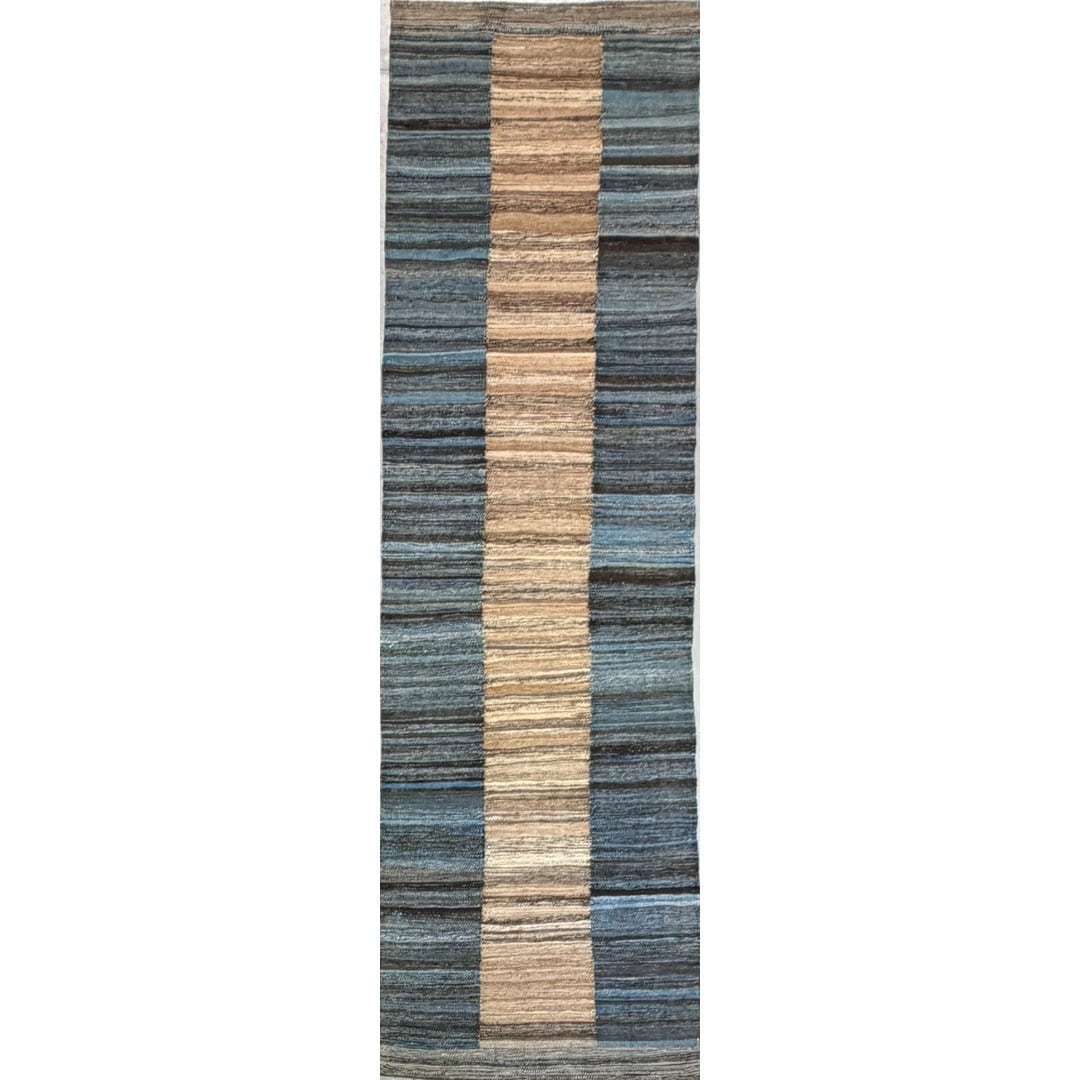
Fantastic Flatweave
Modern Afghan kilim runner
2′9″ × 9′6″ · Rug ID 103118
The flatweave description is a starting point for questions, not proof that it fits your gap.
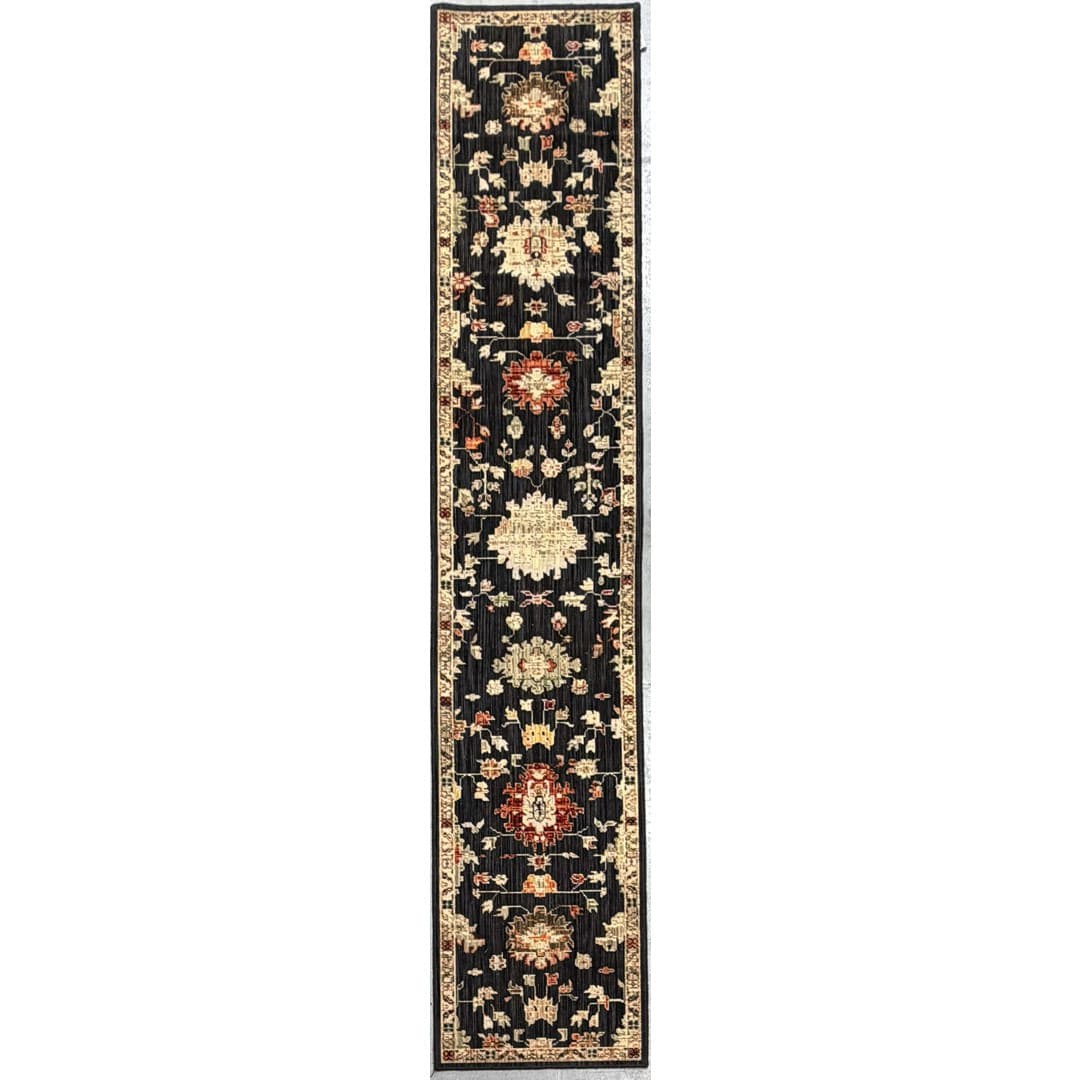
Midnight Motif
Nourison Heriz design runner
2′4″ × 12′ · Rug ID 108551
Request full thickness, including the finished edge, and the intended pad combination.
Door clearance questions
How much clearance should I leave above the rug?
There is no universal allowance in this guide. Check the actual door, full rug-and-pad stack and any product-specific guidance. A tiny calculated remainder is not a guarantee of free movement.
Can I use the listed pile height as the full thickness?
Only if the seller confirms what that measurement includes. Ask about the backing or foundation and the highest edge crossed by the door.
Will a flatweave always fit?
No. The rug still has a full thickness, and a pad or gripper can add height. Measure the exact combination.
Can I leave out the pad to gain space?
Reconsider the whole arrangement, including grip and floor compatibility. Do not ignore sliding or another support requirement just to reduce height.
What if the door just brushes the rug?
Stop and reassess rather than assuming the contact is harmless. Look for dragging, lifted edges and difficulty opening or closing.
Should I buy first and rely on returns if it catches?
Ask for measurements and current purchase terms before ordering. This guide does not assume any seller’s return policy or guarantee that a rug can be returned after fitting.
Check height before choosing the look.
Keep the doorway record with the rug ID and pad details. For the next decision, explore our rug materials guide or the photos and questions to request when buying online.
Sources & measurement notes
- Rugs Direct: How Door Clearance Affects Entryway Rug Size and Thickness
- RugPadUSA: Cushioned Rug Pads — Thickness and Door Clearance
- RugPadUSA: RugPro — Low-Profile Pad Description
Reviewed October 29, 2026. The calculation, worksheet and example are explanatory tools, not a fit guarantee, installation standard or door-modification instruction. The diagram is schematic and not to scale. Catalog photographs do not establish thickness; no clearance test has been performed on either featured rug.