

Why Your Office Needs a Rug
The right office rug can create a productive and comfortable environment while setting the tone for your workspace. In 2026, office rugs matter in both home offices and corporate offices because they add comfort, improve acoustics, and make the room feel more professional.
A rug adds warmth under your feet during long hours at the desk, especially over wood, tile, concrete, or luxury floors. Rugs inherently absorb sound, which can minimize echo in offices, reduce noise from casters, and make Zoom or Teams calls feel less hollow.
Rugs can enhance workplace acoustics and establish visual zones while preventing trip hazards when sizing and placement are correct. In multipurpose rooms, the rug helps define the office from the rest of the space and creates an inviting atmosphere with practical benefits.
Choosing the Right Size Rug for Your Office
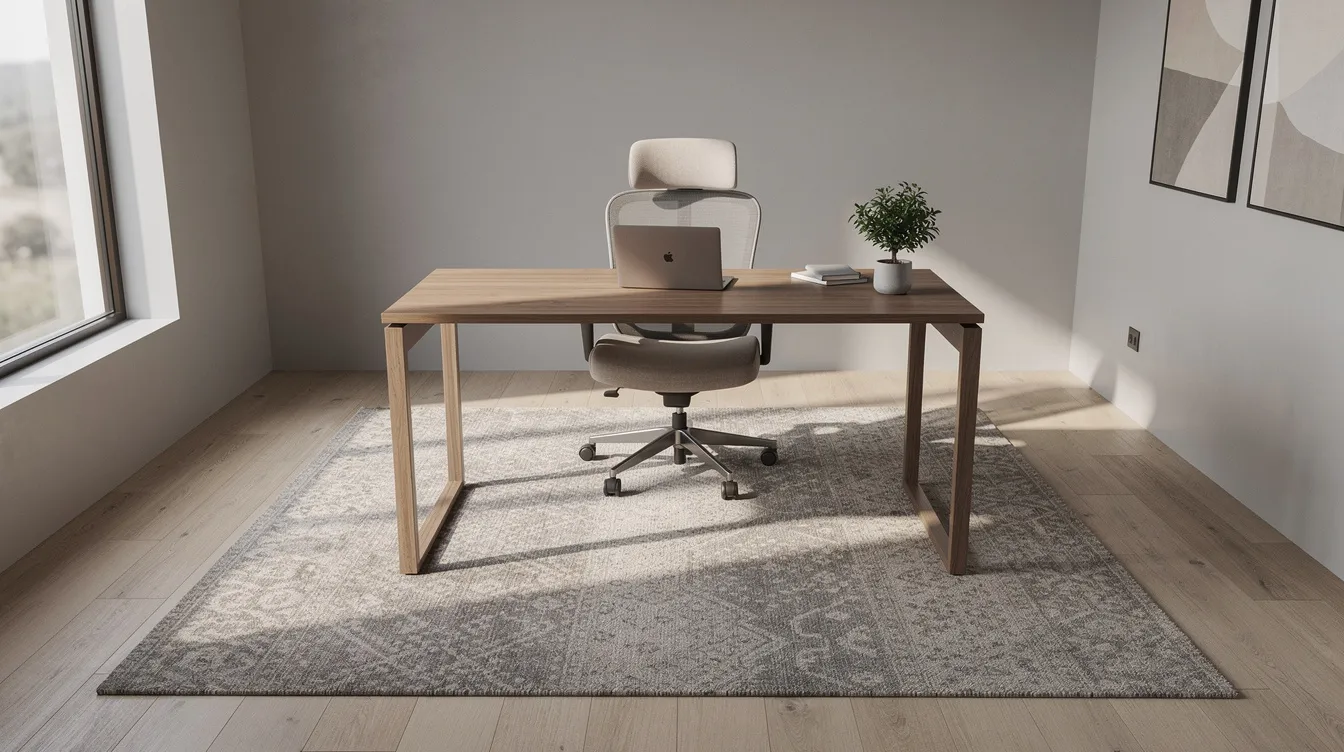
Office rug sizing should be proportionate to your desk or conference table setup, with larger rugs, such as 6×9 or 8×10, helping to anchor the workspace and protect floors.
- Small home office: 5’ x 8’ or 6’ x 9’ often works for a compact desk and chair.
- Larger office: 8’ x 10’ can hold more office furniture, guest chairs, or shelving.
- Custom: Rouzati Rugs can measure and create custom sizes or broadloom carpeting for tight spaces.
- Border: A large well-proportioned rug can give a sense of spaciousness and balance in an office, ideally accommodating all furniture while leaving about 40 cm of clear floor space between the rug’s edge and the walls.
- Desk rule: When placing a rug in an office, ensure that the desk and chair both sit fully on the rug, allowing enough space for the chair to roll back without falling off the edge.
- Conference rooms: Conference room rugs should extend at least 32 inches beyond the edge of the conference table to keep chairs on the rug when pulled out; 9’ x 12’ or larger is common.
Best Rug Materials & Pile Heights for Home Office Chairs
Not every beautiful rug is practical under office chairs. For daily function, low-pile and flat-weave rugs provide a smooth surface for rolling office chairs and are easy to clean, making them ideal for high-use workspaces.
- A low pile rug, ideally around 0.25–0.35 inches, makes all the difference for smooth roll and less wear.
- Wool is a preferred natural choice for rugs due to its resilience and natural stain resistance.
- Nylon and polypropylene are high-performance synthetic fibers that offer stain resistance and withstand high commercial foot traffic.
- Rugs made from durable materials like polypropylene or polyester can handle foot traffic and chair movement without wearing thin.
- Dense loop piles are effective for acoustic dampening in open-concept spaces or conference rooms.
- Avoid shag or very plush rugs under a rolling chair; use them in a lounge corner, reading chair area, or fun creative nook instead.
- Add a clear mat only when absolutely necessary for very heavy office chairs.
Color, Pattern & Style: Matching Your Office Rug to Your Space
A rug can be the design anchor for a traditional study, contemporary office, rustic library, or minimalist tech workspace.
Neutral tones in rugs can make rooms feel larger and brighter, while earthy shades bring warmth. Neutral office rugs in colors like beige, grey, taupe, or ivory create a clean, timeless look, while darker tones can help mask everyday wear. For professional environments, solid neutrals or subtle patterns are preferable to avoid visual distraction.
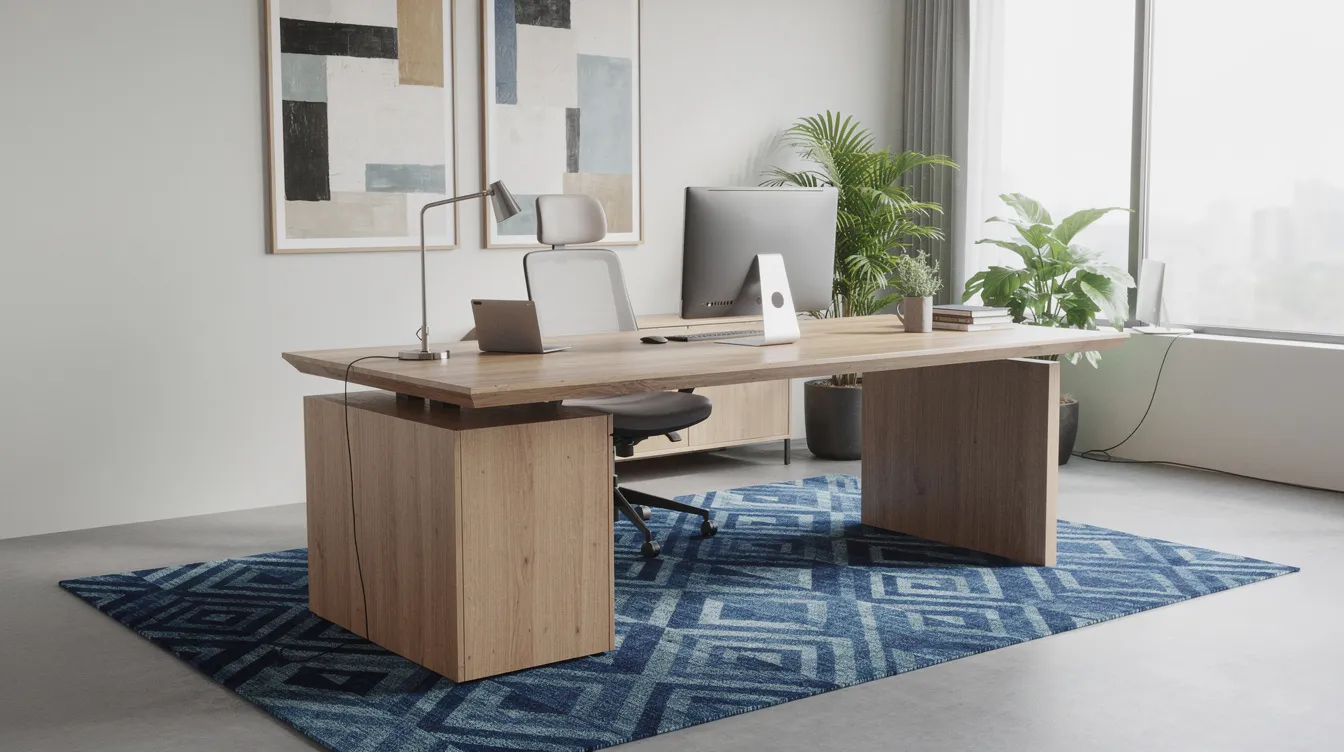
For personality, incorporating a pop of color or a bold, multi-color pattern in an office rug can energize the workspace and enhance creativity. Try blue or charcoal for executive rooms, dark red or vintage patterns for studios, and geometric modern patterns for a crisp look. Antique, Oriental, classic, and vintage rugs add character; modern rugs complement chrome, black metal, and clean-lined furniture legs.
Protecting Floors: Backing, Rug Pads & Rolling Chairs
The right backing and rug pad help protect hardwood, engineered wood, tile, concrete, and luxury vinyl floors.
- Using a quality rug pad is recommended to ensure safety and prevent slipping.
- Choose 100% natural rubber or felt-and-rubber pads cut to size.
- Avoid cheap latex, PVC, or adhesive pads that may stick, discolor, or damage floors.
- Thin, dense pads support a rolling chair better than overly soft pads.
- Rouzati Rugs can advise on safe pad material for North Shore homes and offices.
- Use polycarbonate chair mats when office furniture is very heavy or casters are aggressive.
Office Rug Placement Ideas for Different Workspaces
Placement should support function first, then style.
- Home office: Center the area rug under the desk and chair, with extra room behind the chair.
- Study or library: Use a Persian, Oriental, or traditional rug under the desk, table, and seating, leaving an even wood-floor frame.
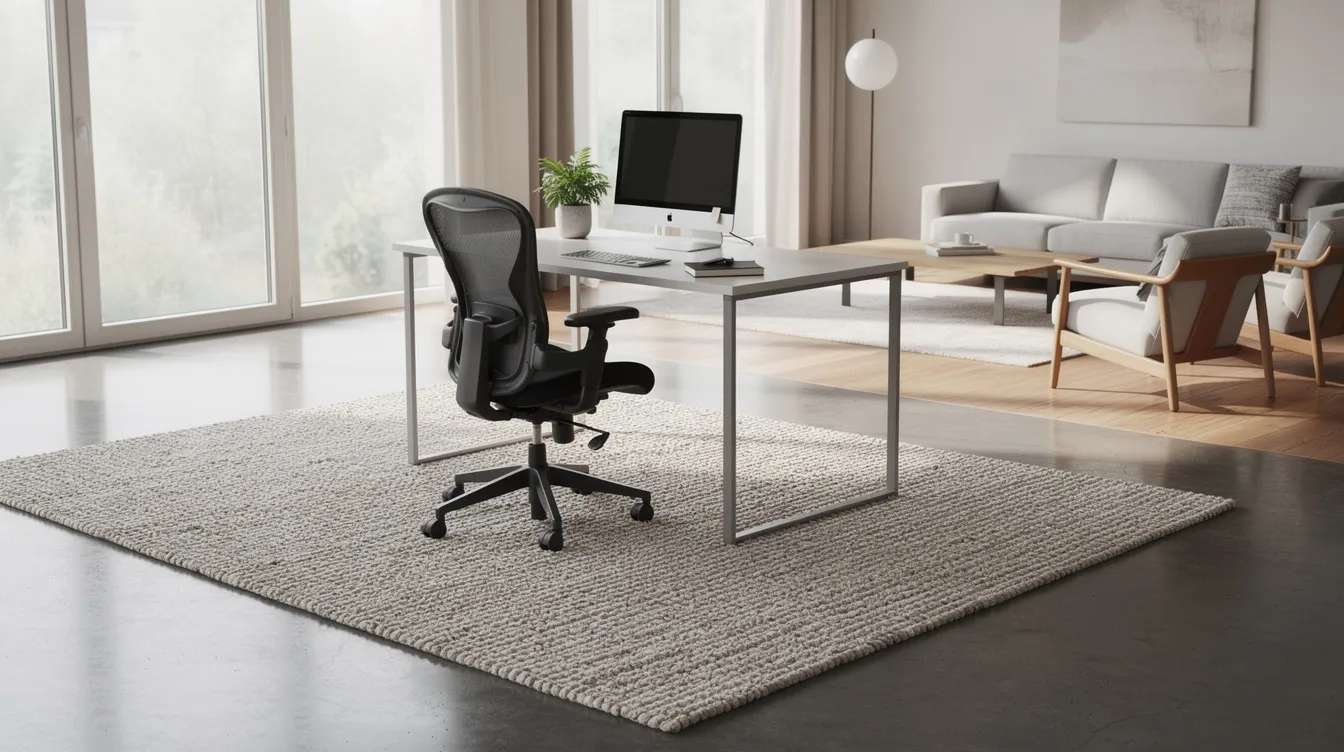
- Open-plan room: Use the rug to define the workspace so the desk, chair, and small bookcase sit inside one footprint.
- Corporate office: Place a durable rug under a desk cluster or meeting table to elevate comfort and create a more inviting setting.
- Shared space: Try coordinated rugs or a runner to connect zones without crowding the world of furnishings.
Caring for Your Office Rug: Cleaning, Repair & Longevity
Office rugs take daily dirt, feet, coffee, and caster tear, so care protects your investment.
Vacuum weekly with suction or an adjustable setting. Blot spills quickly. Rotate the rug every 6–12 months so the chair path does not create uneven wear. Busy offices may need yearly deep cleaning; low-use home offices may need cleaning every 18–24 months.
Check the rug pad every few years, because compressed pads lose comfort and grip. If corners curl, fringe frays, or an edge opens, Rouzati Rugs offers rug cleaning, reweaving, fringe repair, binding, and serging in the Wilmette and Evanston area.
How Rouzati Rugs Helps You Find the Perfect Office Rug
Rouzati Rugs makes it easier to shop for the right rug by combining product knowledge with in-home practicality. Our collection includes antique, vintage, modern, transitional, custom, and office-appropriate rugs selected for style and durable function.
We help clients choose color, size, texture, patterns, and material for a specific office layout. We also offer in-home trials where available, custom cutting and binding, stair runners that coordinate with office rugs, rug pads, cleaning, and repair. Visit the showroom or contact Rouzati Rugs to explore options for your workspace.
FAQ: Office Rugs & Workspace Design
Can I use an antique or Oriental rug under a rolling office chair?
Yes, but use a quality pad, rotate it regularly, and avoid grinding casters into delicate areas. Rouzati Rugs can assess whether the piece belongs under a desk or in a lower-traffic office area.
What rug works best if my office has both a desk and a small seating area?
Choose a larger rug that anchors both zones, with the desk fully on the rug and sofa or chair front legs on it. Two coordinated rugs can also work in a large room.
How do I choose an office rug if I frequently change my furniture layout?
Pick a slightly larger neutral rug with timeless pattern and flexible placement. Custom sizing can help if your layout changes often.
Are washable rugs a good idea for home offices with kids or pets?
Machine-washable rugs are designed for easy cleaning, making them suitable for high-energy workspaces where spills and dirt are common. Choose low-pile, tightly woven styles.
What if my office is very small-do I really need a rug?
Yes, if it improves comfort and scale. A light, low pile rug can make a compact office feel finished without overwhelming the room.
Rugs for Office: How to Choose the Perfect Office Rug for Style, Comfort & Performance
Key Takeaways
- Choose low pile, flat-weave, or dense office rugs under office chairs so a rolling chair can roll smoothly without bunching.
- The ideal size rug lets the desk and chair sit fully on the rug, with enough space to pull back without dropping off the edge.
- A quality rug pad protects floors, prevents slipping, and supports safer chair movement.
- Rouzati Rugs offers area rugs, custom rugs, stair runners, and rug pads for a home office, professional office, or larger workspace on the Chicago North Shore.
Why Your Office Needs a Rug
The right office rug can create a productive and comfortable environment while setting the tone for your workspace. In 2026, office rugs matter in both home offices and corporate offices because they add comfort, improve acoustics, and make the room feel more professional.
A rug adds warmth under your feet during long hours at the desk, especially over wood, tile, concrete, or luxury floors. Rugs inherently absorb sound, which can minimize echo in offices, reduce noise from casters, and make Zoom or Teams calls feel less hollow.
Rugs can enhance workplace acoustics and establish visual zones while preventing trip hazards when sizing and placement are correct. In multipurpose rooms, the rug helps define the office from the rest of the space and creates an inviting atmosphere with practical benefits.
Choosing the Right Size Rug for Your Office
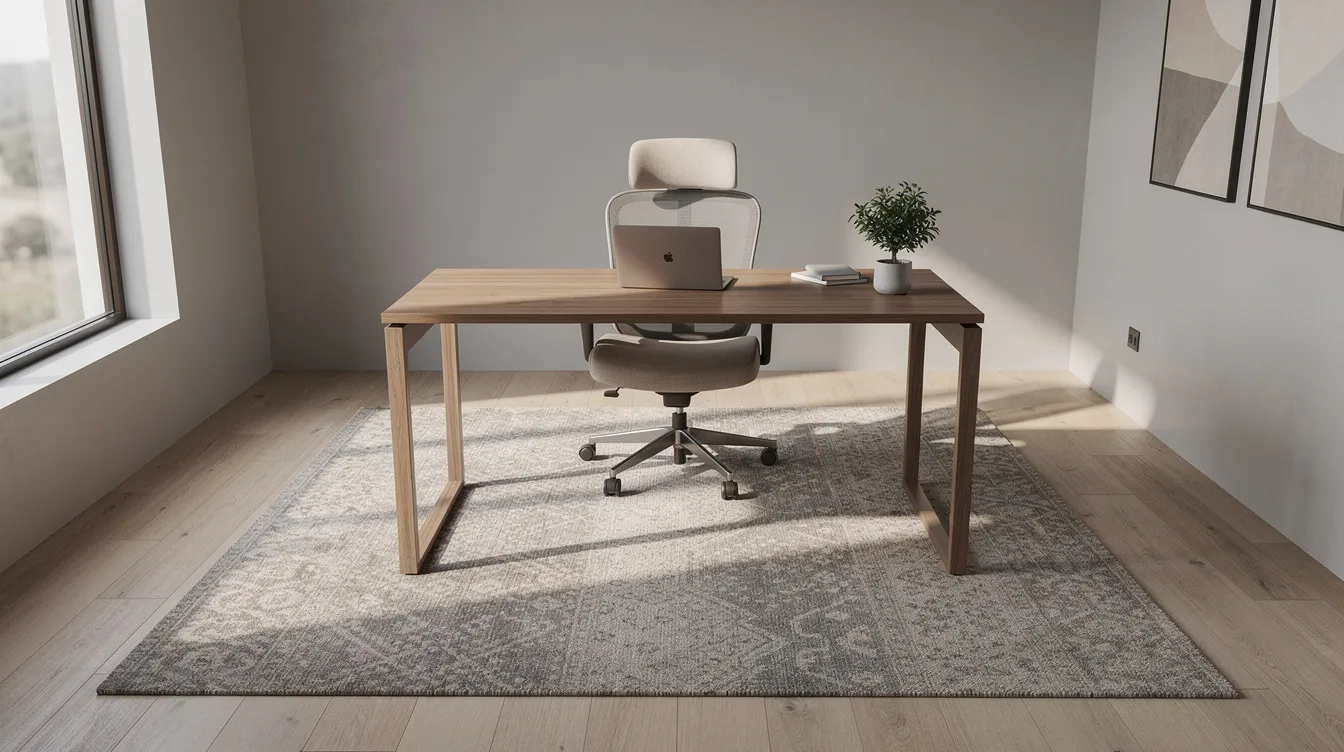
Office rug sizing should be proportionate to your desk or conference table setup, with larger rugs, such as 6×9 or 8×10, helping to anchor the workspace and protect floors.
- Small home office: 5’ x 8’ or 6’ x 9’ often works for a compact desk and chair.
- Larger office: 8’ x 10’ can hold more office furniture, guest chairs, or shelving.
- Custom: Rouzati Rugs can measure and create custom sizes or broadloom carpeting for tight spaces.
- Border: A large well-proportioned rug can give a sense of spaciousness and balance in an office, ideally accommodating all furniture while leaving about 40 cm of clear floor space between the rug’s edge and the walls.
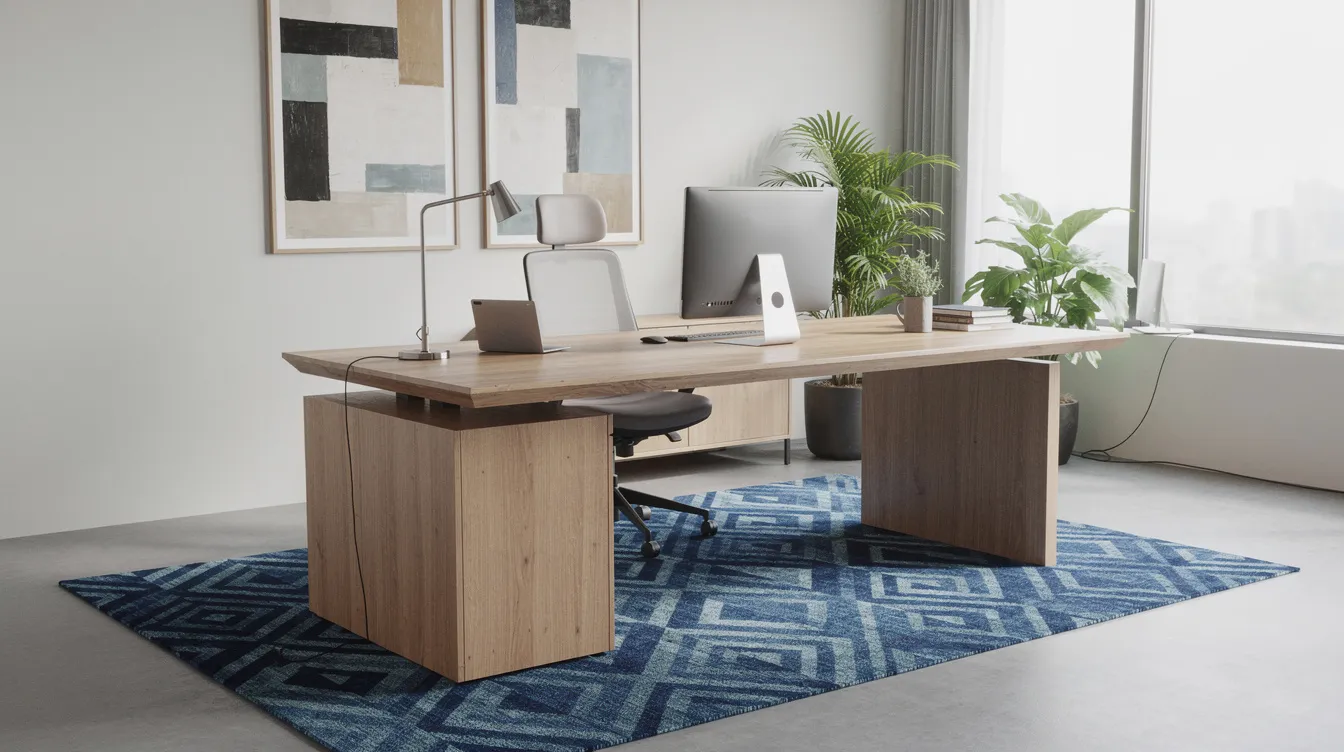
- Desk rule: When placing a rug in an office, ensure that the desk and chair both sit fully on the rug, allowing enough space for the chair to roll back without falling off the edge.
- Conference rooms: Conference room rugs should extend at least 32 inches beyond the edge of the conference table to keep chairs on the rug when pulled out; 9’ x 12’ or larger is common.
Best Rug Materials & Pile Heights for Office Chairs
Not every beautiful rug is practical under office chairs. For daily function, low-pile and flat-weave rugs provide a smooth surface for rolling office chairs and are easy to clean, making them ideal for high-use workspaces.
- A low pile rug, ideally around 0.25–0.35 inches, makes all the difference for smooth roll and less wear.
- Wool is a preferred natural choice for rugs due to its resilience and natural stain resistance.
- Nylon and polypropylene are high-performance synthetic fibers that offer stain resistance and withstand high commercial foot traffic.
- Rugs made from durable materials like polypropylene or polyester can handle foot traffic and chair movement without wearing thin.
- Dense loop piles are effective for acoustic dampening in open-concept spaces or conference rooms.
- Avoid shag or very plush rugs under a rolling chair; use them in a lounge corner, reading chair area, or fun creative nook instead.
- Add a clear mat only when absolutely necessary for very heavy office chairs.
Color, Pattern & Style: Matching Your Office Rug to Your Space
A rug can be the design anchor for a traditional study, contemporary office, rustic library, or minimalist tech workspace.
Neutral tones in rugs can make rooms feel larger and brighter, while earthy shades bring warmth. Neutral office rugs in colors like beige, grey, taupe, or ivory create a clean, timeless look, while darker tones can help mask everyday wear. For professional environments, solid neutrals or subtle patterns are preferable to avoid visual distraction.
For personality, incorporating a pop of color or a bold, multi-color pattern in an office rug can energize the workspace and enhance creativity. Try blue or charcoal for executive rooms, dark red or vintage patterns for studios, and geometric modern patterns for a crisp look. Antique, Oriental, classic, and vintage rugs add character; modern rugs complement chrome, black metal, and clean-lined furniture legs.
Protecting Floors: Backing, Rug Pads & Rolling Chairs
The right backing and rug pad help protect hardwood, engineered wood, tile, concrete, and luxury vinyl floors.
- Using a quality rug pad is recommended to ensure safety and prevent slipping.
- Choose 100% natural rubber or felt-and-rubber pads cut to size.
- Avoid cheap latex, PVC, or adhesive pads that may stick, discolor, or damage floors.
- Thin, dense pads support a rolling chair better than overly soft pads.
- Rouzati Rugs can advise on safe pad material for North Shore homes and offices.
- Use polycarbonate chair mats when office furniture is very heavy or casters are aggressive.
Office Rug Placement Ideas for Different Workspaces
Placement should support function first, then style.
- Home office: Center the area rug under the desk and chair, with extra room behind the chair.
- Study or library: Use a Persian, Oriental, or traditional rug under the desk, table, and seating, leaving an even wood-floor frame.
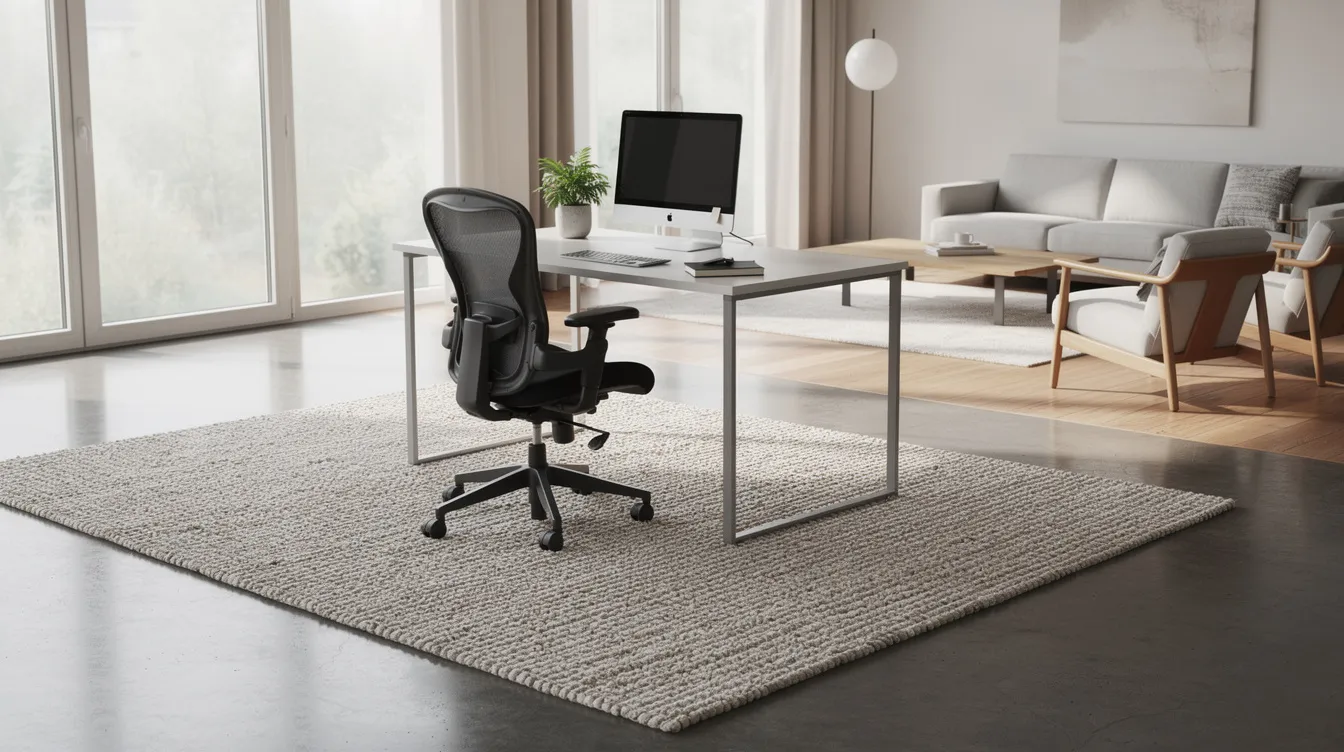
- Open-plan room: Use the rug to define the workspace so the desk, chair, and small bookcase sit inside one footprint.
- Corporate office: Place a durable rug under a desk cluster or meeting table to elevate comfort and create a more inviting setting.
- Shared space: Try coordinated rugs or a runner to connect zones without crowding the world of furnishings.
Caring for Your Office Rug: Cleaning, Repair & Longevity
Office rugs take daily dirt, feet, coffee, and caster tear, so care protects your investment.
Vacuum weekly with suction or an adjustable setting. Blot spills quickly. Rotate the rug every 6–12 months so the chair path does not create uneven wear. Busy offices may need yearly deep cleaning; low-use home offices may need cleaning every 18–24 months.
Check the rug pad every few years, because compressed pads lose comfort and grip. If corners curl, fringe frays, or an edge opens, Rouzati Rugs offers rug cleaning, reweaving, fringe repair, binding, and serging in the Wilmette and Evanston area.
How Rouzati Rugs Helps You Find the Perfect Office Rug
Rouzati Rugs makes it easier to shop for the right rug by combining product knowledge with in-home practicality. Our collection includes antique, vintage, modern, transitional, custom, and office-appropriate rugs selected for style and durable function.
We help clients choose color, size, texture, patterns, and material for a specific office layout. We also offer in-home trials where available, custom cutting and binding, stair runners that coordinate with office rugs, rug pads, cleaning, and repair. Visit the showroom or contact Rouzati Rugs to explore options for your workspace.
FAQ: Office Rugs & Workspace Design
Can I use an antique or Oriental rug under a rolling office chair?
Yes, but use a quality pad, rotate it regularly, and avoid grinding casters into delicate areas. Rouzati Rugs can assess whether the piece belongs under a desk or in a lower-traffic office area.
What rug works best if my office has both a desk and a small seating area?
Choose a larger rug that anchors both zones, with the desk fully on the rug and sofa or chair front legs on it. Two coordinated rugs can also work in a large room.
How do I choose an office rug if I frequently change my furniture layout?
Pick a slightly larger neutral rug with timeless pattern and flexible placement. Custom sizing can help if your layout changes often.
Are washable rugs a good idea for home offices with kids or pets?
Machine-washable rugs are designed for easy cleaning, making them suitable for high-energy workspaces where spills and dirt are common. Choose low-pile, tightly woven styles.
What if my office is very small-do I really need a rug?
Yes, if it improves comfort and scale. A light, low pile rug can make a compact office feel finished without overwhelming the room.