

Rug Moth Damage: Signs, Inspection and When to Seek Help
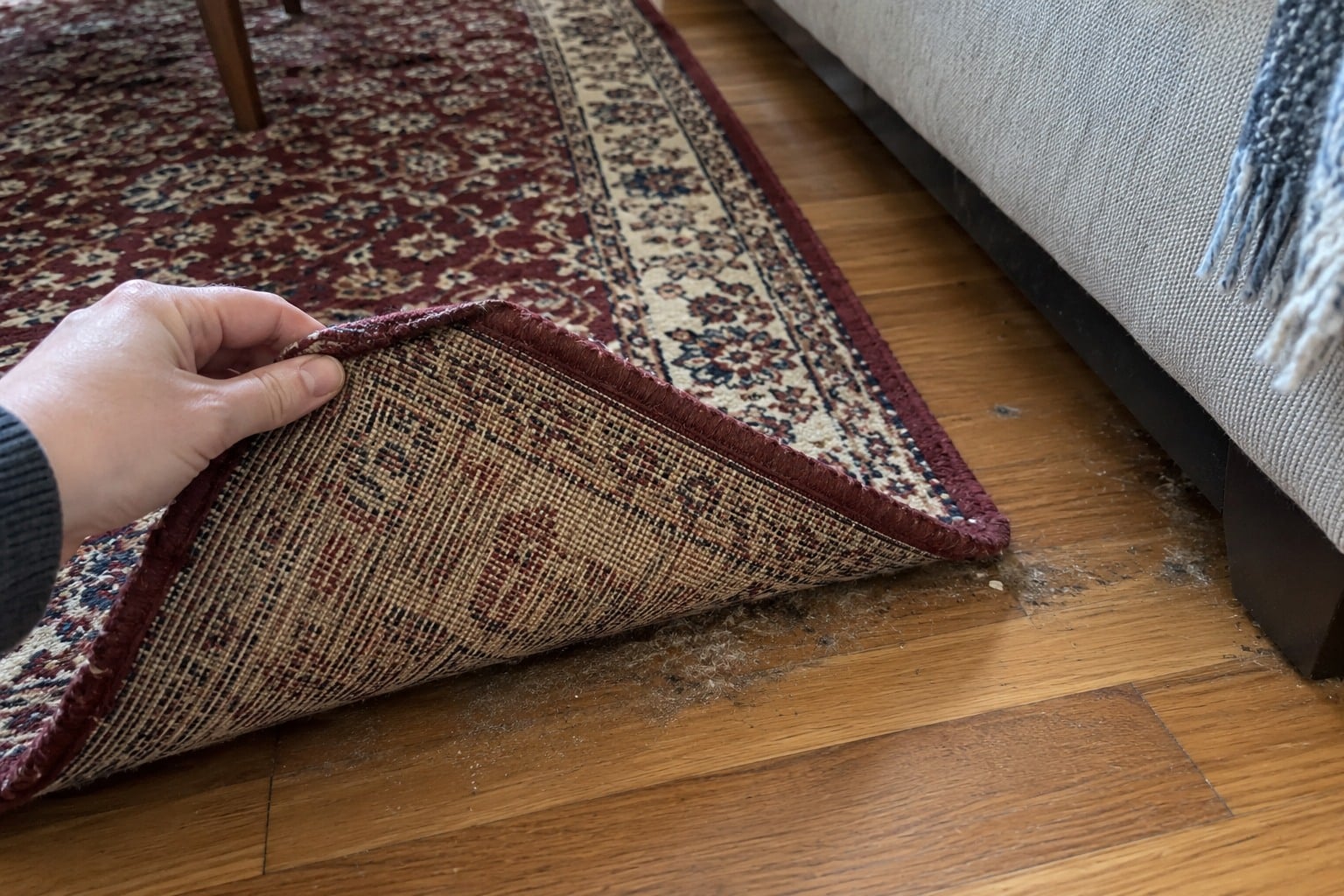
A thin patch beneath a sofa can raise an uncomfortable question: is the rug simply worn, or could insects be involved? Before applying a treatment, document what you see and establish what caused the loss.
This guide helps you organize an inspection, record useful evidence and decide who to contact. For routine prevention, see our separate guide to moth protection for wool rugs.
What Does Rug Moth Damage Look Like?
Look for surface grazing, irregular fiber loss, small holes or exposed threads. Silken tubes, mats or portable cases containing fibers can provide additional evidence. Check concealed areas beneath furniture and along edges, where activity can escape notice. [1]
Separate your observations from your conclusion. “Pile missing beside the left border” is a useful description. “Definitely moth damage” is a diagnosis that photographs alone may not support.
Moths, Carpet Beetles or Ordinary Wear?
Carpet beetles also damage textiles. Their larvae and shed skins can be useful identification clues; damage patterns alone may not distinguish beetles from moths reliably. [2]
| Observation | Question to investigate | What to record |
|---|---|---|
| Missing pile in a concealed area | Are there insect traces nearby? | Close-up, location and underside |
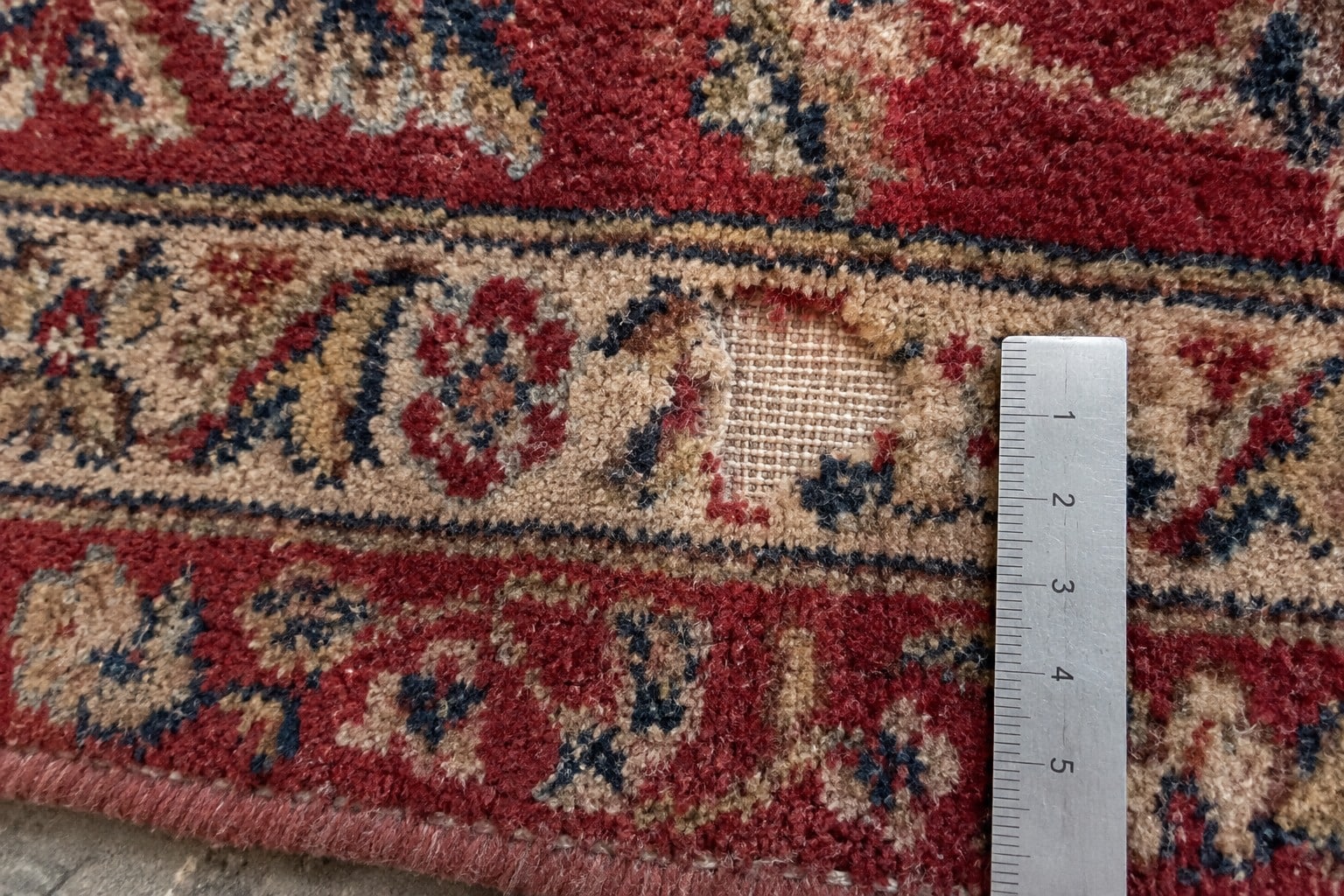
| Webbing, cases or a visible insect | Can a professional identify the material or insect? | Sharp photograph beside a ruler |
| Thinning in an often-used area | Is wear involved, or is another cause present? | Wide view showing the traffic route |
| Old hole with no obvious insects | Is the damage historic or still developing? | Dated photographs for comparison |
The table is an observation aid, not a diagnostic test. Ask the specialist to explain what evidence supports their assessment.
A Practical Rug Inspection Checklist
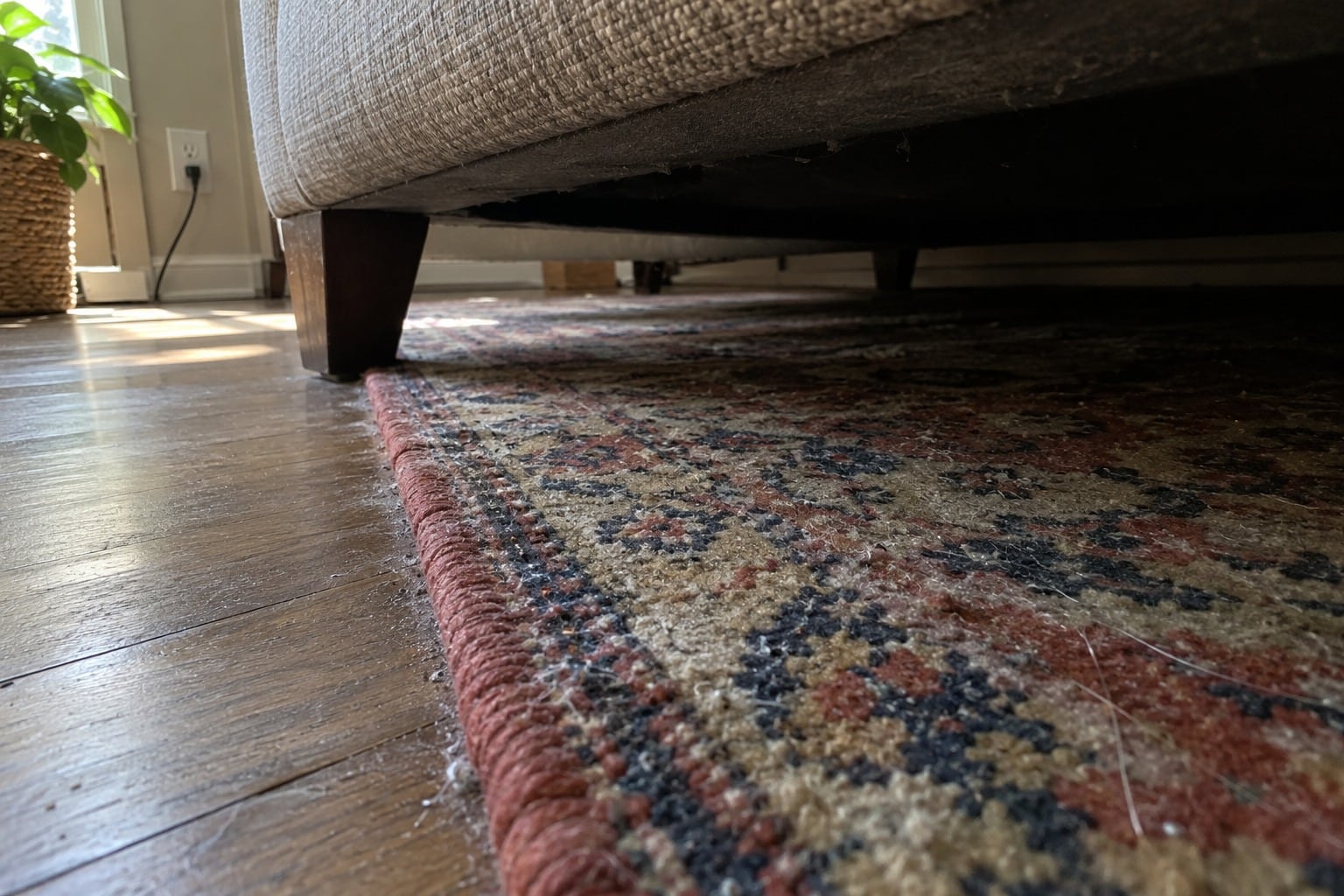
- Start with a whole-rug photograph. Include the surrounding furniture so the affected location is clear.
- Photograph the suspected damage. Take one medium view and one close-up. Place a ruler nearby without covering the area.
- Inspect hidden locations. Check under furniture and at edges. Arrange help before moving heavy furniture. [1]
- Record both sides if safe. Support the rug while lifting an edge. If it is brittle or tears easily, leave further handling to a specialist.
- Write a brief history. Note when you discovered the problem, where the rug was stored, its last cleaning and any treatments already applied.
- Keep a dated record. Repeat photographs from the same position. Ask your specialist when to reassess the area.
What Should You Do First?
Send your photographs and notes for assessment before choosing a treatment. Tell the recipient whether you observed living insects, loose threads or an expanding patch.
For the surrounding room, thorough vacuuming can remove fabric pests and their food sources. Pay attention to debris beneath furniture and around baseboards; dispose of collected material promptly. [2] Ask a rug specialist how to clean the affected textile itself, especially if its structure is fragile.
Do not substitute an ordinary cleaning appointment for a confirmed pest-management plan. Ask explicitly whether the proposed service addresses insect activity, textile cleaning, repair or a combination of these.
When Should You Contact a Professional?
- A rug specialist: when fibers are missing, threads are exposed, the rug is delicate or you need advice about handling and repair.
- A pest professional: when insects need identification, several textiles are affected or activity continues elsewhere in the home.
- Both: when controlling the pest and protecting the textile require separate expertise.
For a heavily affected home, professional pest management may be needed. [1] For a valuable textile, ask whether a conservator should be involved. Conservation guidance emphasizes identifying pests, inspecting objects and monitoring activity rather than treating unexplained damage blindly. [3]
How to Build a Useful Inspection Record
Give every photograph a clear purpose. Start with the whole rug, then photograph the affected corner or border, and finish with a close view. A close-up without context can make it difficult to tell whether a patch sits in a traffic lane, beneath a sofa or beside an edge.
Use daylight where possible and keep the original image files. Avoid filters, sharpening effects or color edits: these can change the appearance of fibers. Take a second photograph from another angle if glare hides the weave. Include a ruler in one frame, but also take an unobstructed picture.
A short message you can send
“I noticed missing pile on [date], near [location]. The rug measures approximately [dimensions]. I have attached a whole-rug photo, close-ups and an underside view where safe. I have / have not seen insects or webbing. The last cleaning was [date], and these products have already been applied: [names]. What inspection should I arrange?”
Can a Moth-Damaged Rug Be Repaired?
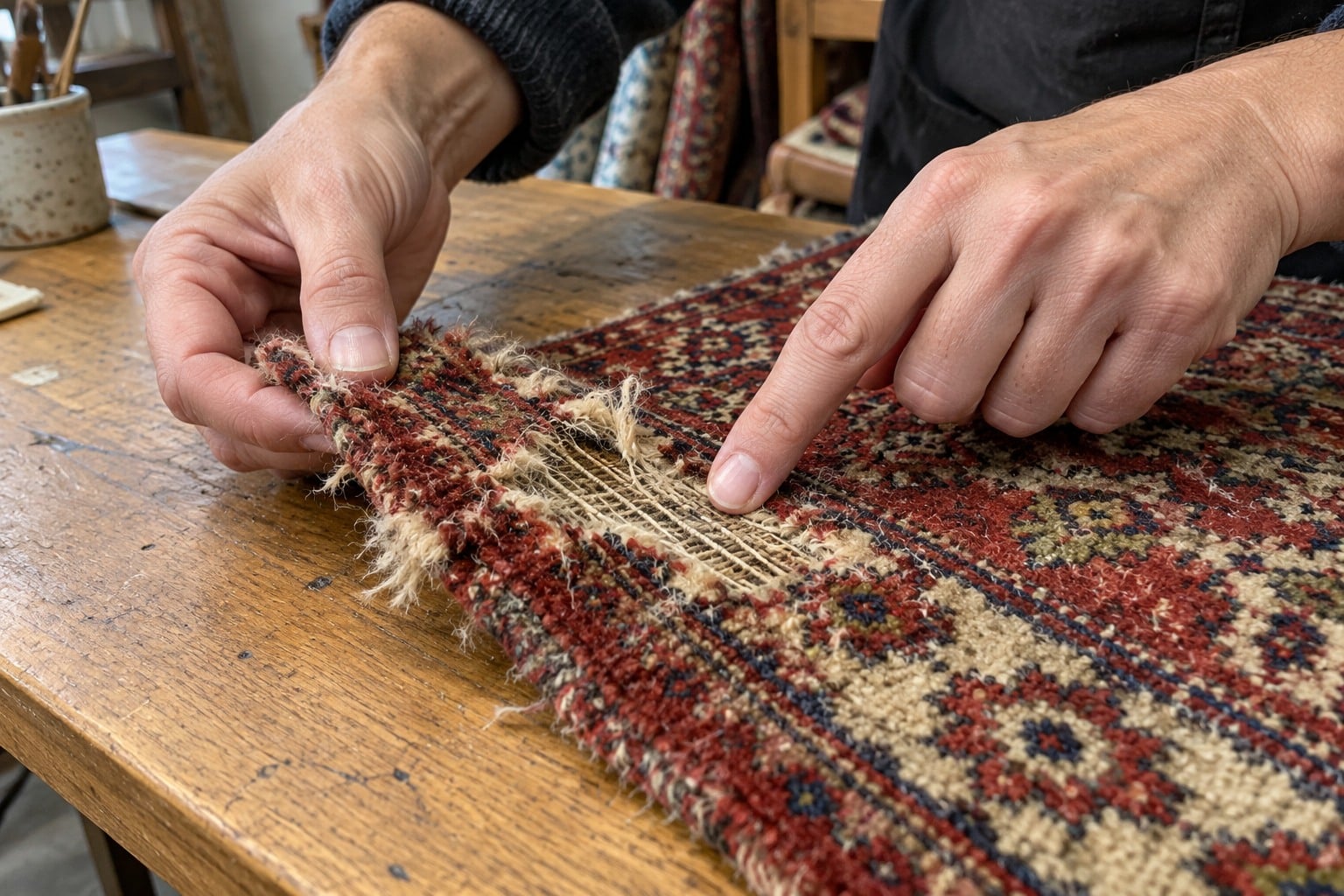
The answer depends on what remains. A specialist needs to assess the pile, foundation, edges and extent of loss before recommending repair. Request an explanation of the proposed work and its likely appearance. A repair estimate is not a guarantee that every affected area will become invisible.
Confirm the pest-management plan before investing in cosmetic restoration. Repairing missing fibers and addressing insect activity are different tasks. If another textile in the home shows similar signs, tell both the rug specialist and the pest professional so their assessments cover the wider situation.
Questions to Ask Before Approving Work
- What caused the damage, and how certain is the identification?
- Is there evidence of current activity?
- Which steps address the pest, and which address the rug?
- What result can I expect, and what may remain visible?
- What follow-up inspection should I arrange?
Request a written scope and estimate. Photograph the rug before collection and retain any treatment and repair records with your ownership documents.
Frequently Asked Questions
Does seeing a moth mean my rug is infested?
No. Clothes moths and food-infesting moths are different pests. Identify the insect and inspect the textile before drawing a conclusion. [1]
Can I identify the cause from a hole alone?
Not reliably. Carpet beetles and clothes moths can both damage textiles. Evidence from the insect or its traces is more useful than the hole alone. [2]
Should I apply spray, heat or a home remedy immediately?
First obtain advice suited to the rug. Treatment suitability depends on the object; conservation guidance calls for careful selection of control methods. [3] Provide the specialist with the exact name of any product already used.
What should I send with an inspection request?
Send a whole-rug image, close-ups, an underside view if safe, approximate dimensions and a short history. Include photographs of insects or cases without labeling them as a confirmed species.
Ask Rouzati Rugs About the Next Step
If you have noticed unexplained fiber loss, contact Rouzati Rugs with your photographs and notes. Ask about an appropriate inspection and the scope of available care or repair services before bringing in a potentially infested rug.
Once the immediate concern is assessed, return to our wool rug moth-protection guide for ongoing prevention.