

Wool rugs do need moth protection under certain conditions, especially in low-traffic or undisturbed areas. This applies to hand-knotted and machine-made wool rugs placed in bedrooms, closets, basements, or seasonal storage. The decision matters because moth larvae feed on keratin, a natural protein found in wool fibers, and damage is permanent once it occurs.
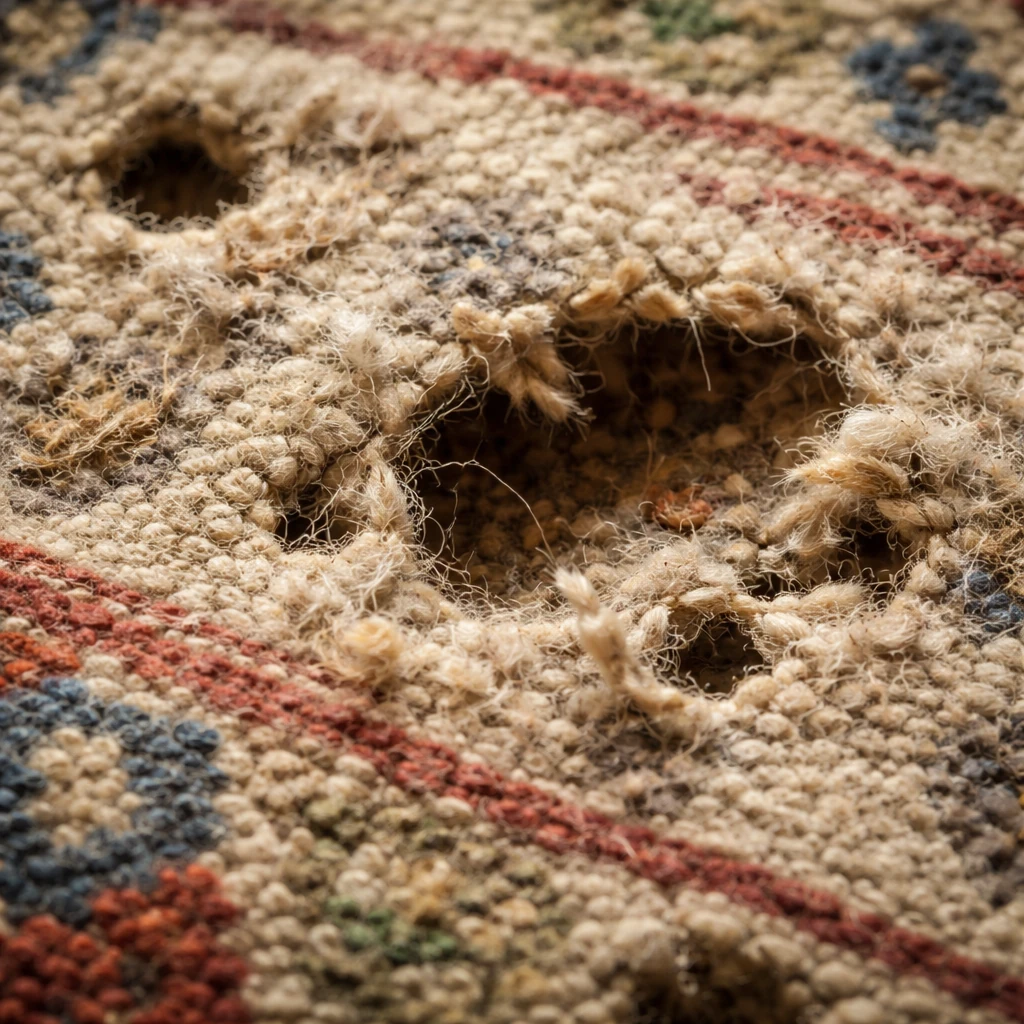
Why Are Wool Rugs Vulnerable to Moths?
Wool contains keratin, which moth larvae use as a food source.
Adult moths do not damage rugs. The larvae do. They prefer dark, quiet areas where rugs remain undisturbed. The underside of rugs, edges under furniture, and rolled storage positions create ideal feeding conditions.
Synthetic rugs do not carry this same protein risk. Wool does.
Does Every Wool Rug Need Moth Protection?
Not every wool rug requires active chemical treatment, but all wool rugs benefit from monitoring and prevention.
High-traffic rugs are naturally less attractive to moths because movement disturbs larvae development. Low-traffic rugs in guest rooms or storage areas carry higher risk. Protection decisions should be based on environment and usage, not fear alone.
For broader fiber protection planning, see wool rug protection.
How Does Storage Increase Moth Risk?
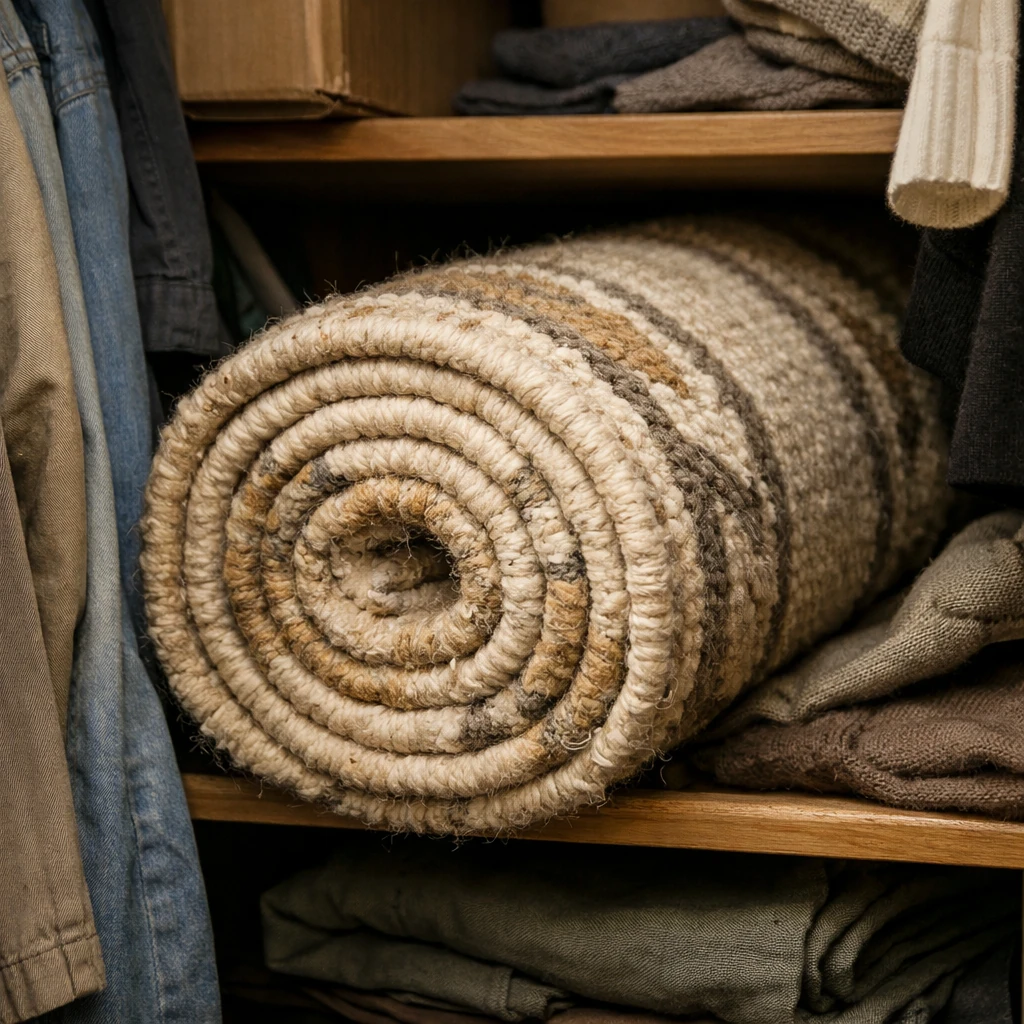
Seasonal storage significantly increases infestation risk.
When rugs are rolled and placed in closets, basements, or attics, airflow decreases and darkness increases. If rugs are stored without cleaning, organic debris such as food particles or skin cells can attract insects. Storage without inspection creates ideal larval conditions.
What Actually Happens When Homeowners Ignore Moth Risk
In real situations, homeowners in Chicago often:
Mistake 1
Store wool rugs without cleaning them first.
Mistake 2
Assume cedar blocks alone eliminate risk.
Mistake 3
Only inspect the top surface of the rug.
These mistakes occur because moth damage develops slowly and often begins underneath. By the time holes appear on the surface, larvae may have been feeding for months.
Chicago’s seasonal humidity changes can also create micro-environments that support insect development in enclosed spaces.
What Needs to Be Confirmed Before Choosing Moth Protection
- Confirm the rug is 100% wool or wool-blend.
- Inspect underside and fringe for early thinning.
- Identify low-traffic or shaded areas.
- Determine if the rug will be stored long-term.
- Evaluate basement or closet humidity levels.
Protection decisions should reflect exposure conditions, not assumptions.
When Moth Protection May Not Be Necessary
If the rug is in a high-traffic area with regular cleaning and airflow, risk may be lower.
If the rug is synthetic or primarily polypropylene, keratin-based feeding risk does not apply. In these cases, general maintenance may be sufficient without insect-specific treatment.
However, absence of visible damage does not mean absence of risk in stored rugs.
Decision Recap
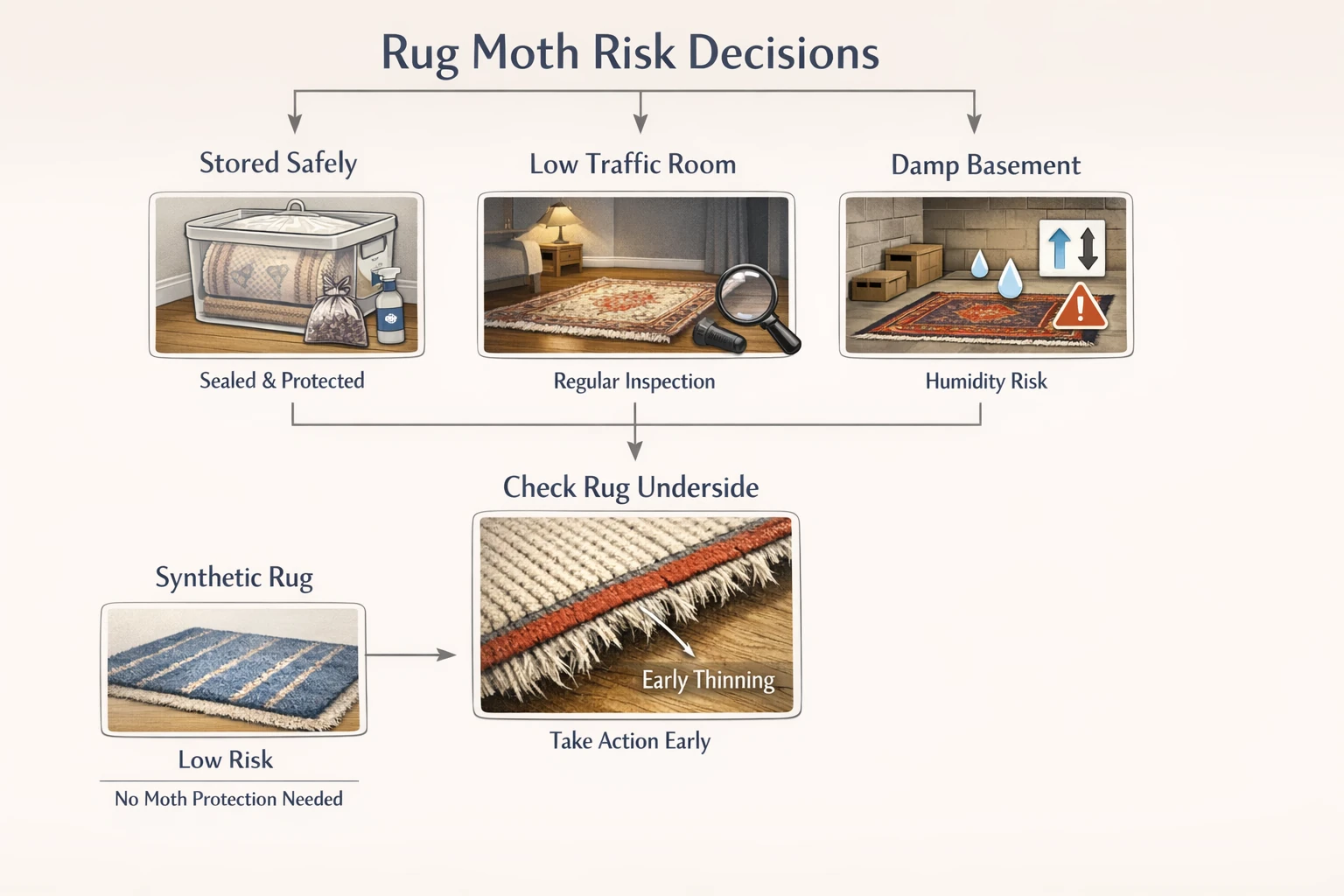
- If the rug is wool and stored seasonally, implement preventive measures.
- If the rug sits in a low-traffic, dark room, inspect regularly.
- If basement humidity fluctuates, reassess storage conditions.
- If early thinning appears underneath, act before holes form.
- If the rug is synthetic, moth protection is typically unnecessary.
Frequently Asked Questions
Why are wool rugs vulnerable to moth damage?
Wool fibers contain keratin, a protein that moth larvae feed on. Larvae prefer dark, undisturbed areas, making stored or low-traffic rugs more vulnerable. Regular inspection reduces long-term risk.
Does cleaning prevent moth damage?
Cleaning removes organic debris that can attract insects, but it does not eliminate risk entirely. Environmental control and regular monitoring are also necessary for prevention.
Is moth damage reversible on wool rugs?
No. Once wool fibers are eaten, the damage is permanent. Structural repair may stabilize holes, but prevention is more effective than restoration.
About the Author
This guide was developed by the textile specialists at Rouzati Rugs to help homeowners understand when specialized rug restoration decisions matter.