

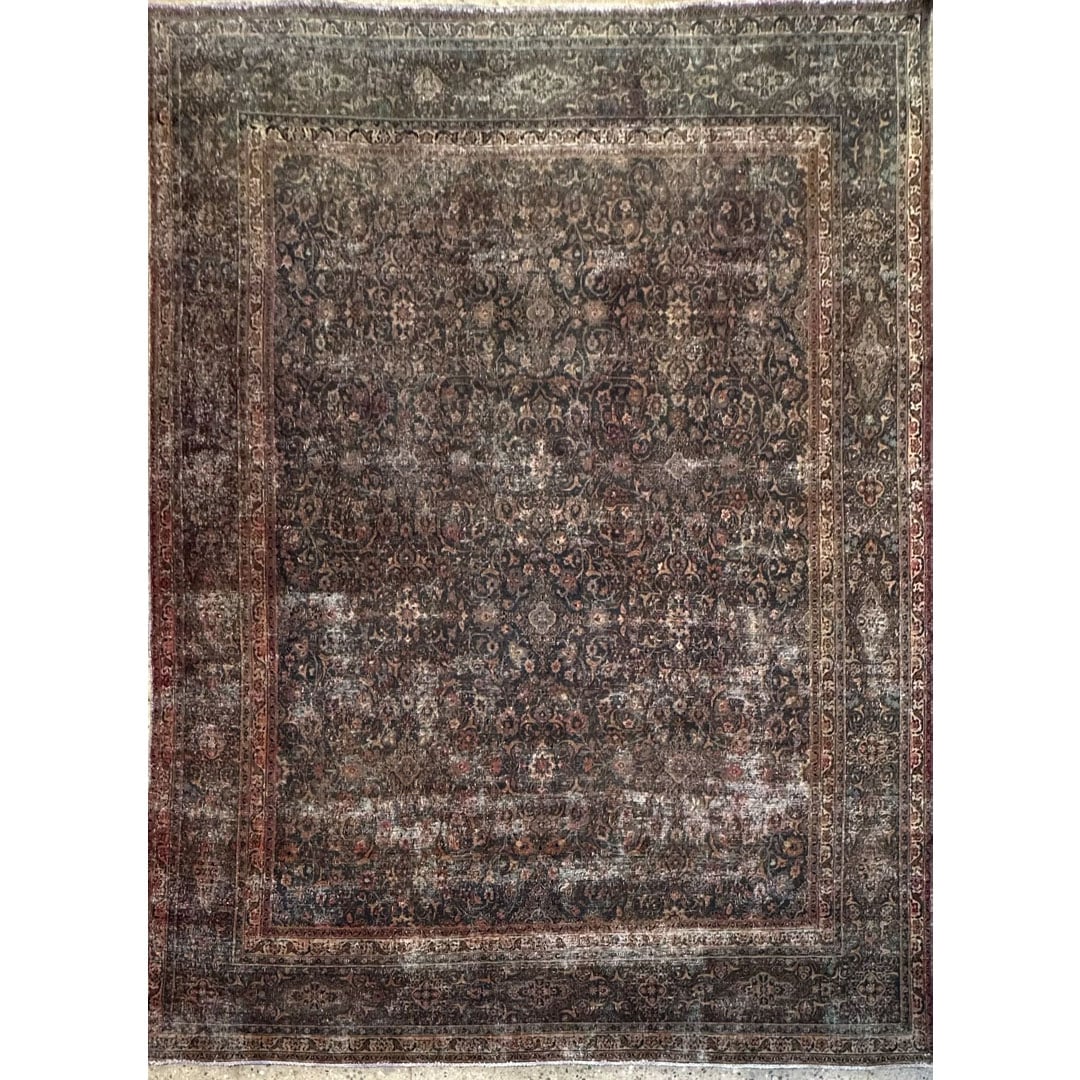
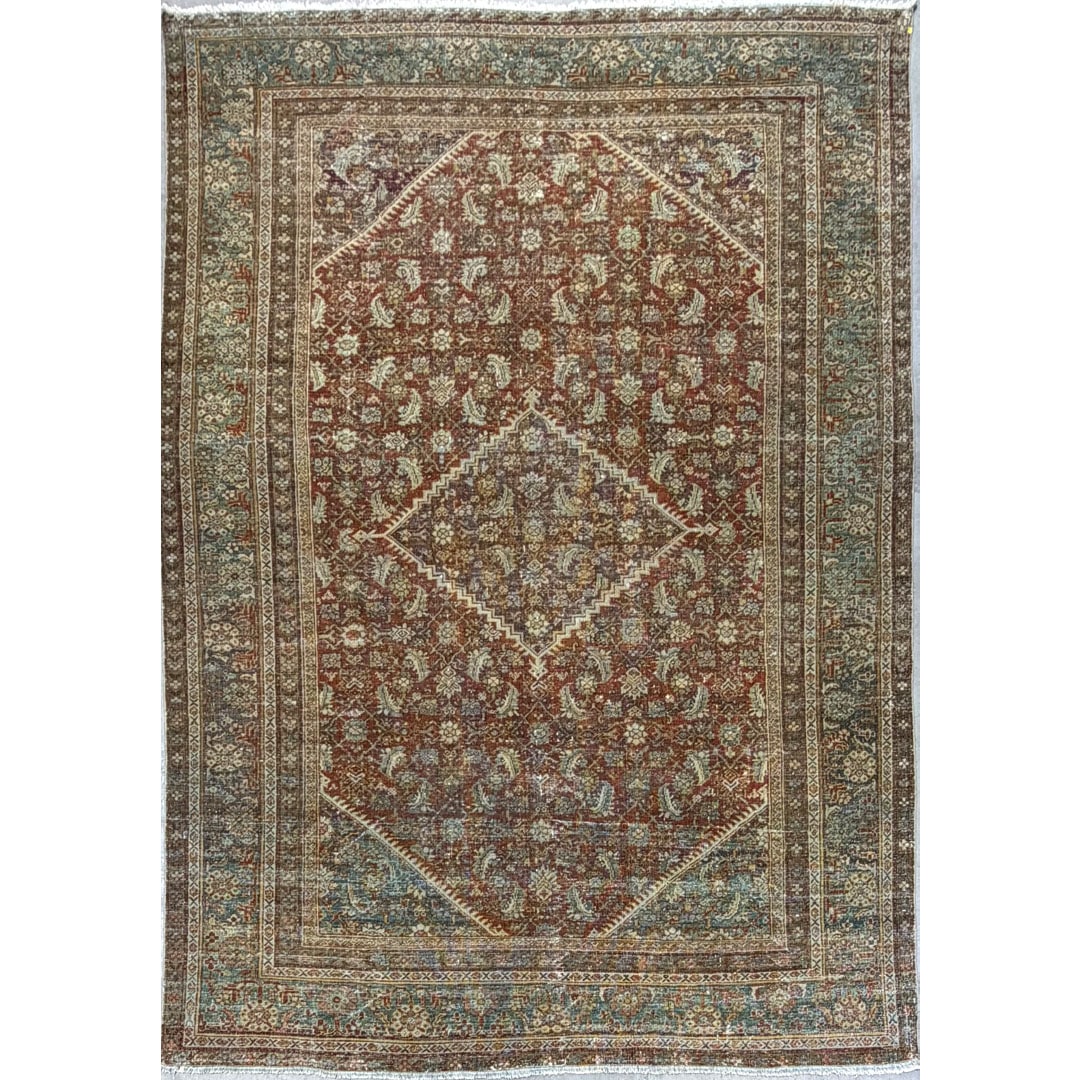
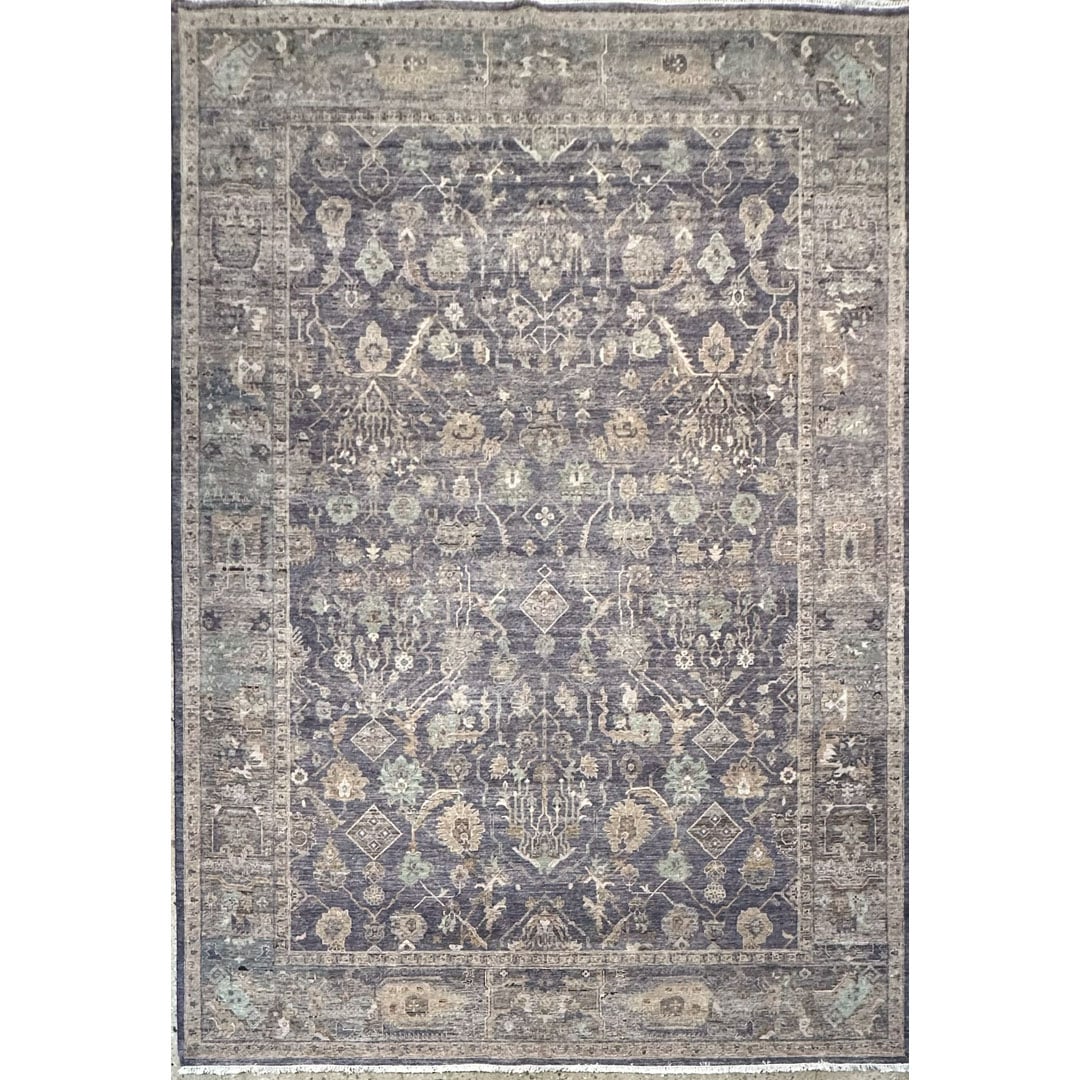
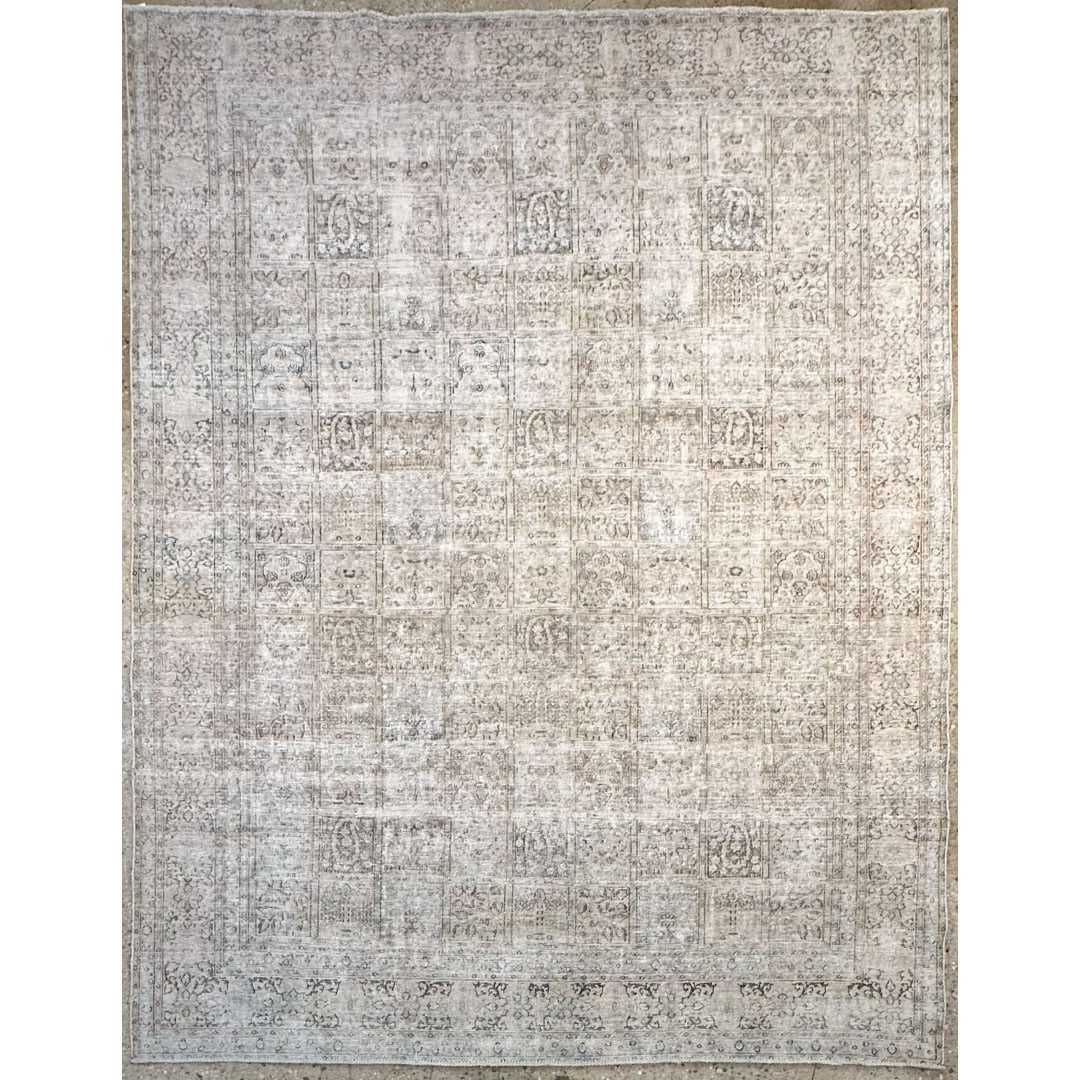
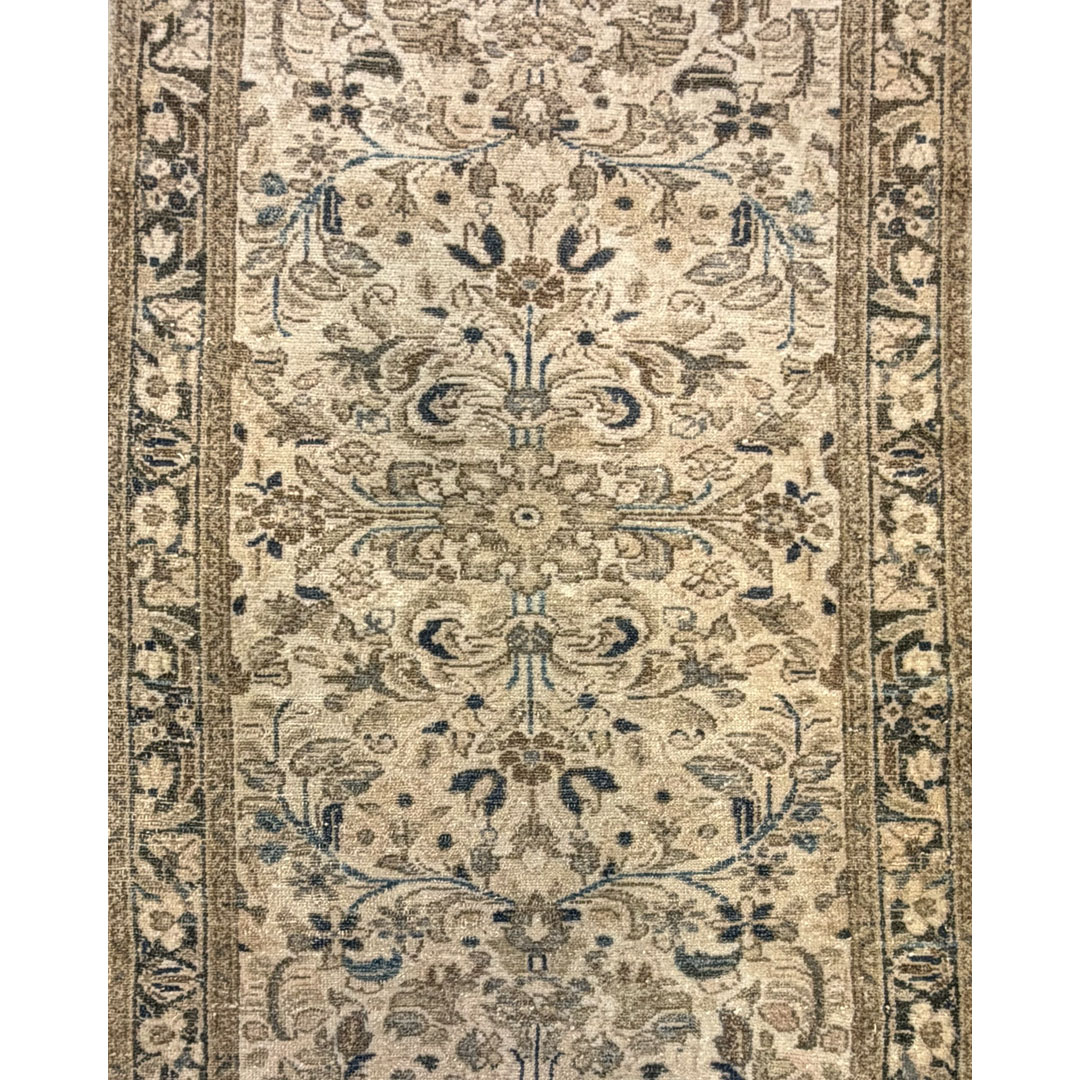
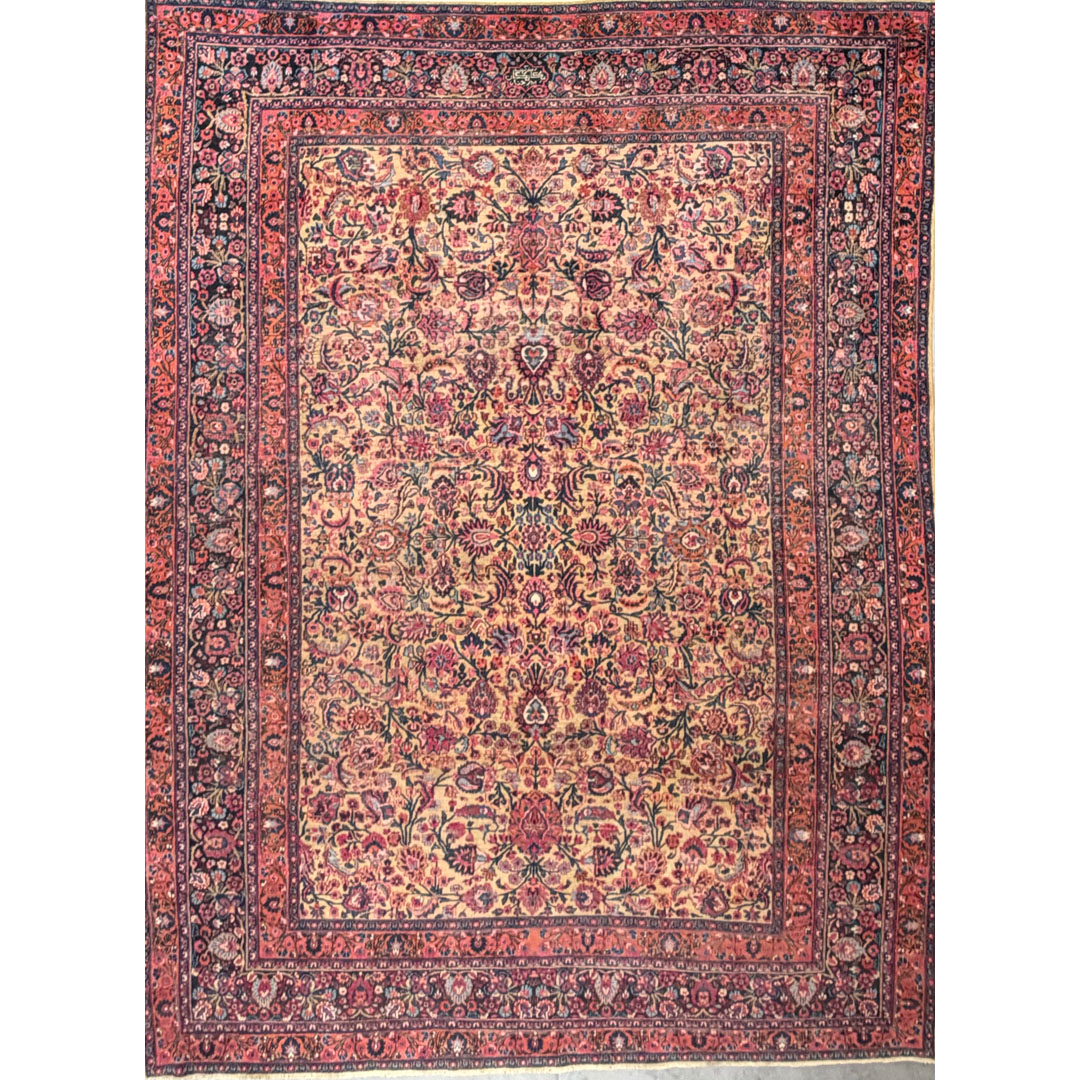
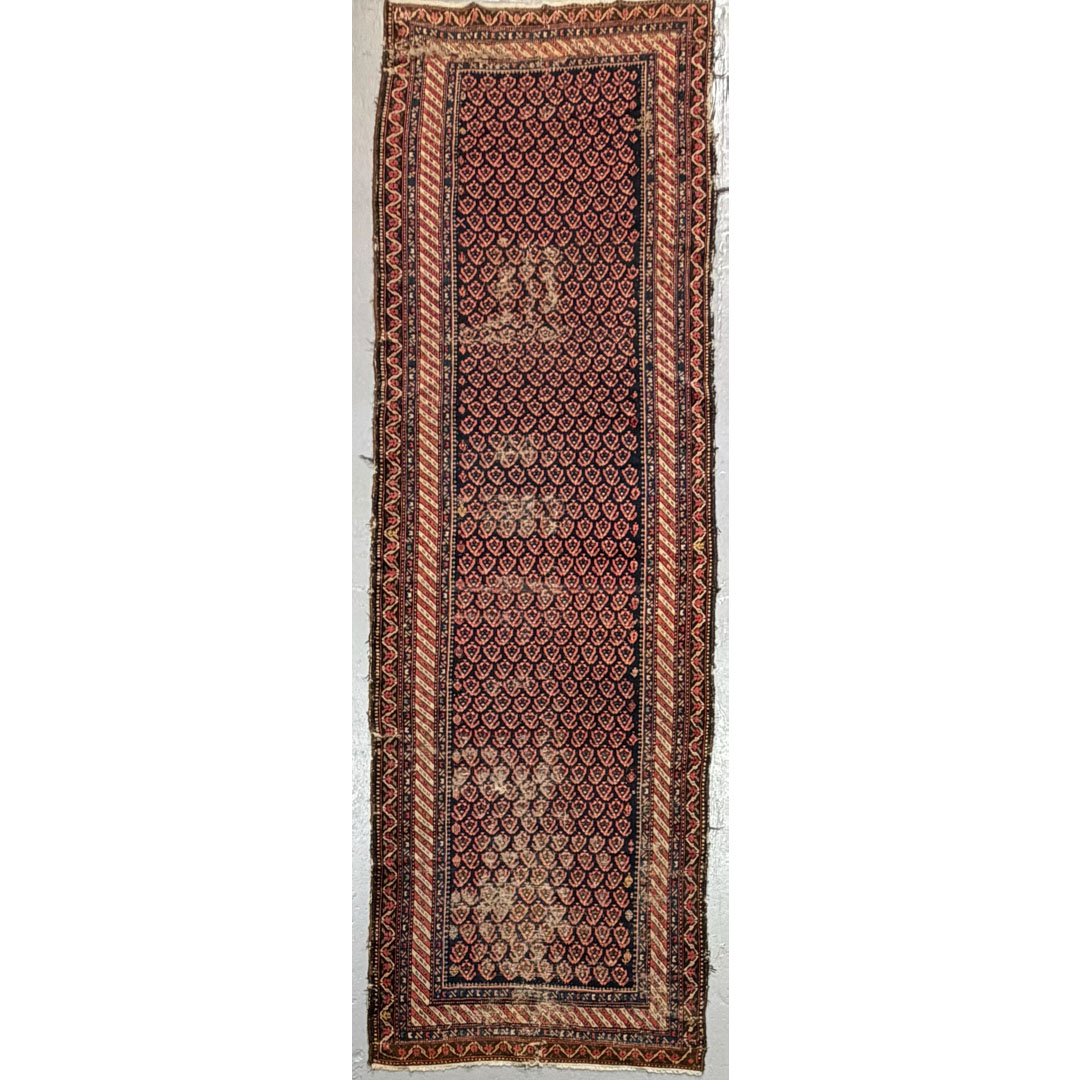
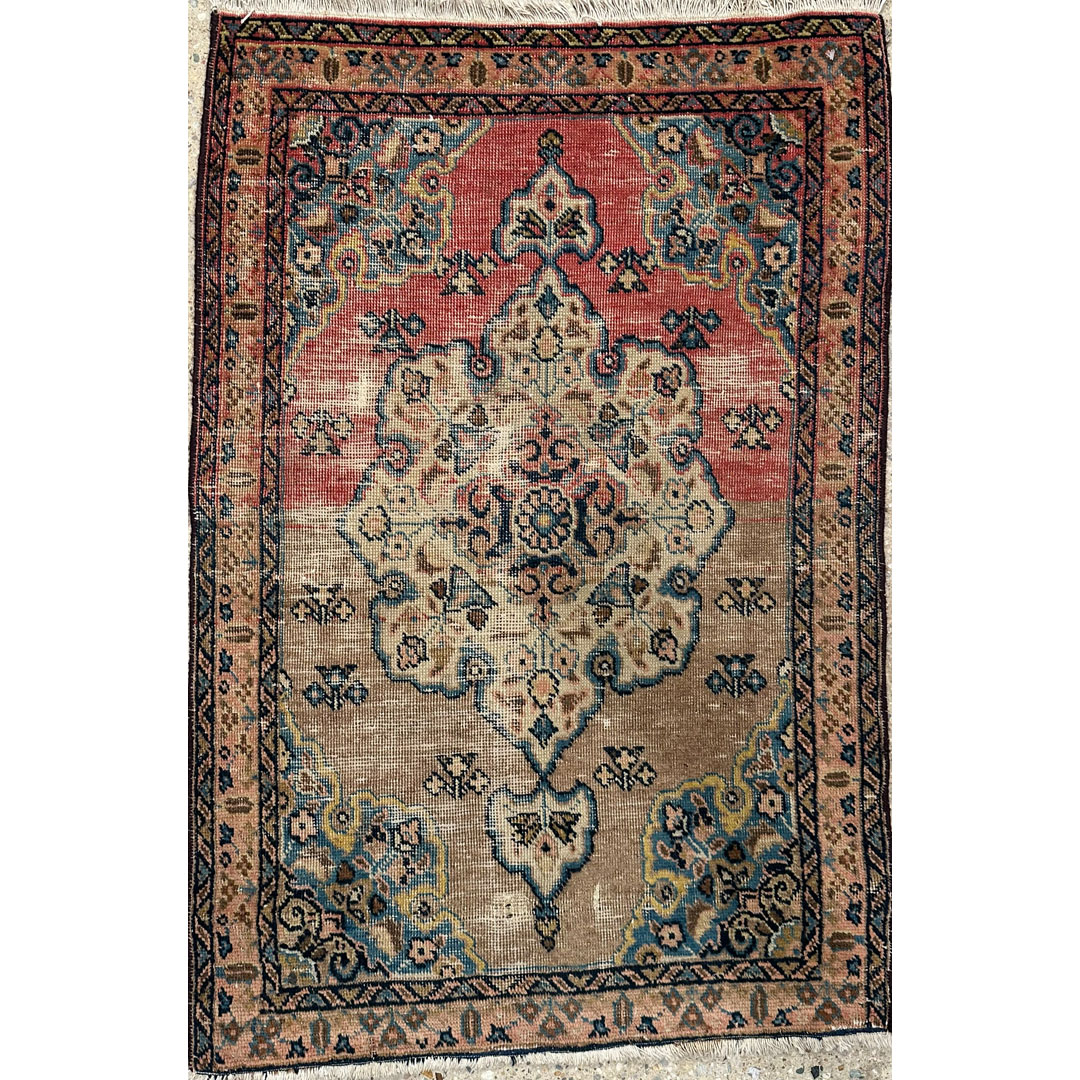
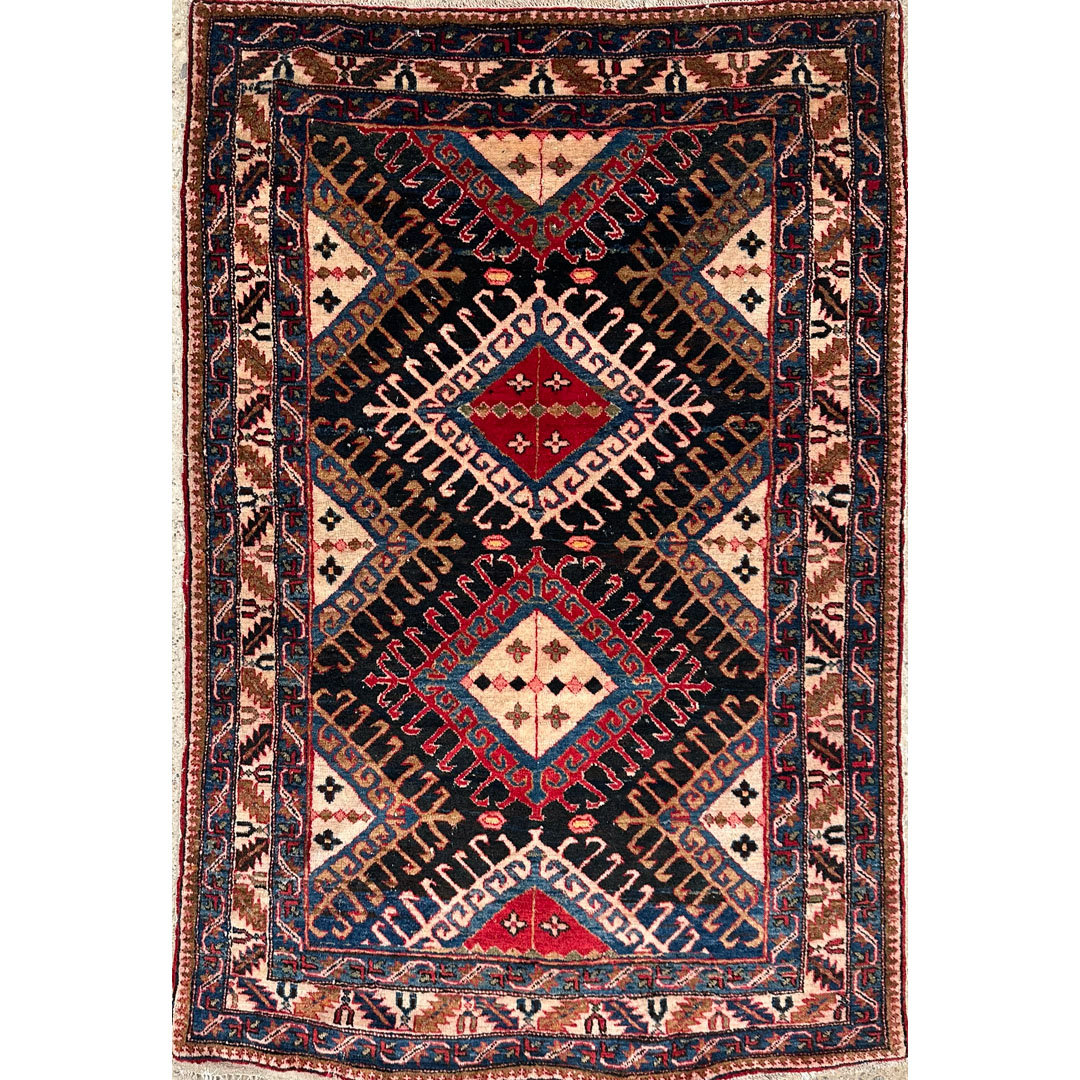
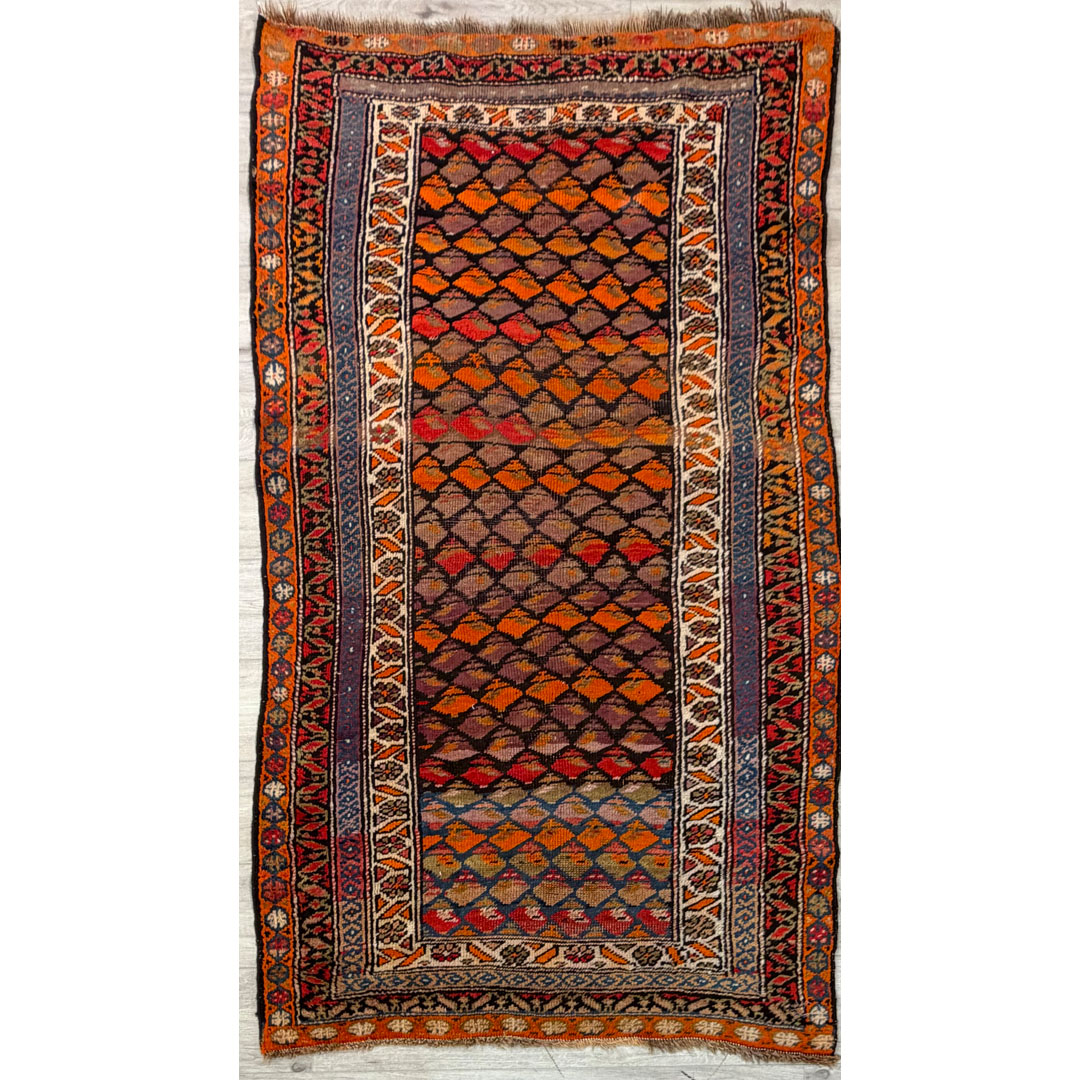
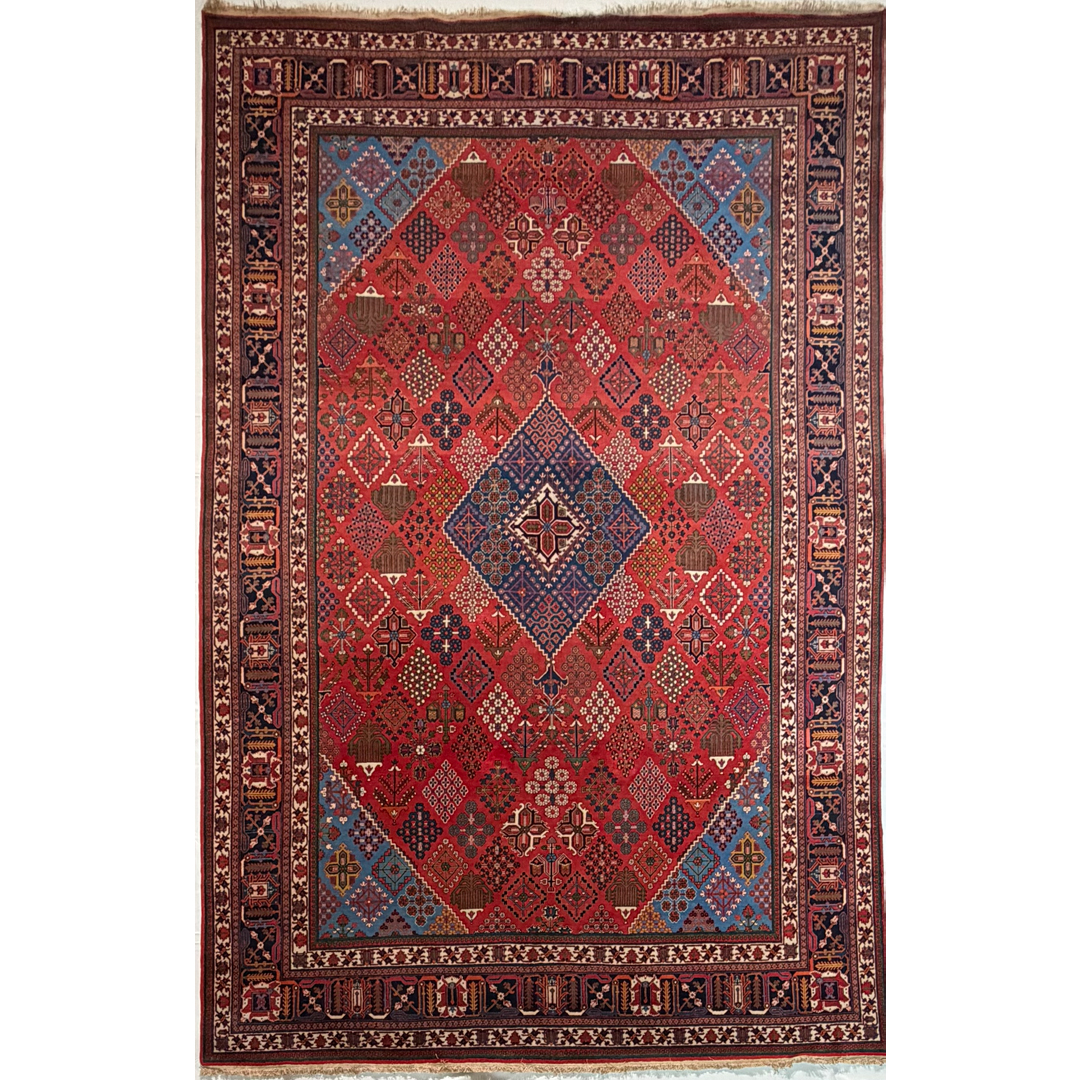
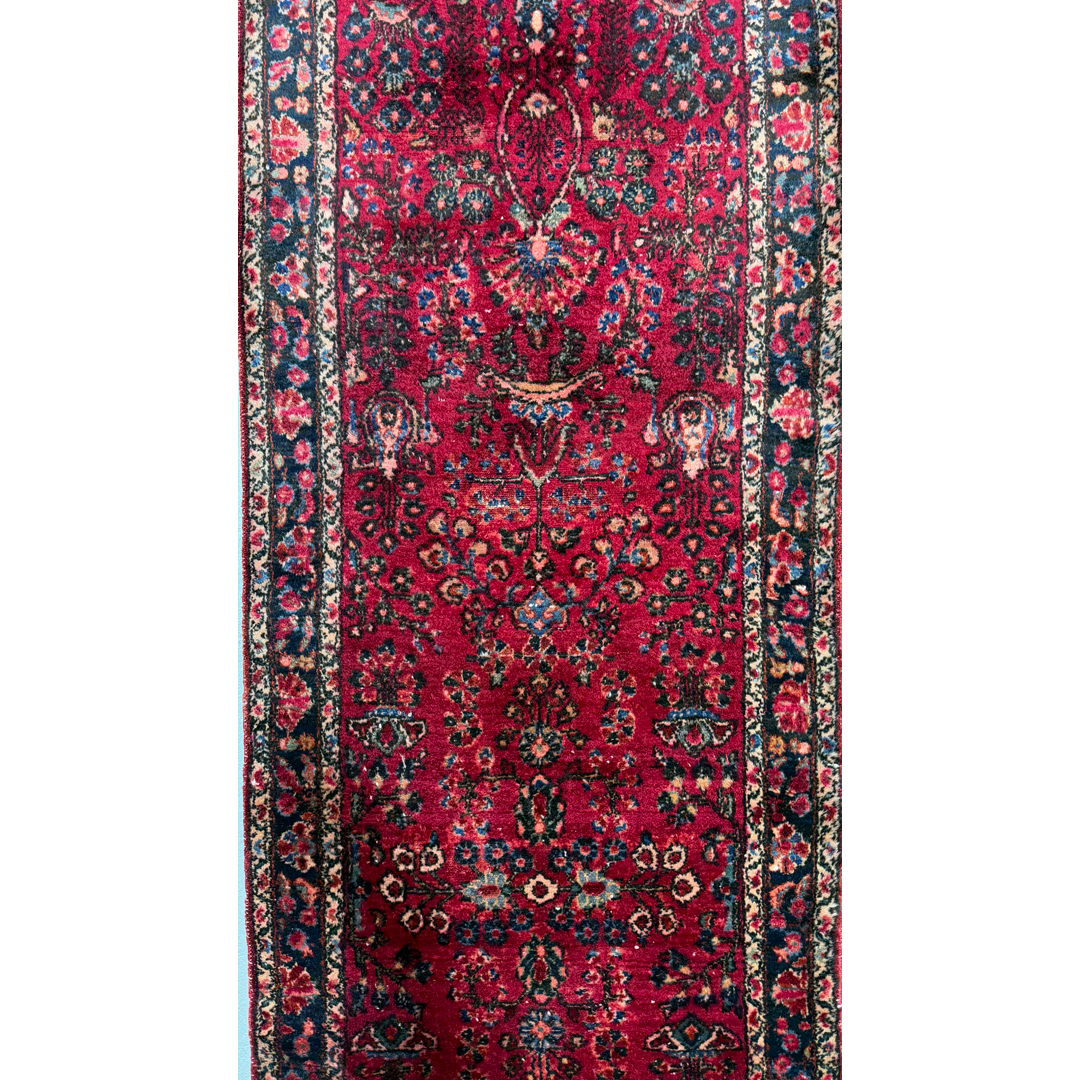
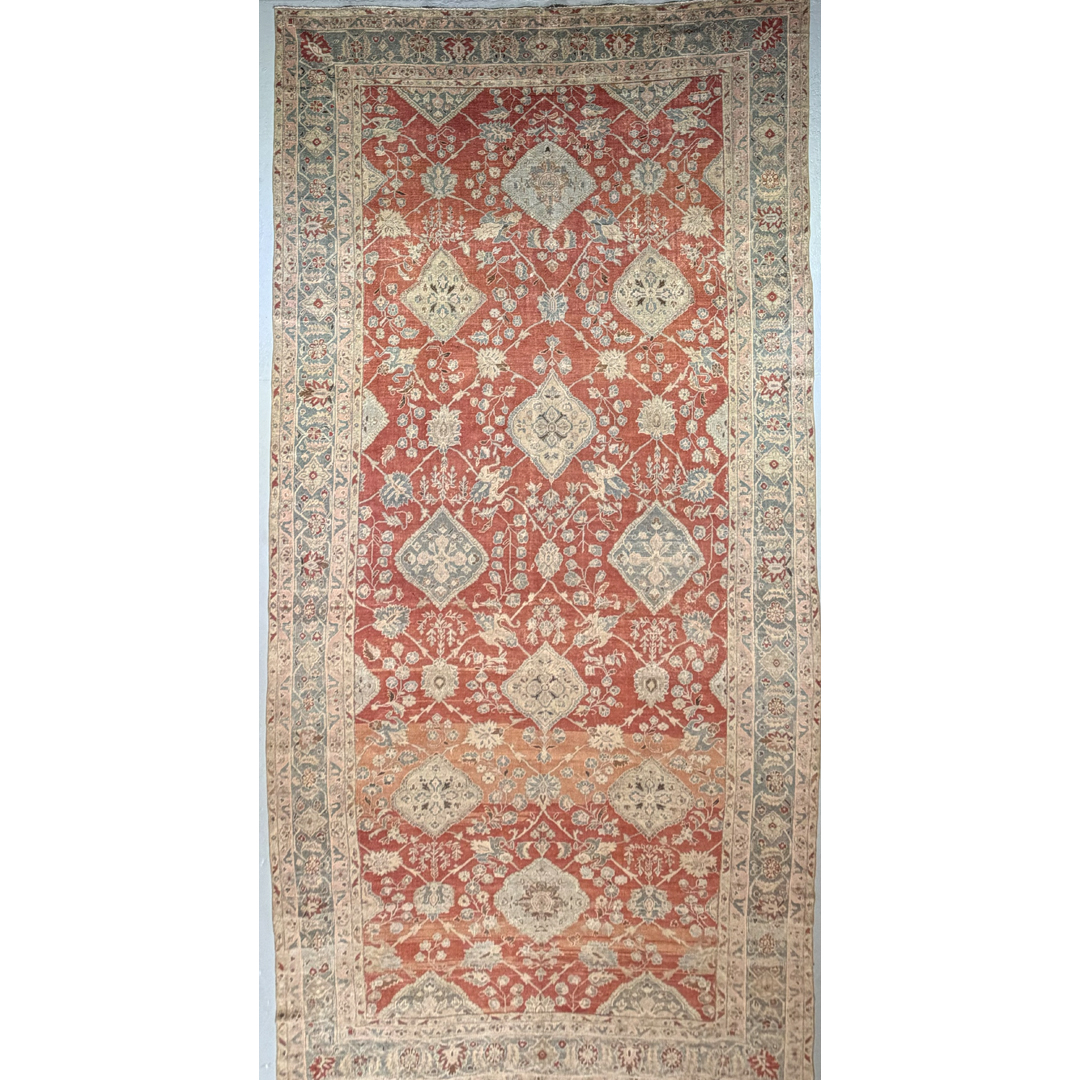
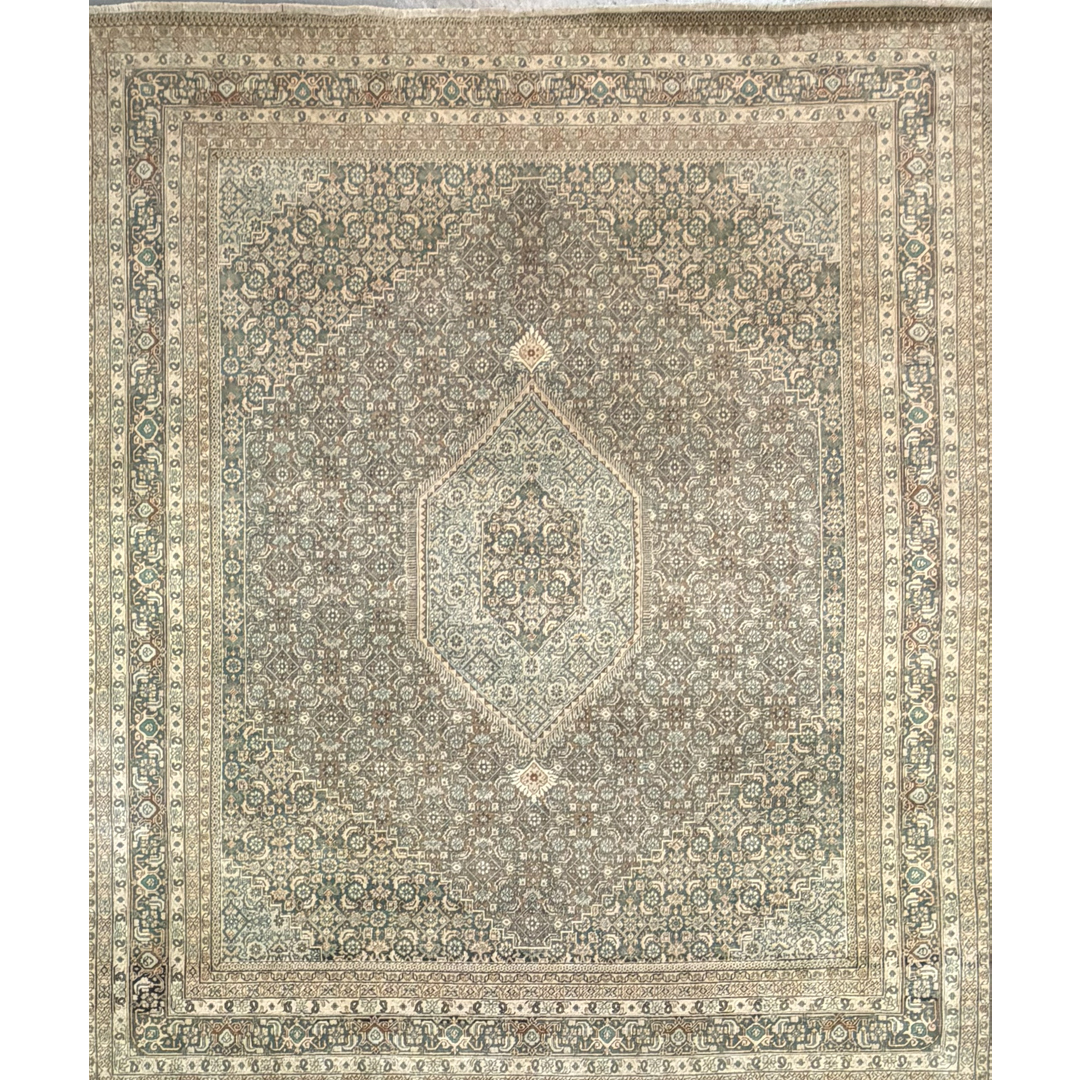
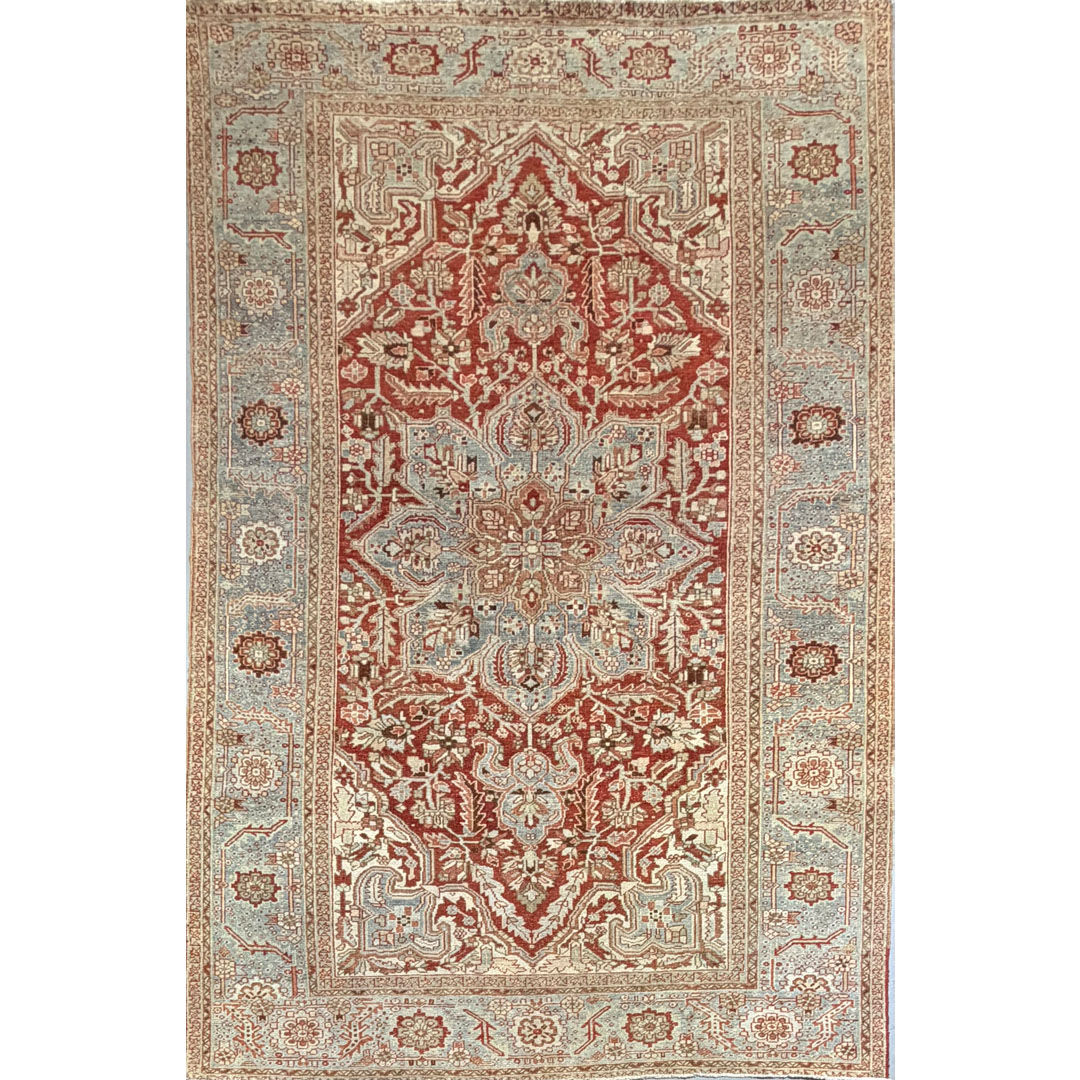
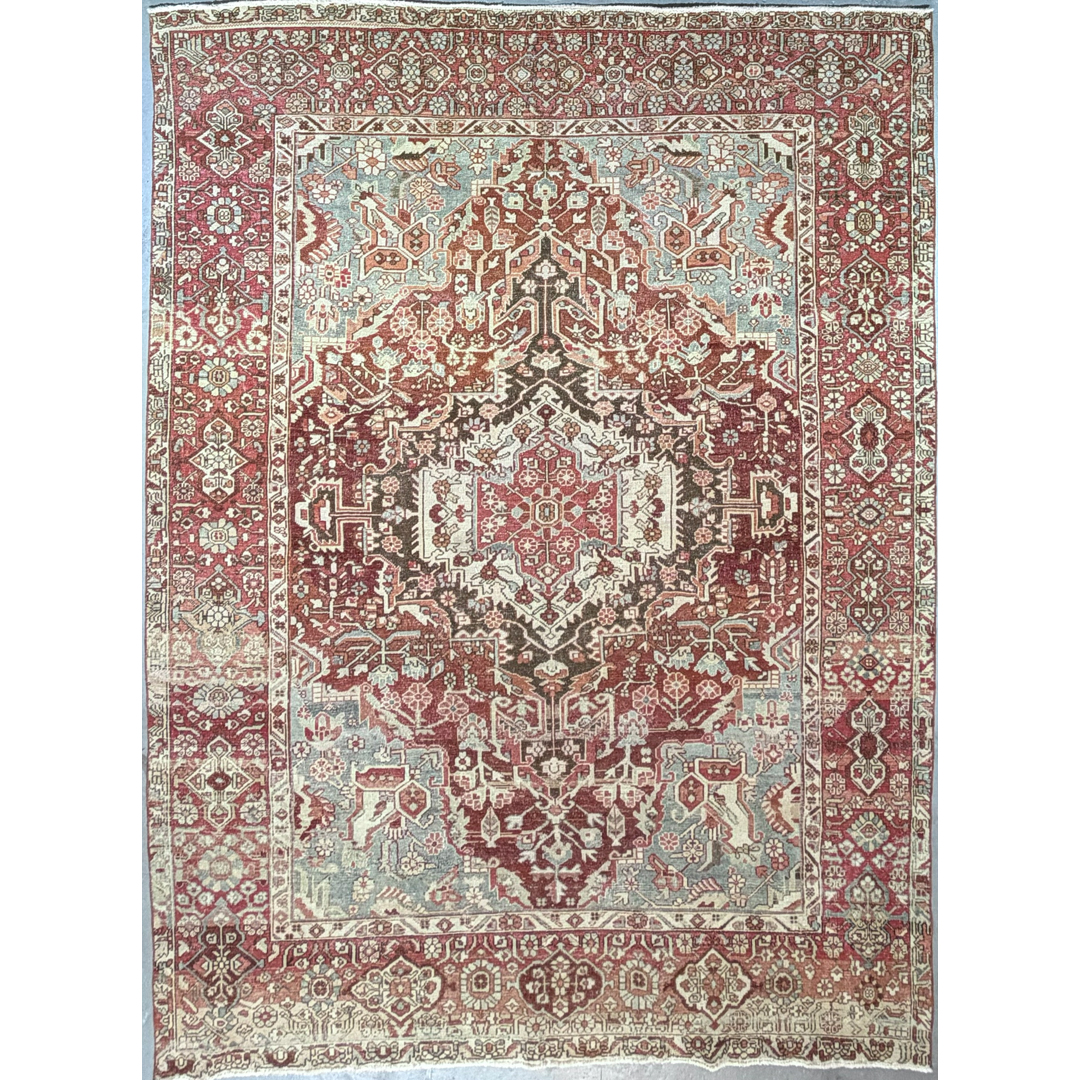
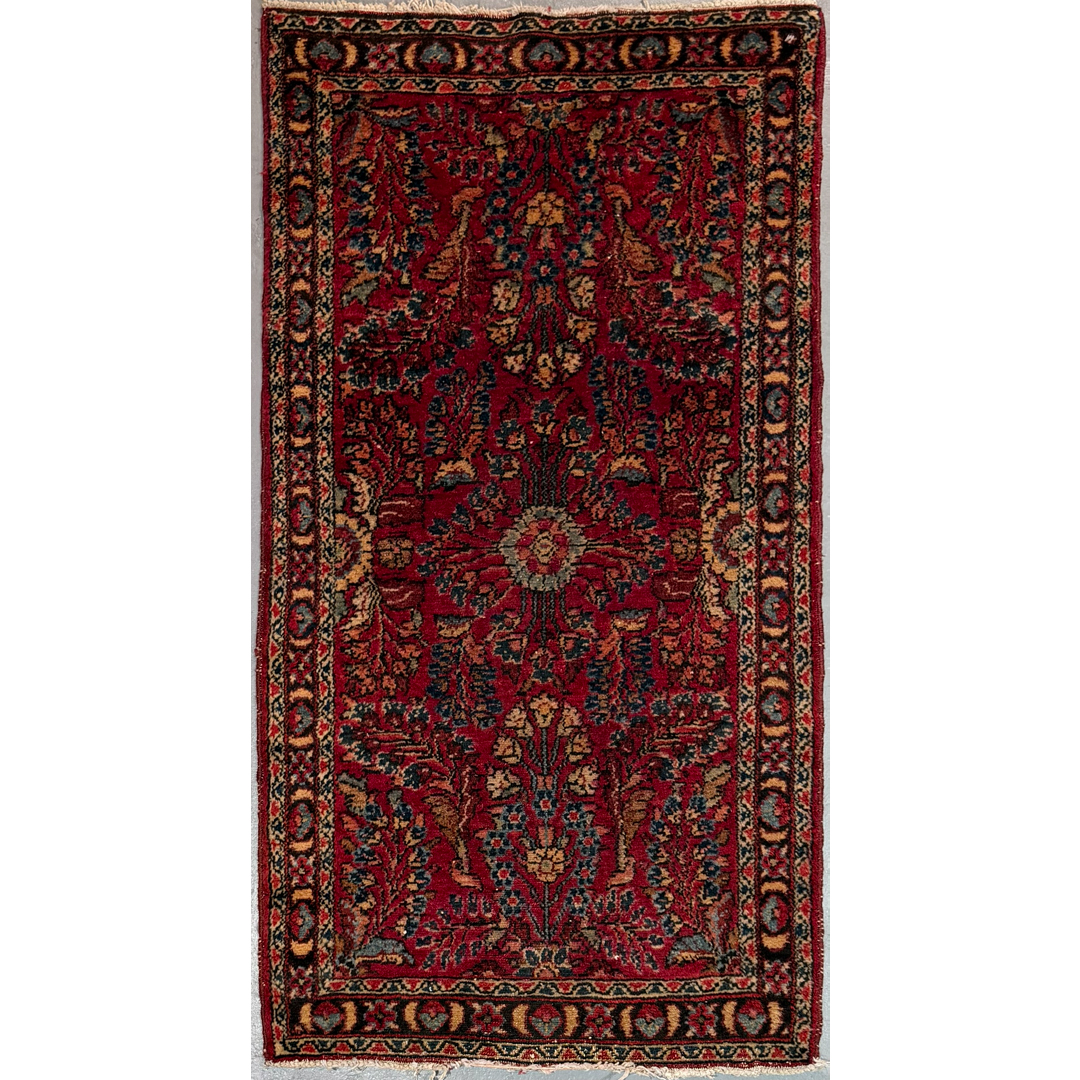


Discover our collection of Persian rugs in Chicago, featuring hand-knotted designs known for their craftsmanship, intricate patterns, and timeless character. From traditional room-defining pieces to antique and vintage Persian rugs, our collection includes a variety of sizes, colors, and regional styles for different interiors.
At Rouzati Rugs, you can explore Persian rugs from renowned weaving regions and traditions, including Tabriz, Heriz, Qum, Bakhtiari, Kerman, Hamadan, and Sarouk. Browse our Persian rugs for sale online, or visit us in the Chicago area to experience their colors, textures, and craftsmanship in person.
Not sure which Persian rug is right for your space? Consider the room size, existing colors, furniture style, rug construction, and how much foot traffic the area receives before choosing a rug.
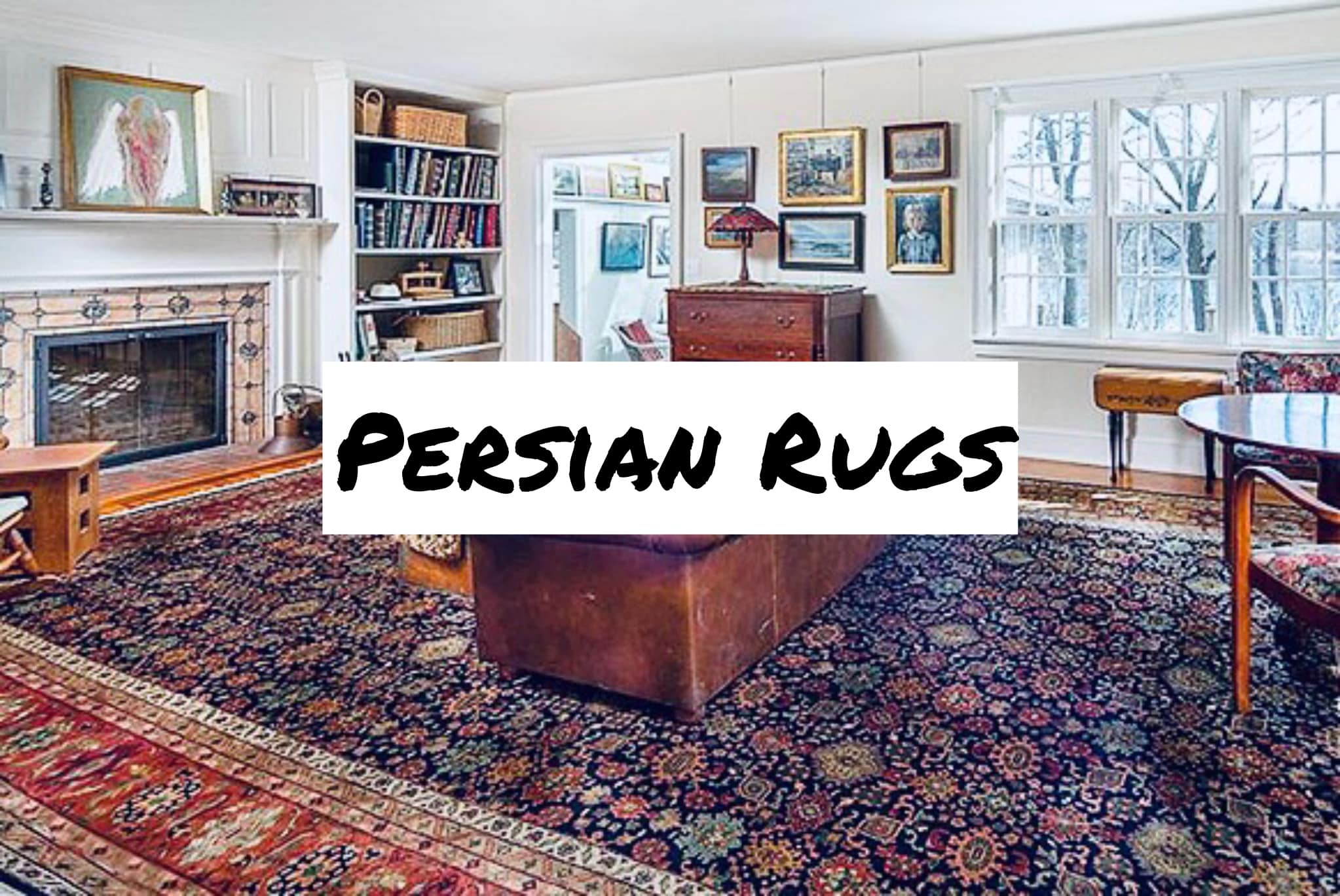
Brief History of Persian Rugs
The history of Persian rugs dates back over 2,500 years to ancient Persia, now modern-day Iran. Initially crafted by nomadic tribes, these rugs were used for practical purposes, such as floor coverings and blankets, and evolved into symbols of status and wealth. Persian rug weaving flourished during the Safavid dynasty (1501-1736), with royal patronage elevating it to an art form. The intricate designs, often inspired by nature, architecture, and Persian mythology, have been passed down through generations, making each rug a unique cultural artifact.
Types of Persian Rugs
Persian rugs come in various styles, each reflecting the region of its origin and the techniques used by the weavers. Some of the most well-known types include:
- Tabriz Rugs: Originating from Tabriz, these rugs are known for their high knot density and intricate designs, often featuring medallions, floral motifs, and detailed borders. They are usually made of wool or silk.
- Kashan Rugs: These rugs hail from the city of Kashan and are renowned for their rich colors and elaborate floral patterns. They are typically made from high-quality wool.
- Isfahan Rugs: Isfahan rugs are considered some of the finest Persian rugs, with intricate designs and a high knot count. They often feature symmetrical patterns and are made from a combination of silk and wool.
- Nain Rugs: From the city of Nain, these rugs are characterized by their delicate designs and lighter color palette. They are often made from wool and silk and have a high knot density.
- Heriz Rugs: Known for their durability, Heriz rugs come from the Heriz region and feature bold geometric patterns and vibrant colors. They are typically made from wool and are ideal for high-traffic areas.
Are Persian Rugs the Most Expensive Rugs in the World?
Persian rugs are among the most expensive rugs in the world due to their intricate craftsmanship, high-quality materials, and historical significance. Some Persian rugs, especially antique pieces, can fetch prices in the hundreds of thousands or even millions of dollars. While other types of rugs can also be expensive, Persian rugs consistently hold a reputation for luxury and value, making them a symbol of prestige and refinement.
The Allure and Elegance of Persian Rugs
The allure of Persian rugs lies in their intricate designs, rich history, and unparalleled craftsmanship. Each rug tells a story, reflecting the culture and traditions of its weaver. The combination of vibrant colors, complex patterns, and luxurious materials creates a sense of elegance and sophistication that is unmatched by other types of rugs. Persian rugs can transform any space, adding warmth, texture, and a touch of opulence.
Are They an Investment or a Waste of Money?
Investing in a Persian rug can be a wise decision, as these rugs often appreciate in value over time. Factors that influence their investment potential include:
- Rarity: Rare designs and limited production increase the value of Persian rugs. Antique rugs, in particular, can be highly sought after by collectors.
- Craftsmanship: The high level of craftsmanship in Persian rugs ensures they are durable and long-lasting, adding to their value.
- Condition: Well-maintained rugs retain their value better than those that are worn or damaged. Proper care and maintenance are crucial for preserving a rug’s condition.
While Persian rugs can be a significant financial investment, they are far from a waste of money. Their aesthetic appeal, durability, and potential for appreciation make them a valuable addition to any home.
How to Choose the Perfect Persian Rug
Selecting the perfect Persian rug involves considering several factors:
- Size: Measure your space to determine the appropriate rug size. Ensure it complements the room’s layout and doesn’t overwhelm or underwhelm the space.
- Design and Color: Choose a design and color scheme that complements your existing decor. Persian rugs come in various patterns and hues, so select one that enhances your room’s aesthetic.
- Material: Persian rugs are typically made from wool, silk, or a combination of both. Wool rugs are durable and ideal for high-traffic areas, while silk rugs are luxurious and best suited for low-traffic spaces.
- Knot Density: Higher knot density indicates a higher quality rug with more intricate designs. However, rugs with lower knot density can also be beautiful and more affordable.
- Budget: Set a budget and explore options within that range. While Persian rugs can be expensive, there are options available to suit various price points.
Discover a Wide Variety of Persian Rugs in Chicago at Rouzati Rugs
For those in Chicago looking to purchase Persian rugs, Rouzati Rugs is the premier destination. Rouzati Rugs offers an extensive collection of authentic Persian rugs, from antique pieces to contemporary designs. With a commitment to quality and customer satisfaction, Rouzati Rugs ensures you find the perfect rug to suit your taste and budget. Their knowledgeable staff can provide expert guidance, helping you select a rug that enhances your home’s decor and meets your needs.
The Best Place to Clean Persian Rugs in Chicago
Maintaining the beauty and longevity of your Persian rug requires proper cleaning and care. For the best results, professional cleaning is recommended. In Chicago, Rouzati Rugs offers top-notch rug cleaning services, specializing in the care of Persian rugs. Their experienced team uses gentle yet effective techniques to clean and preserve your rug, ensuring it remains in pristine condition for years to come.
1. How can you tell if a Persian rug is authentic?
Authentic Persian rugs are traditionally made in Iran (historically Persia) and many are hand-knotted. Look at the back of the rug to examine the knot structure, pattern details, materials, and overall craftsmanship. Because quality and construction vary significantly, professional evaluation is recommended when authenticity or value is important.
-
Are Persian rugs handmade?
Many traditional Persian rugs are hand-knotted by skilled weavers, but you shouldn’t assume every rug marketed with a Persian-style design is handmade. Check the rug’s origin, construction, materials, and product specifications before purchasing.
-
What is the difference between Persian rugs and Oriental rugs?
Persian rugs are a type of Oriental rug specifically associated with Iran. The term “Oriental rug” is broader and can include rugs traditionally produced in several rug-making regions and countries. Therefore, a Persian rug can be considered an Oriental rug, but not every Oriental rug is Persian.
- Why are some Persian rugs so expensive?
The price of a Persian rug can be influenced by craftsmanship, materials, age, condition, size, design complexity, origin, and rarity. Fine hand-knotted rugs can require substantial skill and time to produce, while certain antique or particularly rare examples may command higher prices.
-
Are Persian rugs a good investment?
Some high-quality, rare, or collectible Persian rugs may retain or increase their value, but not every Persian rug should be purchased as a financial investment. If investment potential matters to you, factors such as provenance, age, rarity, condition, craftsmanship, and market demand should be evaluated carefully.
-
How long can a Persian rug last?
A well-made Persian rug can last for many decades and, in some cases, generations when it is properly maintained. Regular vacuuming, appropriate rotation, prompt treatment of spills, a suitable rug pad, and professional cleaning when necessary can help extend its lifespan.
-
How do I choose the right Persian rug for my room?
Start with the size of the room and furniture layout, then consider color, pattern, material, construction, and expected foot traffic. A bold Persian rug can become the focal point of a simple room, while a more subtle design can complement an interior that already contains strong colors or patterns.
- Where can I buy Persian rugs in Chicago?
You can explore Persian rugs at Rouzati Rugs in the Chicago area, with options spanning different sizes, colors, patterns, ages, and weaving traditions. Shopping in person also gives you the opportunity to compare texture, pile, colors, construction, and overall character before choosing a rug for your space.