

For homeowners seeking textile art with genuine heritage, authentic Navajo rugs represent one of the most respected traditions in Native American craftsmanship. These handwoven pieces connect Chicago interiors to centuries of artistry rooted in the Southwest, offering both aesthetic warmth and cultural significance that machine-made alternatives simply cannot replicate.
Quick Answer: Where to Find Authentic Navajo Rugs in Chicago
Rouzati Rugs in Wilmette curates a carefully vetted selection of authentic Navajo rugs, serving collectors and homeowners throughout Chicago, Evanston, and the North Shore. If you’re searching for Navajo rugs in Chicago IL or Navajo rugs near me, our showroom offers an opportunity to examine these handwoven textiles in person before making a purchase.
Every piece in the Rouzati Rugs Navajo collection comes from trusted Native American trading partners and established dealers, with clear provenance documentation where available. We work to ensure that each rug reflects genuine craftsmanship rather than mass-produced imitations.
What you can expect:
- Handwoven Navajo rugs sourced from reputable Southwest dealers
- In-person viewing at our Wilmette showroom
- In-home trials available for Navajo rugs in North Shore neighborhoods including Evanston, Winnetka, and Kenilworth
- Provenance information provided when documentation exists
- Expert guidance on authenticity, condition, and placement
Whether you’re in Wilmette, Evanston, or anywhere in the Chicago area, we can help you find a piece that fits your space and respects the Navajo weavers who created it.
What Are Navajo Rugs?
Navajo rugs are handwoven textiles created by Diné (Navajo) artisans in the Four Corners region spanning Arizona, New Mexico, Utah, and Colorado. Rooted in centuries of weaving tradition, these pieces represent one of the world’s most distinctive forms of textile art, with techniques and designs handed down through generations of weavers.
Early Navajo weaving began as functional items—wearing blankets, cloaks, and saddle blankets—during the 18th and 19th centuries. By the late 1800s, as trading posts emerged across the Southwest and tourism expanded, production shifted toward rugs and floor coverings created specifically for trade. This evolution transformed Navajo textiles from utilitarian garments into the recognized art form found in homes and museums today.
Key characteristics of authentic Navajo rugs:
- Woven on upright, continuous-warp looms by hand
- No fringe—warps are typically woven back into the rug
- Designs are integral to the weave, not printed or tufted onto a backing
- Natural wool from Churro sheep, often retaining lanolin for durability
- Each weft thread inserted individually by hand, making the process non-mechanizable
Navajo rugs are displayed in museums across the world, from Chicago to Santa Fe to New York, recognized as among the most significant Native American textiles ever produced. These pieces reflect not just skill, but a living cultural tradition that continues among Navajo weavers in the Southwest region.
Authentic Navajo Rugs vs. Imitations
In a large market like Chicago, distinguishing authentic Navajo rugs from machine-made “Southwestern style” imitations is essential for buyers who value quality, cultural authenticity, and long-term investment. The differences extend far beyond aesthetics—they reflect fundamentally different approaches to creation.
Mass-produced Southwestern rugs may share similar color palettes or geometric patterns, but they lack the craftsmanship, materials, and cultural significance of handwoven Navajo rugs vs machine-made alternatives. Understanding these distinctions helps protect both your investment and the integrity of Navajo culture.
| Feature | Authentic Navajo Rugs | Machine-Made Imitations |
|---|---|---|
| Construction | Handwoven on upright loom | Machine-woven or tufted |
| Materials | Natural wool, often Churro sheep | Synthetic fibers or processed wool |
| Edges | Hand-finished selvedges, no fringe | Cut edges with added fringe |
| Pattern | Unique variations, slight irregularities | Perfectly uniform, repetitive |
| Backing | No backing—design visible on both sides | Often has fabric or latex backing |
| Feel | Springy, substantial wool texture | Thin, flat, or overly soft |
| Provenance | May include weaver information, region, date | No documentation |
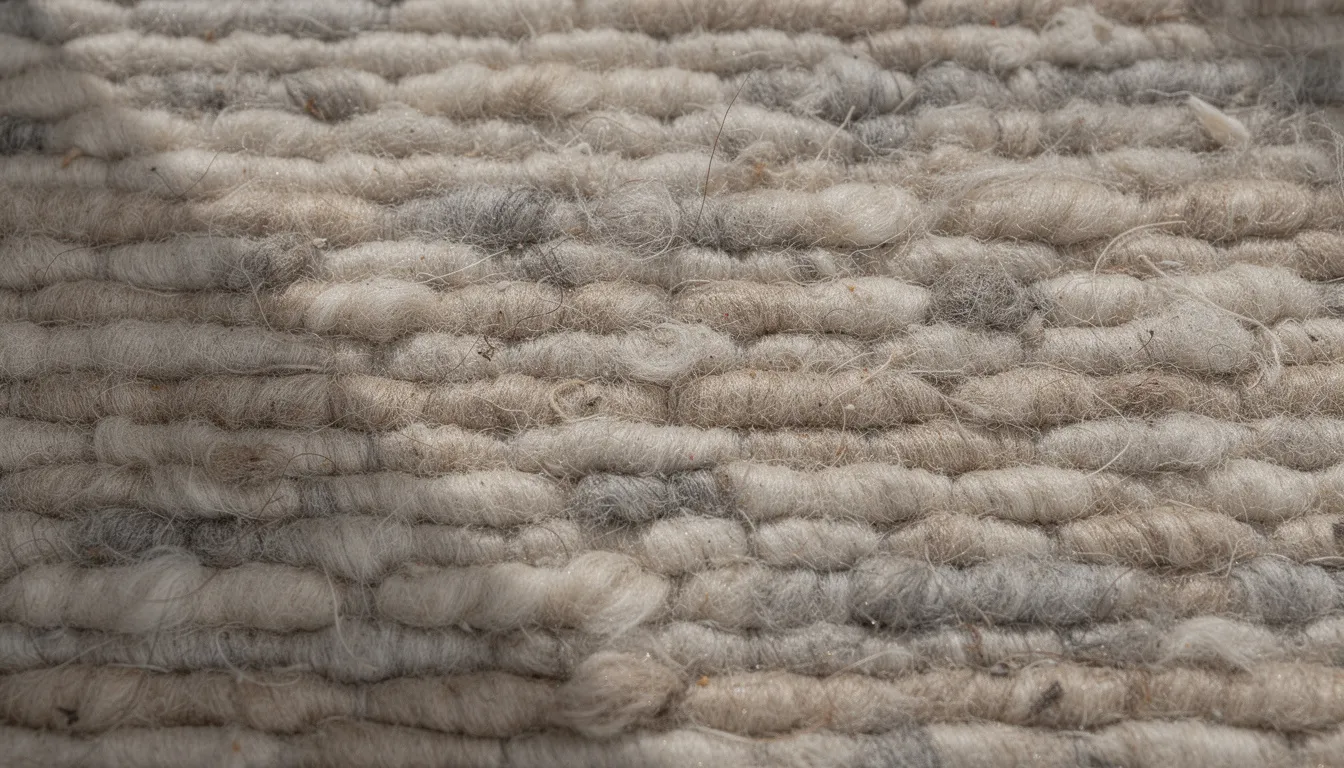
Authentic Navajo rugs often display slight irregularities in lines and wefts—a signature of handwork rather than a flaw. These variations distinguish genuine pieces from imitations that appear mechanically perfect.
At Rouzati Rugs, we work exclusively with certified Native American rugs from reputable dealers and avoid mass-produced Southwestern reproductions. When you’re evaluating Navajo rug provenance, we can help you understand what makes a piece authentic and worth the investment.
History and Cultural Significance of Navajo Weaving
The history of Navajo weaving spans several centuries, evolving through distinct periods influenced by trade, conflict, and cultural exchange. Understanding this arc helps buyers appreciate the significance of pieces they may encounter in the market.
Navajo blankets first emerged in the early 1700s, influenced by Pueblo peoples who introduced upright looms and weaving techniques around 1650. The Spanish had brought Churro sheep to the region by the early 1600s, and Navajo weavers adopted wool as their primary material, shifting away from the cotton used in earlier Pueblo textiles.
The mid-19th century produced the iconic Chief’s Blankets—first-phase striped designs, then second-phase with added detail, and third-phase featuring terraced diamonds and rare bayeta red yarn unraveled from traded European fabric. These pieces are among the most prized items in museums and private collections worldwide.
Key historical milestones:
- 1600s: Spanish introduce Churro sheep; wool becomes primary weaving material
- 1650: Pueblo peoples influence Navajo loom techniques and early designs
- 1863-1868: Bosque Redondo internment disrupts weaving traditions temporarily
- 1890-1930: Trading posts shape regional styles; rugs replace blankets for trade
- Post-1950: Modern adaptations continue while traditional methods persist
The spiritual origin story of Navajo weaving involves Spider Woman teaching the people to weave on a loom made from sky and earth cords. While most Navajo rugs in the market are not ceremonial objects, they carry cultural weight that merits respect. Preserving cultural heritage rugs means supporting living weavers and understanding the traditions behind each piece.
Key Navajo Rug Regions and Styles
Many Navajo rugs can be associated with specific trading posts or regions, each with characteristic designs, colors, and weaving techniques. These regional styles developed from the late 1800s through the mid-1900s, influenced by traders who supplied dyes and yarns while encouraging designs that appealed to collectors and tourists.
Two Gray Hills Neutral tones—black, white, gray, and natural brown wool—with exceptionally fine weaving and geometric diamond patterns. Credited to traders George Bloomfield and Ed Davies working with local weavers, this style emphasizes quality over color.
Ganado Deep red fields with black, gray, and white motifs, associated with trader John Lorenzo Hubbell’s trading post. The bold red creates dramatic visual impact popular in Chicago living rooms and craftsman-style homes.
Teec Nos Pos Complex borders and vivid colors distinguish this style, featuring intricate geometric patterns with multiple hues. These pieces appeal to collectors seeking visual complexity.
Yeibichai and Pictorial Rugs Figural and symbolic imagery, including stylized human and spirit figures. These pieces require careful consideration of cultural context and are less common in general collections.
The finest museum-quality Navajo textiles can range from a few thousand dollars to well above $40,000, depending on rarity, condition, weaver recognition, and age. Rouzati Rugs’ Navajo collection typically focuses on classic geometric area rugs and vintage pieces suitable for Chicago interiors rather than rare collector-only items.

Ethical Sourcing and Provenance at Rouzati Rugs
Ethically sourced Navajo rugs and clear provenance matter deeply, especially when non-Native retailers carry Indigenous artwork. At Rouzati Rugs, we take this responsibility seriously—working only with trusted Native American rug dealers and established trading partners who can document origin where possible.
Our approach to sourcing curated Navajo rugs reflects our commitment to both quality and cultural respect:
- Trusted dealer relationships: We purchase from Native American-focused dealers, reputable auction houses, and family collections with established histories
- Indian Arts and Crafts Act compliance: We follow guidelines that protect against fraudulent claims of Native American origin
- Cooperative and family sources: Where possible, we prioritize buying from cooperatives or family collections rather than exploitative channels
- Documentation preservation: When weaver names, approximate weaving dates, regions, or previous collection histories exist, we include them with the sale
Our hand-selected Navajo rugs come with whatever provenance information is available, helping preserve each piece’s history for future owners. This documentation adds both cultural value and potential collectability to your purchase.
We believe that respecting Navajo culture means ensuring that purchases support rather than exploit the communities and traditions that produce these textiles.
How to Tell if a Navajo Rug Is Authentic
For Chicago buyers new to Native American rugs, knowing how to evaluate authenticity protects your investment and ensures you’re purchasing genuine craftsmanship. Here’s a practical checklist for assessing potential pieces.
Construction indicators:
- Look for tight, handwoven construction with no fabric backing
- Check that the pattern appears identical (or nearly so) on both sides
- Examine edges for hand-finished selvedges—authentic pieces have no fringe, as warps are woven back into the rug
- Feel the wool for a slightly “springy” quality indicating natural fibers
- Notice minor irregularities in lines and weft spacing—signs of handwork, not flaws
Documentation and certification:
- Some authentic Navajo rugs carry labels or documentation from recognized galleries, guilds, or appraisers
- Many older pieces lack formal documentation but can be authenticated through expert examination
- Certified Native American rugs may include weaver identification, region, and approximate date
- Request Navajo rug provenance information when available from any seller
Red flags for imitations:
- Perfect mechanical uniformity in pattern and spacing
- Fabric or latex backing visible on the reverse side
- Cut edges with attached fringe
- Synthetic or overly processed feel to fibers
- Price points significantly below market for comparable authentic pieces
Rouzati Rugs offers in-store consultations at our Wilmette showroom where we can help you compare authentic Navajo pieces to machine-made Southwestern reproductions. This hands-on examination is often the most reliable way to understand the differences between genuine textiles and imitations.
Using Navajo Rugs in Chicago Homes
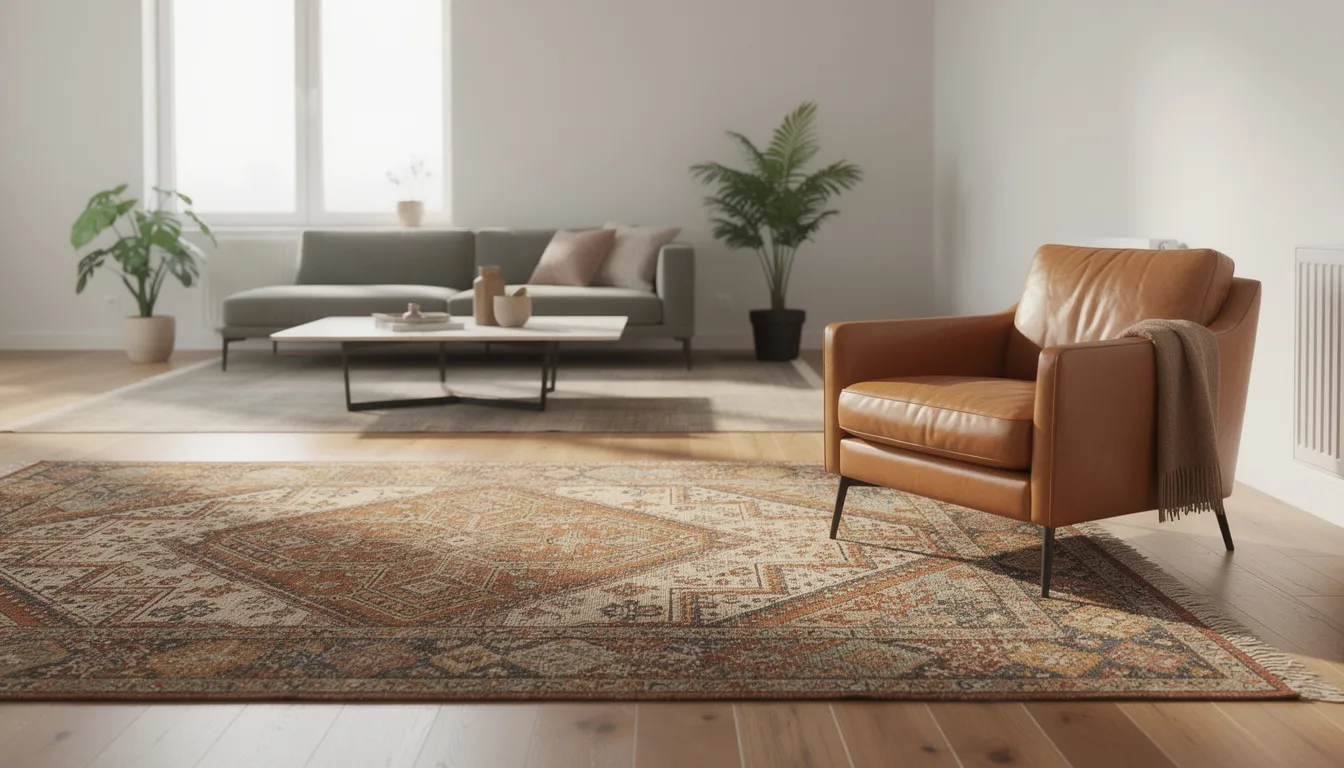
Navajo rugs for Chicago homes complement a wide range of interior aesthetics—from modern lofts to transitional designs to eclectic spaces in North Shore neighborhoods like Wilmette, Evanston, and Winnetka. The earth tones, geometric patterns, and textural warmth of these pieces create natural focal points that work with both contemporary and traditional furnishings.
Placement ideas:
- Use a 3×5 or 4×6 Navajo rug as an accent in an entryway or reading nook
- Layer a smaller Navajo piece over a neutral flatweave or broadloom in a living room for visual depth
- Hang a particularly fine vintage Navajo rug as wall art to protect it from heavy foot traffic while showcasing its craftsmanship
- Place a Ganado-style rug with bold reds against brick walls common in Chicago lofts for dramatic contrast
- Position a Two Gray Hills piece in minimalist North Shore spaces where subtle neutrals anchor the room
Durability considerations:
Are Navajo rugs durable for everyday use? The answer depends on weave density, age, and condition. Newer, sturdier weaves with tight weft counts can handle moderate traffic with proper care. Older or more delicate pieces may be better suited as wall hangings or in low-traffic areas. The unprocessed lanolin retained in natural wool provides some water repellency and resilience.
Color and style integration:
Southwestern Navajo palettes—earth reds, blacks, grays, and ivory—pair naturally with Chicago’s varied architectural styles. These tones complement exposed brick, hardwood floors, and the natural light from lakefront windows. For buyers exploring related options, our collections of Tribal Rugs, Native American Rugs, and Kilim Rugs offer complementary aesthetics.
Vintage and Antique Navajo Rugs in Chicago
Understanding the distinction between vintage and antique Navajo rugs helps buyers set appropriate expectations for condition, value, and use. Vintage Navajo rugs generally date from the mid-20th century (roughly 1940s-1970s), while antique Navajo rugs typically predate the 1930s or are at least 80-100 years old.
What to expect with older pieces:
- Patina and subtle fading that add character and authenticity
- Possible repaired areas from previous conservation efforts
- Variations in dye lots reflecting natural and early commercial colorants
- Potential museum exhibition history or catalog publication
- Investment value that may appreciate over time with proper care
Vintage Navajo rugs Chicago collectors seek often include regional styles from the Rug Period (1895-1950), featuring defined borders and trader-influenced designs. Antique Navajo rugs for sale may include rarer Chief’s Blanket variations or early transitional pieces.
Some antique Navajo textiles have been exhibited in museums or documented in scholarly publications, adding to their provenance and collectability. A 1920s J.B. Moore Crystal rug, for example, represents the crisp, rich designs now valued in collector circles.
Rouzati Rugs can help evaluate whether a vintage piece is suitable for floor use or better reserved as a wall hanging or collection item. Condition assessment is essential for determining appropriate placement and care requirements.
Caring for Handwoven Navajo Rugs
Proper maintenance preserves both the beauty and cultural heritage of Navajo rugs, protecting your investment for generations. These handwoven textiles require different care than machine-made rugs, with attention to their natural wool construction and traditional weaving methods.
Basic care guidelines:
- Vacuum regularly using suction only—avoid beater bars that can damage weft threads
- Rotate the rug every few months to even out exposure to light and foot traffic
- Protect from direct, harsh sunlight from large Chicago windows when possible
- Use quality rug pads on hardwood floors common in North Shore homes
- Address spills immediately by blotting (never rubbing) with clean, dry cloths
Professional care:
Rouzati Rugs offers professional rug cleaning and rug repair services for Navajo and other flatwoven textiles. These pieces should only be handled by specialists familiar with Native American weaving techniques—standard carpet cleaning methods can cause irreversible damage.
Storage recommendations:
- Roll rugs (never fold) to prevent permanent creases
- Wrap in breathable material like cotton sheeting—avoid plastic
- Store in dry, climate-controlled areas away from moisture and pests
- Inspect periodically for any signs of damage during storage
Value preservation:
Do Navajo rugs appreciate in value? Condition, rarity, age, and weaver recognition all influence long-term appreciation. Proper care directly impacts potential future value—a well-maintained piece holds both aesthetic appeal and investment potential. Museum-quality antique examples from the Classic or Rug Periods command premiums, but even newer handwoven pieces retain value when properly cared for.

Frequently Asked Questions About Navajo Rugs in Chicago
What are Navajo rugs?
Navajo rugs are handwoven textiles created by Diné (Navajo) artisans using traditional techniques passed down through generations. Originally made as wearing blankets and utilitarian items, they evolved into floor rugs and decorative textiles during the late 1800s. Each piece is woven on an upright loom with wool from Churro sheep.
Are Navajo rugs handmade?
Yes, authentic Navajo rugs are entirely handmade. Weavers insert each weft strand individually by hand—a process that cannot be mechanized. A single rug may require hundreds of hours to complete, from shearing sheep and spinning wool to dyeing threads and weaving the finished piece.
How can you tell if a Navajo rug is authentic?
Look for handwoven construction without fabric backing, identical patterns on both sides, hand-finished edges without fringe, and natural wool with a springy texture. Slight irregularities in lines and spacing indicate handwork. Documentation of provenance, weaver, or region adds confidence. Rouzati Rugs offers in-store consultations to help buyers authenticate pieces.
Are Navajo rugs durable for everyday use?
Durability depends on weave density, age, and condition. Newer rugs with tight weaves can handle moderate foot traffic with proper care. Older or more delicate pieces may be better suited as wall hangings. Natural lanolin in the wool provides some water resistance and resilience.
Do Navajo rugs appreciate in value?
Many authentic Navajo rugs appreciate over time, particularly antique and vintage pieces in good condition. Factors influencing value include age, rarity, regional style, weaver recognition, and provenance documentation. Proper care protects both aesthetic quality and investment potential.
What symbols are used in Navajo rugs?
Common motifs include geometric diamonds (representing mountains or hogans), zigzag lines (evoking lightning or water), stepped forms, and stylized crosses. Some bordered rugs feature a spirit line—a deliberate break allowing the weaver’s spirit to release from the finished piece. We recommend appreciating these designs without over-interpreting sacred symbolism.
Where can I buy authentic Navajo rugs in Chicago?
Rouzati Rugs in Wilmette offers a curated collection of authentic Navajo rugs, serving Chicago and the North Shore. Visit our showroom to examine pieces in person, or contact us to arrange in-home trials. For related options, explore our Tribal Rugs, Native American Rugs, and Kilim Rugs collections.
Authentic Navajo rugs bring together centuries of tradition, exceptional craftsmanship, and timeless aesthetics suited to Chicago’s diverse interiors. Whether you’re drawn to the bold reds of Ganado or the refined neutrals of Two Gray Hills, these handwoven textiles offer lasting beauty that machine-made imitations cannot match.
Visit our Wilmette showroom to see our Navajo collection in person, or contact Rouzati Rugs to learn more about our ethically sourced pieces, in-home trial service, and expert guidance for Chicago-area buyers. We’re here to help you find a rug that honors both your home and the Navajo weavers who created it.