


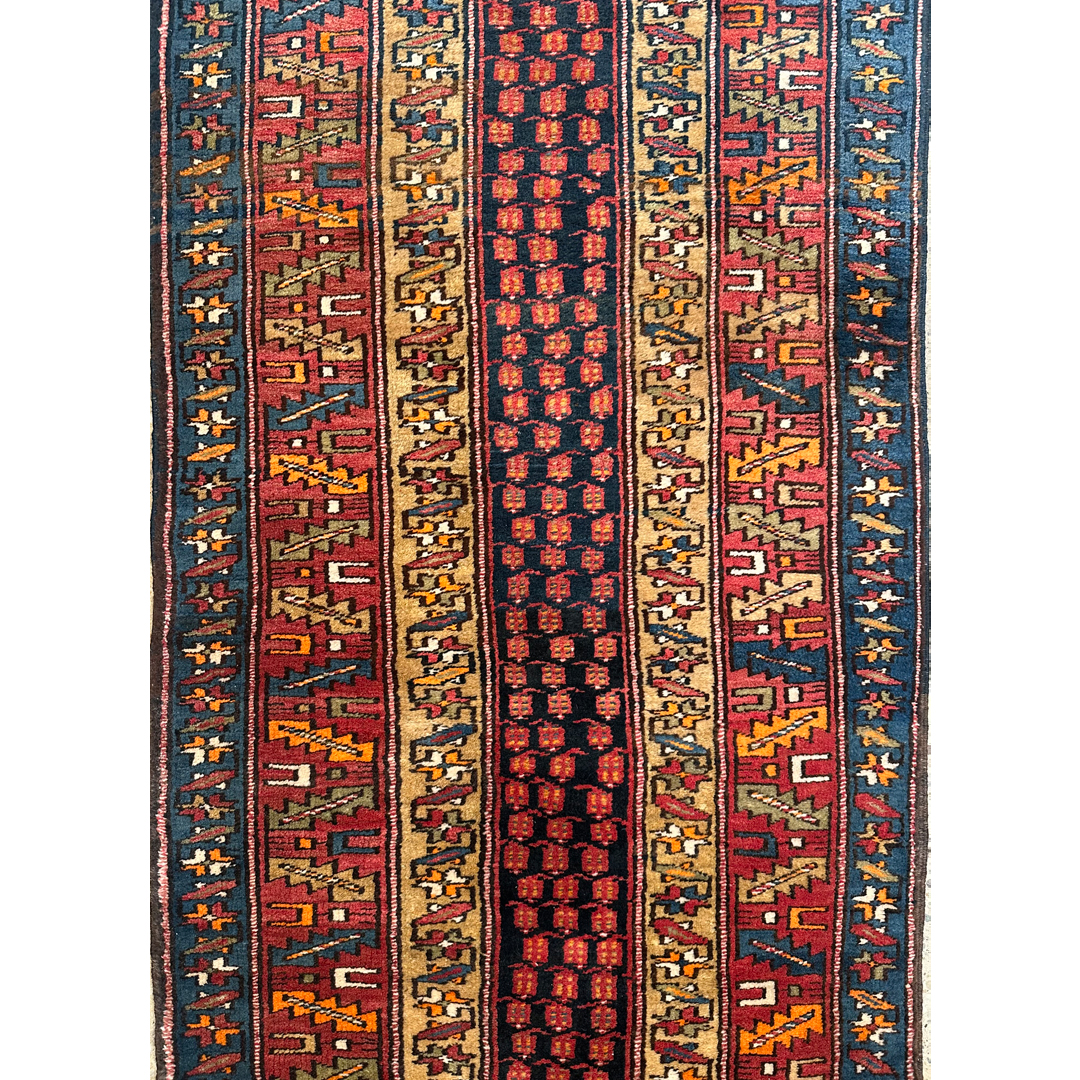
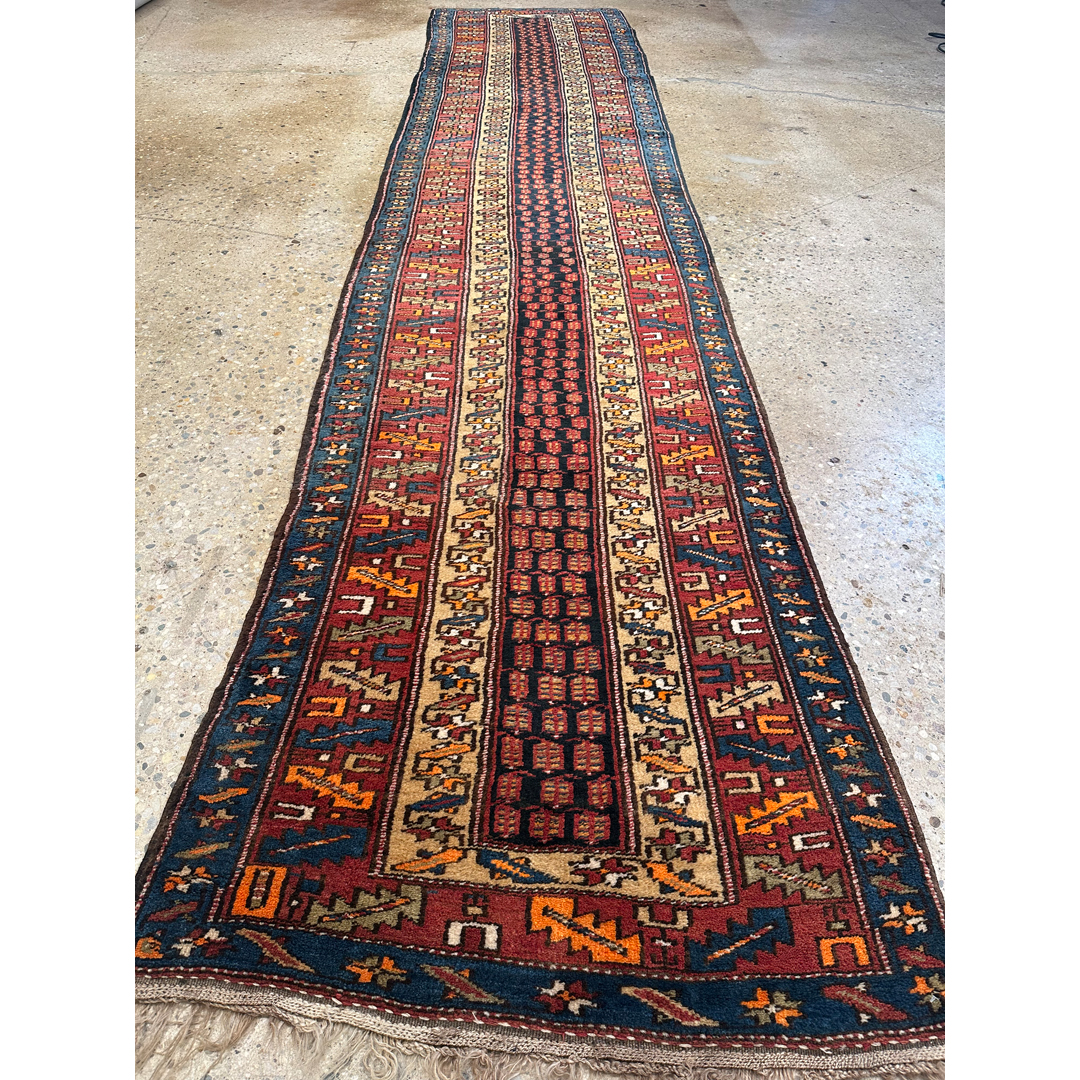
Amazing Ardebil – 1920s Antique Tribal Persian Runner – 3’10” x 13’11” ft.
$2,500.00Color: Blue, Rust, Brown, Gold
Style: Traditional
Size (ft): 3’10” x 13’11”
Shape: Rectangle
Material: Wool
Rug ID: RRI# A600-1 107482

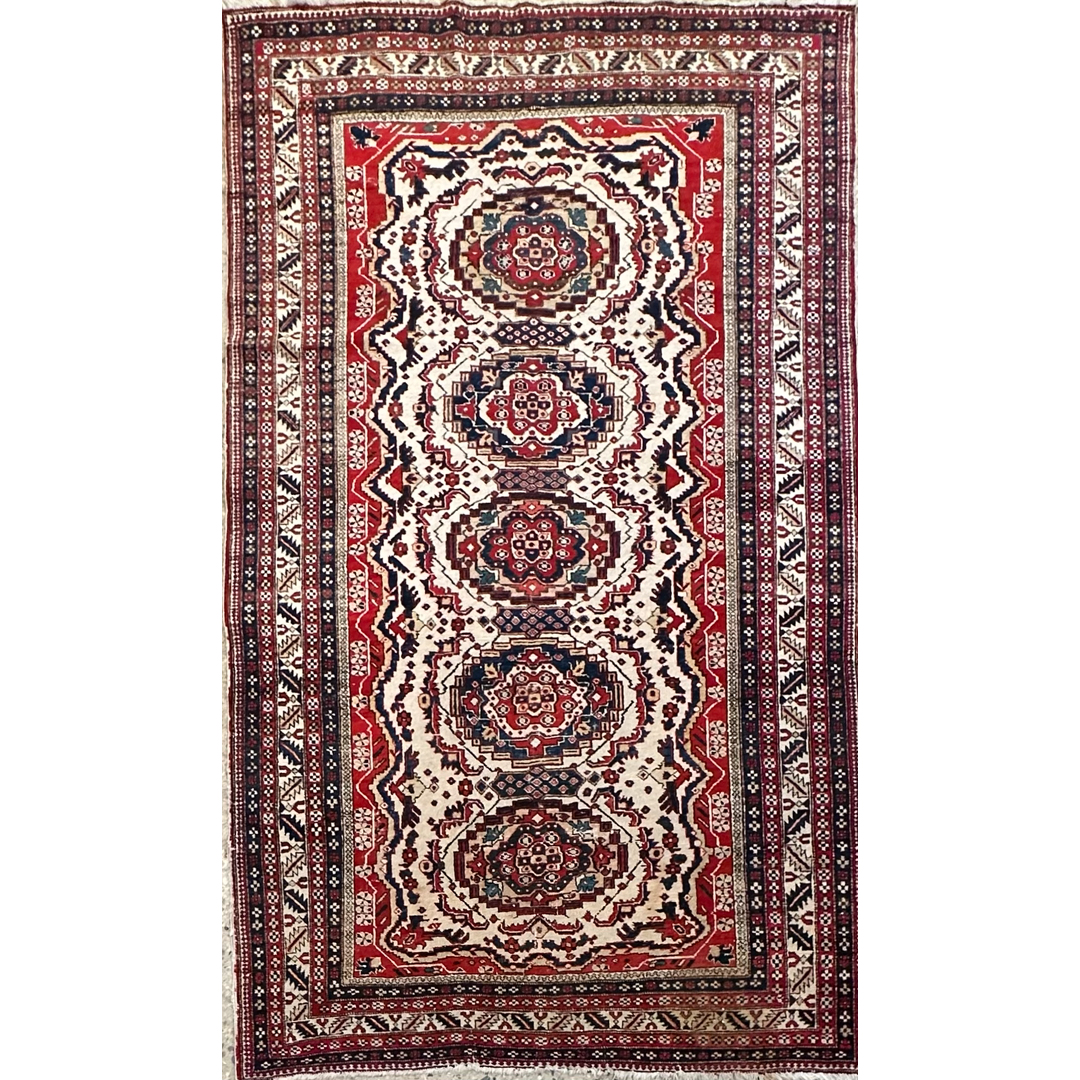
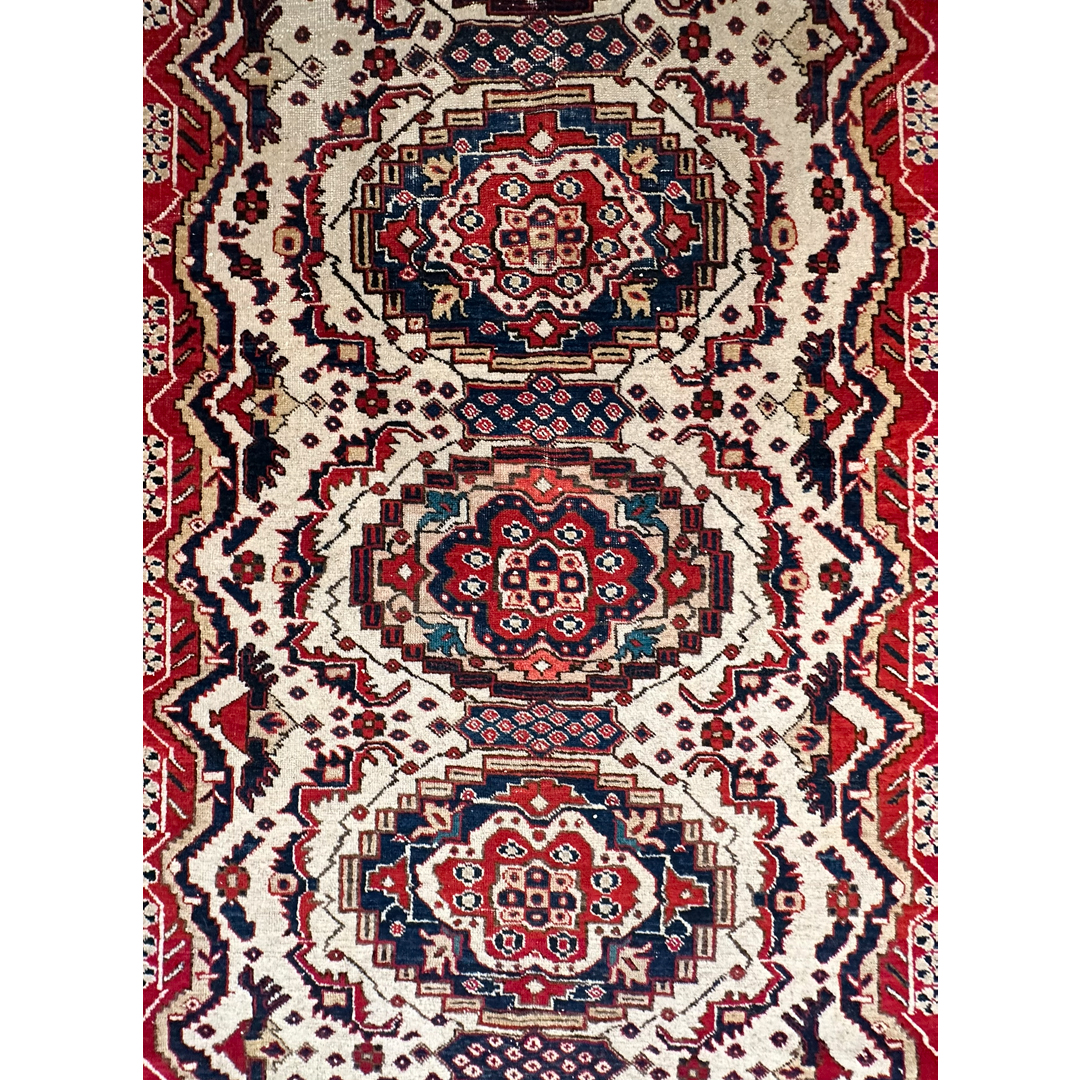
Amazing Ardebil – 1940s Antique Persian Rug – 5’1″ x 9′ ft.
Color: Cream, Red, Blue
Style: Traditional
Size (ft): 5’1 x 9′
Shape: Rectangle
Material: Wool
Rug ID: RRI# A175-1 102171
Amazing Ardebil – 1920s Antique Tribal Persian Runner – 3’10” x 13’11” ft.
$2,500.00Color: Blue, Rust, Brown, Gold
Style: Traditional
Size (ft): 3’10” x 13’11”
Shape: Rectangle
Material: Wool
Rug ID: RRI# A600-1 107482
Amazing Ardebil – 1940s Antique Persian Rug – 5’1″ x 9′ ft.
Color: Cream, Red, Blue
Style: Traditional
Size (ft): 5’1 x 9′
Shape: Rectangle
Material: Wool
Rug ID: RRI# A175-1 102171
Ardebil rugs represent one of the most fascinating chapters in the rich history of Persian carpet weaving. These hand knotted treasures from northwestern Persia combine bold geometric artistry with exceptional durability, making them prized possessions for collectors and homeowners alike. In this guide, we’ll explore what makes these rugs special, how to identify authentic pieces, and where to find quality Ardabil rugs in the Chicago area.
Quick Answer: What Are Ardebil (Ardabil) Rugs?
Ardebil rugs are hand knotted Persian rugs originating from the city of Ardabil in northwestern Persia, situated near the Caspian Sea in a historic region known for centuries of carpet weaving tradition. These rugs are traditionally woven with wool pile on a cotton foundation, featuring distinctive geometric patterns, vibrant colors, and a durable short pile that makes them practical for high-traffic areas.
At Rouzati Rugs in Wilmette (near Chicago), we offer carefully curated vintage and antique Ardabil rugs for sale, complete with in-home trials and expert guidance to help you find the perfect piece. Our selection includes authentic hand knotted examples that showcase the craftsmanship this region is famous for.
Key traits of Ardebil rugs:
- Hand knotted construction using traditional techniques
- Wool pile with cotton warp foundation
- Bold geometric patterns including medallions and diamond shapes
- Color palette featuring deep blues, reds, and ivory accents
- Short, firm pile ideal for runners and dining rooms
The village Ardebil rugs you’ll find in the marketplace today share their name with the legendary 16th-century Ardabil Carpet, now displayed at the Victoria and Albert Museum in London. While these everyday rugs differ from that museum masterpiece, they carry forward the same weaving heritage that made the region famous throughout the world of Persian art.
What Makes Ardabil Rugs Historically Significant?
Ardabil sits in northwest Persia, positioned between the Caspian Sea and the Caucasus mountains. This geographic location placed the city at a crossroads of cultures, influencing its carpet weaving traditions for over five centuries. The town’s name itself derives from ancient Zoroastrian texts, translating to “a tall holy place.”
The city became the spiritual home of the Safavid dynasty through its connection to Shaykh Safi al-Din Ardabili, a Sufi master who died in 1334. His shrine in Ardabil later became a pilgrimage destination and artistic hub that would shape Persian culture for generations.
Historical significance includes:
- The Safavid empire (1501-1736) established royal carpet workshops that elevated weaving from craft to fine art
- Shah Tahmasp I commissioned the famous Ardabil Carpet around 1540 as part of shrine renovations
- Shah Abbas I continued royal patronage, though he moved the capital to Isfahan
- The region’s geometric weaving style influenced surrounding areas including Tabriz and Caucasian traditions
- Ardabil weavers developed distinctive patterns that remain recognizable today
While most village Ardebil rugs feature coarser construction and geometric motifs compared to court-commissioned pieces, the region’s fame in art history stems from the exceptional quality achievable when master artisans were procured specifically for royal projects. This legacy of craftsmanship continues to inform how collectors and enthusiasts value Ardabil carpets today.

The Ardabil Carpet of Sheikh Safi Explained
The Ardabil Carpet actually refers to a pair of sister carpets dated 946 AH in the Islamic calendar, which translates to 1539-1540 CE. One of these magnificent pieces resides at the Victoria and Albert Museum in London, while its companion is displayed at the Los Angeles County Museum of Art. Together, they represent some of the earliest signed carpets in Islamic art history.
These carpets were woven during the Safavid period, likely in royal workshops in Kashan or Tabriz, specifically for the Sheikh Safi al-Din shrine in Ardabil. The London carpet measures an impressive 34 feet by 17 feet, showcasing exceptional quality and the pinnacle of Persian weaving achievement.
Key facts about the Ardabil Carpet:
- Dated via an inscription containing a couplet from the 14th-century poet Hafez
- Signed by Maqsud Kashani, believed to be the royal official supervising production
- Wool pile construction with approximately 300-350 knots per square inch
- Originally displayed as a pair in the shrine complex
The design features a monumental central medallion radiating like a sunburst, surrounded by intricate Shah Abbasi palmettes, arabesques, and scrolling vines. Twin hanging lamp motifs appear at either end, with rich indigo blue and gold tones inspired by mosque interiors creating a sense of sacred warmth throughout the composition.
The provenance tells a compelling story. The carpets remained in the shrine until an earthquake damaged them in the 19th century. The Albert Museum carpet was subsequently restored using pieces from its twin, and the Victoria and Albert Museum purchased it in 1893 with advocacy from William Morris himself.
The legacy of the Ardabil Carpet extends far beyond the museum walls. Reproductions have graced locations including 10 Downing Street and various government buildings around the world. Contemporary Persian Ardabil rug designs continue to draw visible inspiration from its medallion layouts and color combinations.
Design Characteristics of Ardabil Rugs
Everyday Ardabil rugs differ considerably from the courtly Ardabil Carpet, yet they share certain regional traits that make them instantly recognizable to experienced collectors. Understanding these characteristics helps buyers appreciate what they’re purchasing and identify authentic pieces.
Common field layouts include:
- All-over Herati (Mahi) pattern with diamond lattice and distinctive “fish” motifs
- Stepped diamond medallions and hexagonal shapes
- Elongated runner formats featuring repeating geometric compartments
- Connected diamond medallions creating rhythmic visual flow
Typical motifs found in Ardabil rugs:
- Simple angular palmettes reflecting village weaving traditions
- Hooked diamonds and “S” motifs from tribal weavers
- Stylized animals and birds woven into borders
- Tree and vine patterns arranged in strict straight lines rather than flowing curves
The color palette of authentic Ardabil rugs tends toward rich, earthy tones. Deep indigo, madder red, and warm terracotta form the foundation, accented by ivory, bottle green, sky blue, rose pink, and bright orange. In antique and vintage pieces, natural dyes create subtle variations and beautiful patina that synthetic dyes simply cannot replicate.
Construction characteristics:
- Wool pile on cotton warp and weft (occasional all-wool foundations in older tribal pieces)
- Pile kept short and firm, making rugs flexible and suitable for runners
- Knot density typically ranges from 65-130 knots per square inch
- Azerbaijani knots employed by traditional weavers
Modern variations on Ardabil-inspired rugs may incorporate silk highlights, washed color palettes, or larger scale medallions designed for contemporary interiors. However, these differ from traditional village production and should be evaluated accordingly.
Ardabil Rugs vs Other Persian Rugs
Understanding how Ardabil rugs compare to other Persian carpets helps buyers make informed decisions. Each weaving region developed distinctive characteristics shaped by local materials, cultural traditions, and market demands.
Ardabil vs Tabriz rugs:
- Tabriz rugs come from city workshops with very high knot counts and detailed curvilinear designs
- Ardabil rugs have a more village or tribal feel, with bolder geometric lines and slightly lower knot density
- Tabriz pieces typically command higher prices for fine city examples
- Ardabil rugs offer strong value for authentic hand knotted Persian rugs at more accessible price points
Ardabil vs Kashan rugs:
- Kashan produces refined floral medallion carpets with dense arabesques and curving vines
- Ardabil rugs feature more angular designs with straight vines and geometric medallions
- Kashan pieces showcase rich reds and blues in flowing compositions
- Antique Kashan carpets may be closer in style to the museum Ardabil Carpet, but village Ardabil rugs appear more rustic
Ardabil vs Caucasian tribal rugs:
- Ardabil shares a geometric idiom with neighboring Caucasian regions like Shirvan and Karabagh
- Ardabil rugs often have slightly finer weave and more Persian motifs than purely Caucasian pieces
- Border designs in Ardabil rugs typically include more motifs and objects than Caucasian examples
Chicago-area clients at Rouzati Rugs often compare Ardabil rugs with Tabriz and Kashan when choosing a feature rug for their homes. Our in-home trial service helps them see which scale and style fits their space best before making a final purchase decision.
How to Identify an Authentic Ardabil Rug
Knowing how to identify genuine Ardabil rugs matters for several reasons: ensuring authenticity, paying fair prices, and avoiding mislabeled modern reproductions. Whether you’re evaluating a family heirloom or considering a purchase, these guidelines will help.
Geographic and structural clues:
- Hand knotted construction, not machine made
- Wool pile (sometimes mixed with a little silk) on cotton or wool foundation
- Short, firm pile with a flexible handle
- Often produced as runners, gallery rugs, and room-size pieces
Design and color indicators:
- Strong geometric layout with hexagons, diamonds, or lattice Herati patterns
- Straight, grid-like vine work rather than fully flowing curvilinear arabesques
- Traditional palette of browns, blues, reds, and ivory with occasional orange or green accents
Technical checks to perform:
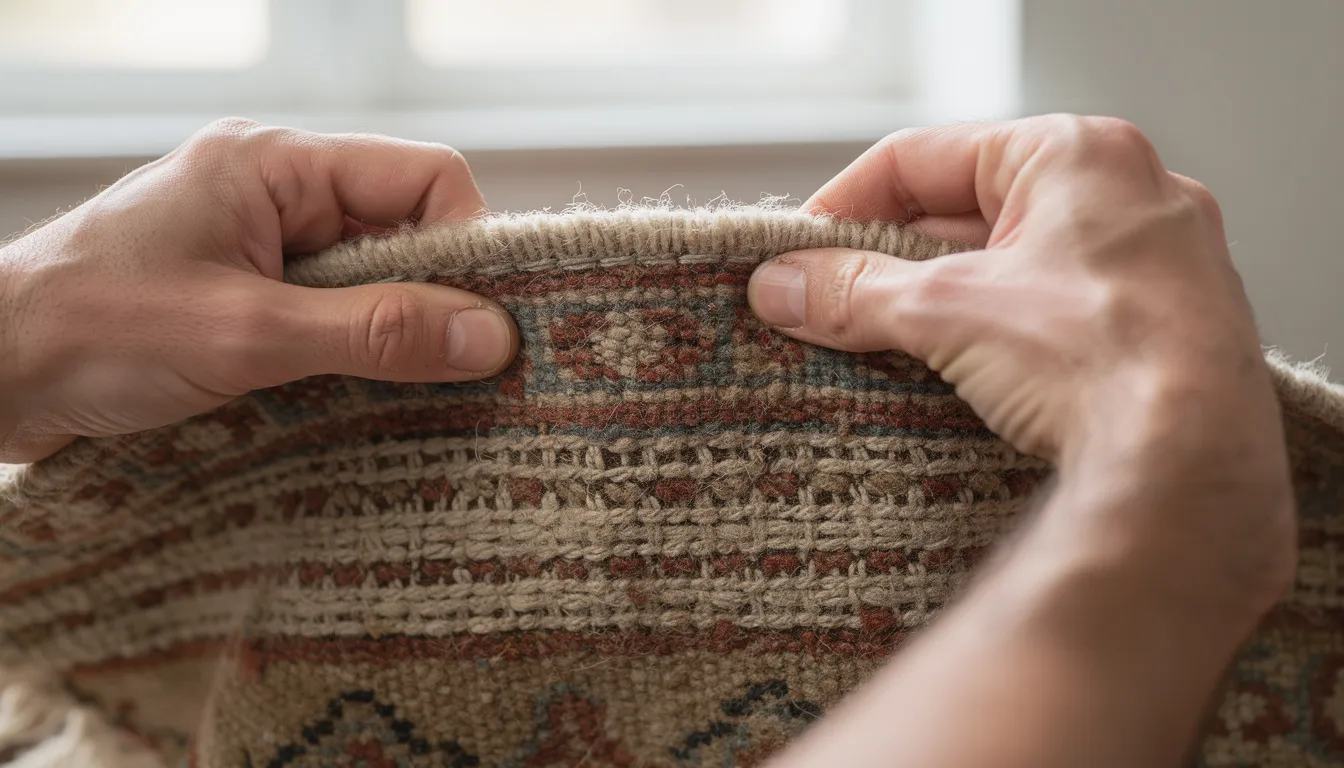
- Flip the rug and examine the back: uneven knots and slight irregularities indicate true hand knotting
- Knot type is often symmetrical (Turkish) in tribal pieces, sometimes asymmetrical (Persian) in more refined weaves
- Knot density should fall within expected range for village Ardabil rugs
Real vs fake considerations:
- Some modern machine-made rugs use “Ardabil style” in marketing but are not Persian hand knotted pieces
- Look for origin labels and seller transparency
- Seek written descriptions specifying “hand knotted in Persia”
- Be wary of prices that seem too good to be true
Rouzati Rugs offers rug appraisal services and hands-on inspection at our Wilmette location for clients who want to confirm whether a family rug is a genuine Ardabil or another Persian type. Our experts can help you understand exactly what you have.
Are Ardabil Rugs a Good Investment?
Antique and high-quality vintage Ardabil rugs can hold or increase value over time, while newer mass-produced pieces function more as décor than investment assets. Understanding what drives value helps set realistic expectations.
Factors affecting value:
- Age: pre-1950 village Ardabils and 19th-century pieces are more collectible
- Condition: original ends and sides, even pile, minimal repairs
- Originality of design and color integrity
- Material quality: hand-spun wool and natural dyes favored by collectors
How much are Ardabil rugs worth?
General value tiers range considerably. Decorative vintage Ardabil runners may fall in the low to mid thousands of dollars, while rare 19th-century or gallery pieces can command significantly higher prices at auction. Exact pricing requires individual inspection and assessment of current market demand.
It’s important to distinguish between museum-level pieces and everyday collectible rugs. The Ardabil Carpet at the Victoria and Albert Museum is essentially priceless and doesn’t serve as a market benchmark for typical residential purchases. Most buyers are investing in durable, usable art rather than museum artifacts.
Long-term benefits include:
- Hand knotted Ardabil rugs can last generations with proper care
- They can be professionally restored, cleaned, and passed down as functional heirlooms
- Unlike disposable machine-made alternatives, they gain character with age
Rouzati Rugs provides antique rug appraisal, cleaning, and restoration services in the Chicago area, helping owners protect and document the value of their Ardabil and other Persian rugs throughout their lifetime.
Buying Ardabil Rugs in Chicago with Rouzati Rugs
For those searching for Ardabil rugs near me or specifically Ardabil rugs in Chicago, Rouzati Rugs serves the Chicago North Shore including Wilmette, Evanston, and surrounding suburbs. Our family-owned business specializes in authentic Persian rugs, and our Ardabil collection represents some of the finest examples available in the region.
Our Ardabil offering includes:
- Curated selection of antique, vintage, and hand knotted Ardabil-style rugs
- Mix of wool Ardabil rugs, occasional wool-and-silk accent pieces, and Ardabil-inspired runners
- Each piece individually photographed and measured for online browsing
When you buy Ardabil rugs from Rouzati Rugs:
- Pricing reflects hand knotting, age, and condition with transparent quotes from knowledgeable staff
- Direct sourcing from reputable suppliers and estates ensures authenticity
- Every rug includes documentation of its origin and characteristics
Customer benefits:
- Free shipping on most rugs shipped within the U.S.
- 30-day returns allowing time to live with your purchase
- In-home trial service in the Chicago area so you can see how an Ardabil rug looks with your lighting, furniture, and flooring
- Collaboration with interior designers on selecting Ardabil, Tabriz, or Kashan rugs for cohesive design projects
Our decades of hands-on restoration, appraisal, and cleaning experience means we can guide you through every aspect of your purchase and support you long after you bring your rug home.
How Ardabil Rugs Work in Interior Design
Ardabil rugs serve as versatile design elements that bridge traditional Persian heritage and contemporary styling. Their geometric patterns and warm color palettes complement a surprising range of interior aesthetics.
Where they work best:
- Long hallways and entryways using Ardabil runners with geometric patterns
- Dining rooms where short-pile construction allows chairs to move easily
- Living rooms where a rich medallion or all-over Herati design anchors the seating area
Style compatibility:
- Bohemian and eclectic spaces benefit from Ardabil’s color and pattern energy
- Modern or minimalist interiors gain warmth and character from a single vintage piece
- Classic and traditional homes find Ardabil rugs complement other Persian styles like Tabriz and Kashan
Styling tips:
- Pair Ardabil rugs with neutral sofas and solid textiles so the rug becomes the primary pattern element
- Consider layering smaller vintage Ardabil rugs over larger neutral carpets for added depth and visual interest
- Let the rug’s colors inspire accent pillows, artwork, or ceramic accessories
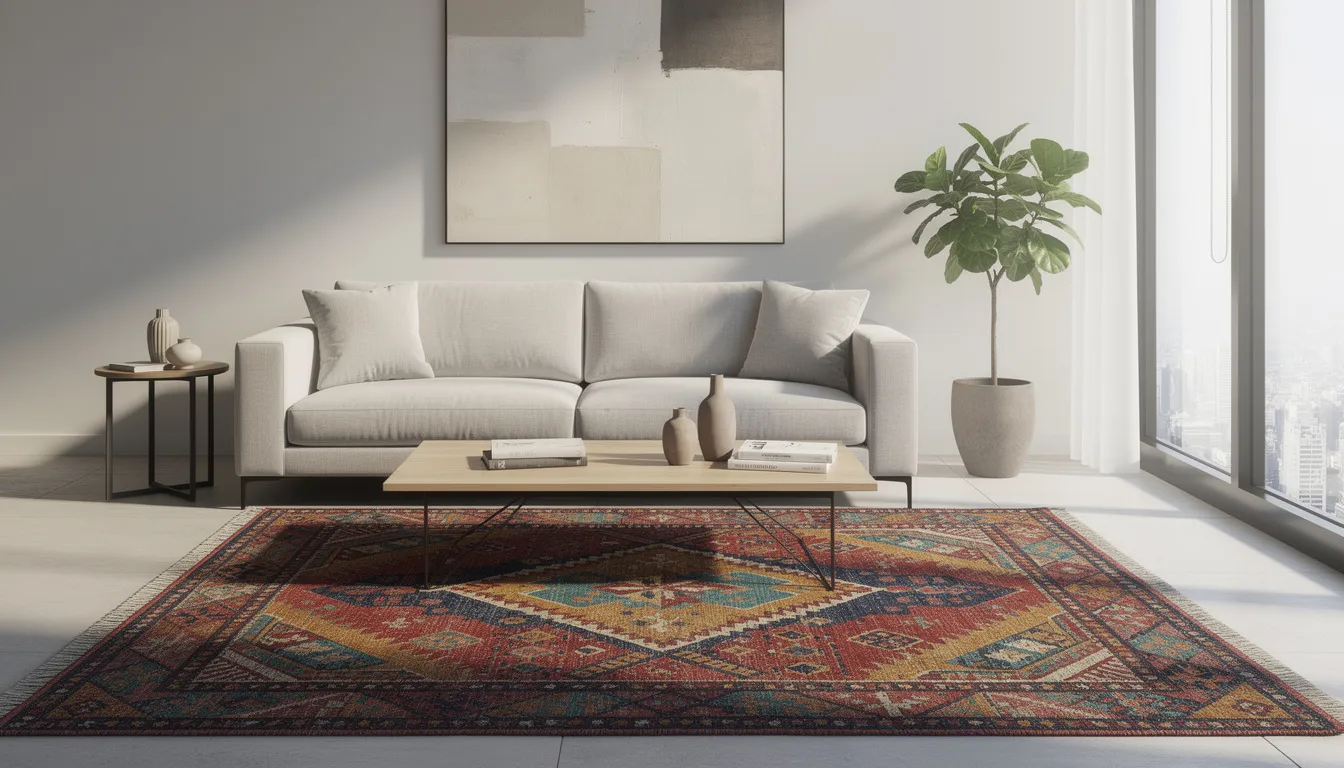
At Rouzati Rugs, our staff regularly helps Chicago-area homeowners and designers combine Ardabil, Tabriz, Kashan, and contemporary rugs in the same home without visual conflict. The key lies in understanding scale, color relationships, and the overall design vision.
Care, Cleaning, and Restoration of Ardabil Rugs
Proper maintenance protects both the beauty and value of your rug, especially for antique Ardabil Persian rugs that have already survived decades or centuries. These pieces deserve careful attention.
Basic care tips:
- Rotate rugs every 6-12 months to even out wear and sun exposure
- Use quality rug pads to reduce slippage and friction against flooring
- Vacuum gently without beater bars; avoid aggressive suction on fringes
Cleaning guidance:
- Professional hand-washing every 3-5 years for frequently used rugs (more often for entryways and dining rooms)
- Avoid steam cleaning and harsh chemicals that can damage wool pile and natural dyes
- Blot spills immediately rather than rubbing
Restoration and repair considerations:
- Common issues include worn fringes, unraveling ends, or moth damage
- Skilled reweaving and edge binding can extend an Ardabil rug’s life by decades when performed properly
- Address problems early before they spread to larger areas
Rouzati Rugs offers expert rug cleaning, restoration, and repair services in the Chicago area, including pickup and delivery options for convenience. Our restoration team works on hand knotted rugs of all types, ensuring your Ardabil piece receives the specialized care it requires.
Frequently Asked Questions About Ardabil Rugs
What are Ardabil rugs?
Ardabil rugs are hand knotted Persian rugs from the Ardabil region of northwestern Persia. They typically feature wool pile construction, geometric patterns including medallions and diamond shapes, and village or tribal weaving techniques that create durable, practical floor coverings.
Where are Ardabil rugs made?
They are made in and around the city of Ardabil in northwestern Persia, near the Caspian Sea and close to the Azerbaijan border. This country has produced carpets in this region for centuries, with the industry continuing today.
Why are Ardabil rugs famous?
Ardabil’s fame stems from both its village weaving tradition and the globally renowned 16th-century Ardabil Carpet displayed in museums in London and Los Angeles. The combination of historical significance and continued production keeps the region’s name prominent in Persian rug culture.
Are Ardabil rugs handmade?
Genuine Ardabil Persian rugs are hand knotted on traditional looms. However, some modern “Ardabil style” rugs may be machine made, so buyers should verify construction method before purchase. Look for documentation specifying hand knotted origin.
How can you tell an authentic Ardabil rug?
Key identification features include a hand knotted back with visible irregularities, appropriate geometric Ardabil-type designs, wool pile on cotton or wool foundation, and reliable documentation or expert appraisal. The structure and material quality reveal authenticity upon close inspection.
Are Ardabil rugs valuable today?
While not every Ardabil rug reaches museum-level status, well-preserved antique and vintage Ardabil rugs are prized by collectors and can command strong prices. Value depends on age, condition, design originality, and natural materials used in production.
Where can I buy Ardabil rugs in Chicago?
Rouzati Rugs in Wilmette serves Chicago-area shoppers seeking authentic Ardabil and other Persian rugs. We offer showroom visits, online consultations, and in-home trial services to help you find the perfect piece for your home.
Conclusion
Ardabil rugs combine regional Persian history, durable hand-knotted construction, and bold geometric aesthetics that have captivated collectors and homeowners for generations. From their origins near the Caspian Sea to their presence in homes across the world, these rugs represent authentic craftsmanship rooted in centuries of tradition.
Their versatility makes them suitable for hallways, dining rooms, and living spaces, compatible with both modern and traditional interiors. Whether you seek a vintage runner to warm an elegant entryway or a statement piece to anchor your living room, Ardabil rugs deliver lasting beauty and exceptional quality.
We invite you to contact or visit Rouzati Rugs in Wilmette for expert guidance in choosing an original Ardabil rug. Our team can help you compare options with Tabriz and Kashan alternatives, arrange cleaning or restoration of existing pieces through our rug services in Chicago services, and ensure you find exactly what your space needs. Whether you are interested in authentic hand knotted Persian rugs or seeking antique pieces, we provide expert guidance tailored to your preferences.
We also offer comprehensive Rug Appraisal Services to help you understand the value of your collection and make informed decisions. Explore our wide selection of Persian rugs, including exquisite Safavid rugs (یا Islamic rugs), as well as Tabriz and Kashan rugs, to find the perfect addition to your home.