

What could be more luxurious and inviting than a beautiful Persian rug in your house? Whether you’re looking to add a pop of color or some warmth to your décor, a Persian rug is sure to do the trick. Plus, these rugs are known for their high quality and durability, so you can enjoy them for years to come! Persian rugs, like other carpets, are a classic choice for floor coverings in any home.
Persian rugs are renowned for their intricate design and rich colors. A properly maintained Persian rug can last for generations, often passed down from a family member as a cherished heirloom. These rugs are typically made from natural fibers such as wool, silk, or cotton, each requiring special care. However, if not taken care of properly or if Persian rug cleaning in Chicago isn’t done regularly, the design of a Persian rug can suffer from fading due to wear and tear, and its beauty can diminish. Exposure to direct sunlight or sun can also cause fading and fiber damage, leading to discoloration and brittleness over time.
The key to preserving a Persian rug is to prevent dirt and debris from accumulating on its surface. Regular vacuuming and spot cleaning will help to keep the rug looking new. With proper care, a Persian rug can be enjoyed for many years to come, but where to start? And what to do? In this blog, we provide everything about taking care of your rug.

How Often Should I Clean Persian Rugs?
Oriental rugs are beautiful pieces that can add a touch of luxury to any home. But like all floor coverings, including carpets, they require regular cleaning to keep them looking their best. How often you need to clean your oriental rugs in Chicago will depend on several factors, including its placement, and the amount of foot traffic it receives.
If your oriental rug is located in a high-traffic area, such as a living room or entryway, you may need to clean it as often as once a week. Every two weeks or so should suffice for less-trafficked areas, such as bedrooms or dens. Of course, if you have pets or small children, you may need to clean your oriental rug even more frequently.
Whenever you do, Persian rug cleaning should be done by making sure that it is vacuumed first to remove any surface dirt and debris. Always vacuum the rug gently to avoid damaging the fibers, and flip the rug over to vacuum the back side as well for a thorough clean. Then, gently spot-clean any particularly stained or soiled areas using mild soap and cool water. Use a clean towel to wipe the stained area gently, being careful not to rub too hard.
Once you’ve finished cleaning, be sure to blot the rug dry with a soft paper towel; never allow it to air-dry, as this can cause the fibers to shrink or become misshapen. With a little care and attention, your oriental rug will continue bringing beauty and elegance to your home for many years.
It’s important to do oriental rug cleaning regularly to prevent dirt and grime from building up and damaging the fibers. Regular cleaning also helps reduce dust mites, which are common indoor allergens. According to experts, the best way to clean any Persian rug is by taking it outside and hanging it over a clothesline or railing. Then, gently beat the rug using a large brush to remove any dirt or debris. After beating, take the rug and shake it outside to further dislodge dust and debris.
If your rug is particularly dirty, you can vacuum it using the upholstery attachment. Once you’ve removed all the dirt and debris, allow the rug to air dry thoroughly before bringing it back inside. Make sure the rug is not left damp, and lay it flat to dry to avoid stretching or warping. Remove as much moisture as possible before returning the rug indoors. At the end of the drying process, allow the rug to rest in a dry area to ensure all moisture is gone. By following these simple tips, you can keep your oriental rug looking beautiful for years to come.
Preparation for Rug Cleaning
Before you start the actual cleaning process, taking the time to properly prepare your Persian rug or Oriental rug can make all the difference in preserving its beauty and extending its life. Preparation is especially important for hand knotted Persian rugs, as their delicate fibers and intricate designs require extra care.
Begin by gently vacuuming the rug’s surface to remove loose dirt and dust. Use a vacuum without a beater bar to avoid damaging the fibers, especially if your rug is made of wool or silk. If you have pets or kids, you may want to vacuum more frequently to keep dirt and stains from settling deep into the pile.
Next, carefully inspect your rug for any stains or high-traffic areas that might need special attention. For any stained area, use a mild detergent and clean towels to blot—never rub—the spot. This helps lift the stain without harming the rug’s fibers. For high-traffic zones, you might need a slightly stronger cleaning solution, but always test it on a small, hidden section first to check for dye bleeding or discoloration.
The type of rug you have matters, too. Silk Persian rugs, for example, are more sensitive than wool rugs and should be handled with extra caution. If you’re unsure about the best cleaning method for your specific rug, don’t hesitate to reach out to a professional rug cleaner for expert advice.
When preparing your cleaning solution, stick to a mild detergent mixed with cold water. Avoid harsh chemicals and hot water, as these can damage the fibers or cause colors to run. If you’re looking to remove odors, a sprinkle of baking soda can be very effective—just let it sit for a while before vacuuming it up.
Gather your cleaning tools before you begin: clean towels, a soft-bristled brush, and a broom are all you need. Avoid steam cleaning or using machines with a beater bar, as these can be too aggressive for delicate rugs.
When To Get Your Rug Professionally Cleaned
A Persian rug is a beautiful and timeless addition to any home. However, like all rugs, it requires regular cleaning to maintain its beauty. The frequency of professional oriental rug cleaning will depend on several factors.
A professional oriental rug cleaning service done every 12 to 18 months is sufficient for most homeowners. However, if the rug is located in a high-traffic area, or if it is not properly cared for, it may need to be cleaned more frequently. Professional cleaning offers a deeper and more thorough clean than home methods, helping to preserve the rug’s integrity and appearance. Experts recommend a deep clean by professionals every few years to maintain the quality of your Persian rug. If your rug has persistent stains or odors, we recommend taking it to a professional for specialized care. Many vintage or delicate rugs are cleaned in a specialized shop to ensure proper handling and preservation of delicate fibers. For fragile or antique rugs, professionals often use dry cleaning, a gentle, waterless method that protects valuable textiles. When it comes time for a professionalPersian rug cleaning service in Chicago, be sure to choose a reputable and experienced rug cleaning company to ensure that your rug is properly taken care of.
Click HERE to view a video on the proper procedure for professional rug cleaning!

How Do You Hand Wash a Persian Rug?
Persian rugs in Chicago require special care to keep them looking their best. When it comes to Persian rug cleaning, hand washing is one of the decent options. Here’s how to do it:
Fill a sink or bathtub with lukewarm water and add a mild detergent. Gently agitate the rug in the water to loosen any dirt or debris. Use a clean towel to gently wipe the surface and fringes of the rug, being careful not to damage the delicate fibers. Drain the dirty water and refill the sink with clean water. Rinse the rug thoroughly, making sure to remove all traces of detergent and as much moisture as possible before drying. Do not steam clean Persian rugs, as this can damage delicate fibers such as wool, silk, or cotton.
After rinsing, lay the rug flat to dry and avoid leaving it damp, as excess moisture can lead to mold, mildew, or warping. Do not hang the rug, as this may cause stretching. Allow the rug to air dry completely, and let it rest in a protected, dry environment until it is fully dry. Once dry, vacuum the rug to restore its nap.
With a little bit of effort, you can keep your Persian rug looking like new for years to come.
How To Use Vinegar To Clean Oriental Rugs?
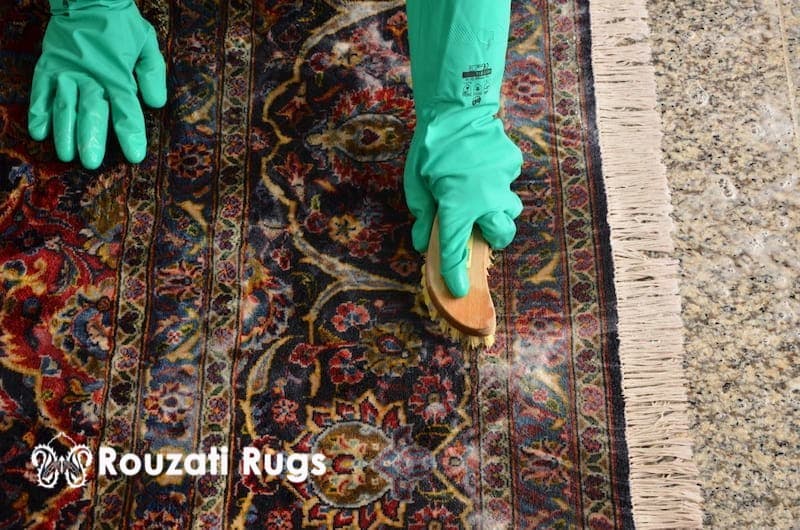
Dust and dirt can quickly build up in the intricate weave, and harsh cleaning chemicals can damage the delicate fibers. Fortunately, there is a gentle and effective way for oriental rug cleaning with the use of vinegar.
Simply mix equal parts vinegar and water in a spray bottle and spray the solution onto the rug. Let it sit for a few minutes, then use a soft brush to lightly scrub away dirt and debris. After scrubbing, use a clean, damp cloth to gently wipe the rug’s surface, making sure to remove any remaining solution and dirt without damaging the fibers. Finally, rinse the rug with clean water and allow it to air dry completely, ensuring the rug is not left damp to prevent mold or mildew. This simple Persian rug cleaning method will leave your oriental rug looking new!
FAQ
- Can you vacuum a Persian rug?
The answer might surprise you! While vacuuming any type of rug or carpet will help remove dirt and debris, many people believe vacuuming a Persian rug can damage delicate fibers. To clean thoroughly, it’s important to flip the rug over and vacuum both sides. This helps remove embedded dirt and prevents buildup that can harm the rug over time.
- How frequently should a Persian rug be cleaned?
The location of the rug and the volume of foot activity it experiences are two factors that affect how frequently it needs to be cleaned. Cleaning may be necessary once per week in high-traffic areas and perhaps every two weeks in low-traffic areas. Regular cleaning also helps reduce dust mites and other allergens.
- Can I use water to wash my Persian rug?
Washing Persian rugs in water is not advisable since doing so could cause the fibers to shrink or change shape. Gently beat the carpeting with a stiff brush to remove dirt and debris. You can also take the rug outside and shake it to dislodge dust and particles.
- How should I wash a Persian rug by hand?
A bathtub or sink should be filled with warm water and mild detergent. When you’re ready to rinse the rug, drain the used water and replace it with fresh water. To restore the rug’s nap, let it entirely air dry before vacuuming. Honestly, avoid using harsh chemicals or steam clean methods, as these can damage delicate fibers.
- Can I steam clean a Persian rug?
No, you should not steam clean Persian rugs. Steam cleaning can damage the delicate fibers and natural dyes, especially in vintage or handmade rugs. It’s best to use gentle, traditional cleaning methods or consult a professional.
- What is snow cleaning for Persian rugs?
Snow cleaning is a traditional method where you lay the rug on clean, dry snow and gently beat it. The cold helps lift dirt and refresh the fibers, and as the snow sublimates, it carries away dust and debris. This method can revitalize the rug’s appearance and colors.
- What materials are Persian rugs made from?
Persian rugs are typically made from natural fibers such as wool, silk, and cotton. Cotton is often used for the foundation and is a delicate material that requires careful cleaning to preserve its vibrancy and integrity.
- Are Persian rugs often family heirlooms?
Yes, Persian rugs are often passed down from a family member, making them cherished heirlooms with sentimental value and history.
- How do I remove allergens from my Persian rug?
Regular cleaning, including vacuuming both sides and taking the rug outside to shake it, helps reduce dust, allergens, and dust mites that can accumulate in carpets and rugs.