

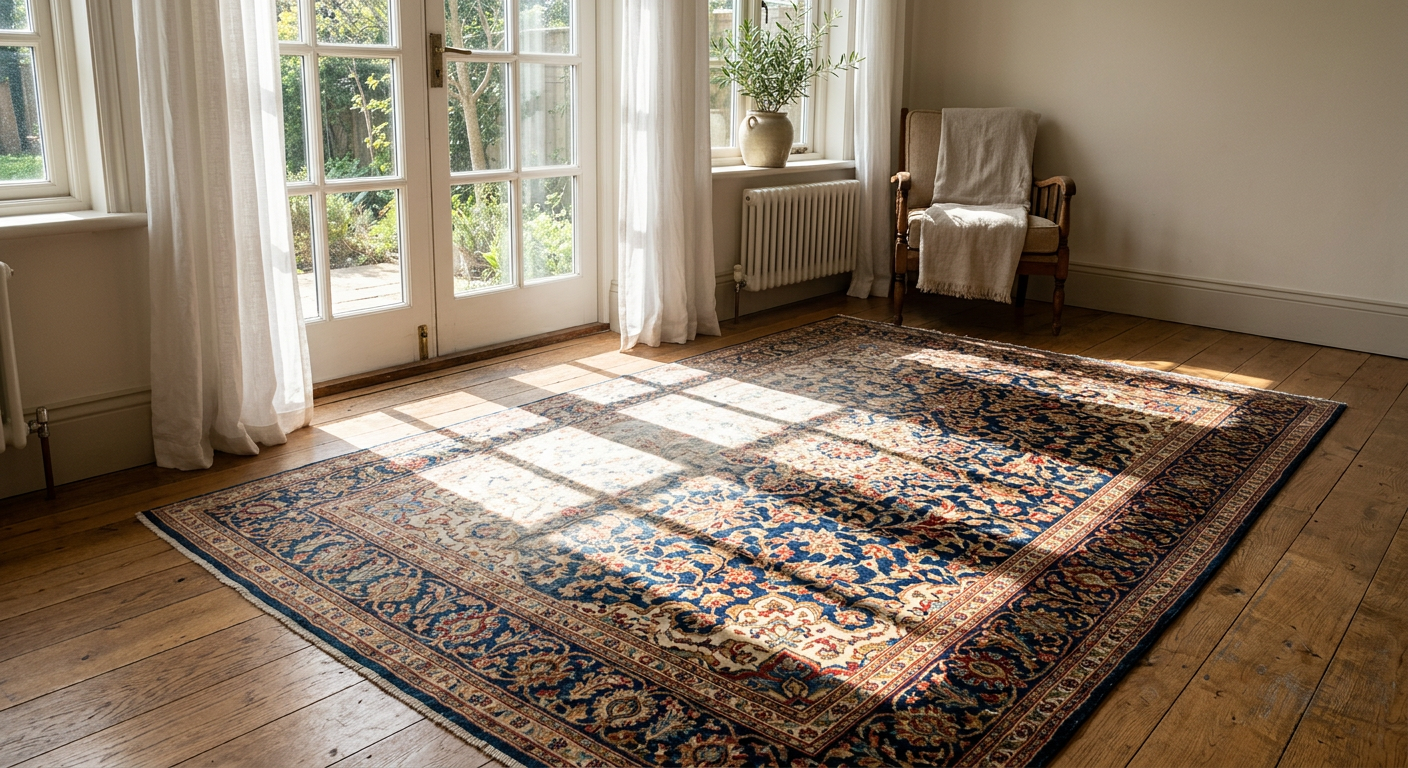
Silk rugs are highly sensitive to prolonged sunlight exposure and do not tolerate direct UV light well. This applies to hand-knotted silk rugs placed near large windows, glass doors, or skylights. The decision matters because UV exposure can cause permanent fading, fiber weakening, and uneven sheen distortion over time.
Why Are Silk Rugs So Sensitive to Light?
Silk fibers are protein-based and finer than wool.
This delicate structure reflects light beautifully, which gives silk rugs their signature sheen. However, that same structure is vulnerable to UV degradation. Prolonged sunlight can weaken fibers at a microscopic level, leading to brittleness and fading.
Silk does not have the natural resilience that wool has under environmental stress.
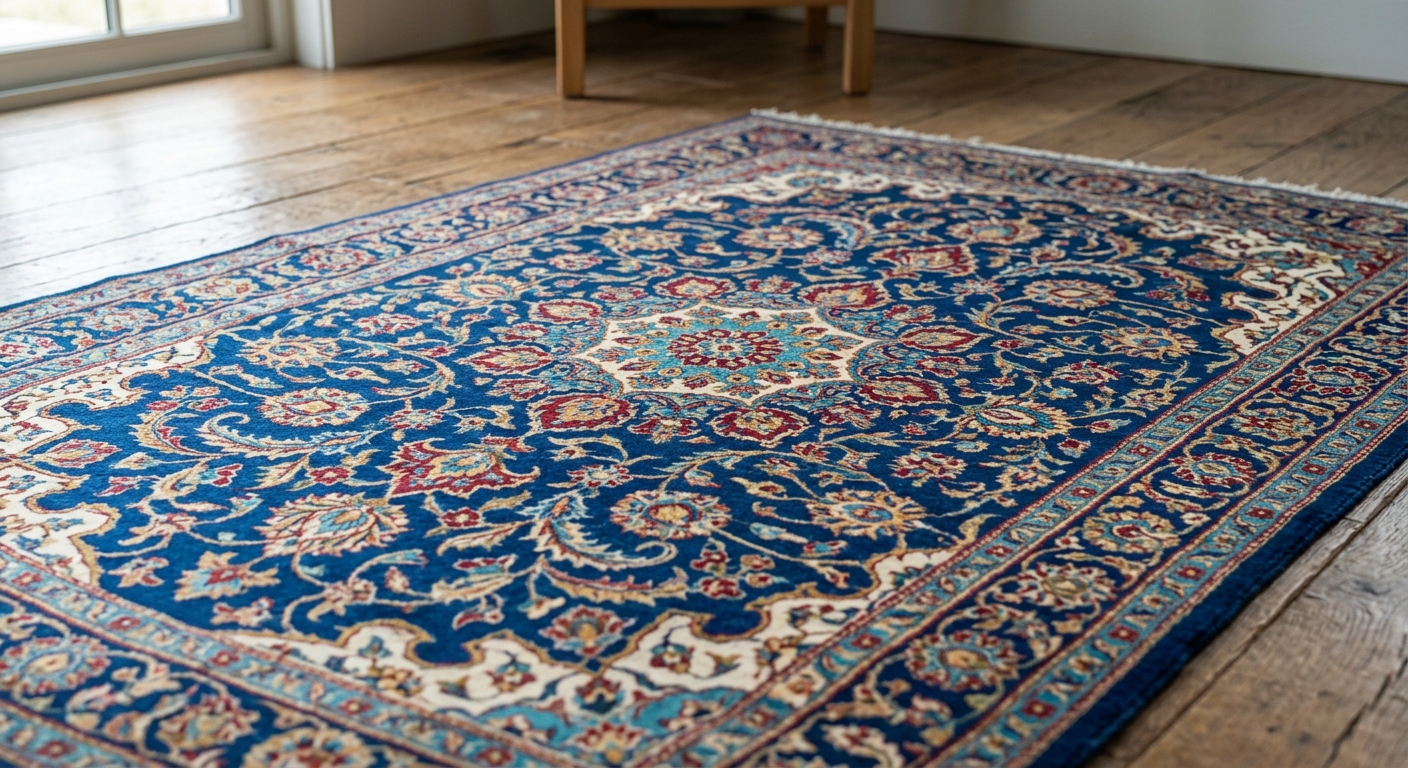
Silk’s fine fibers create sheen but increase light sensitivity
Placement: In fiber sensitivity section
What Does UV Damage Look Like on a Silk Rug?
UV damage often appears as uneven fading or dull patches.
Areas closest to windows may lose vibrancy faster than shaded sections. In some cases, color shifts are subtle at first and become noticeable only when furniture is moved. Over time, fibers may lose strength, increasing breakage risk in high-exposure areas.
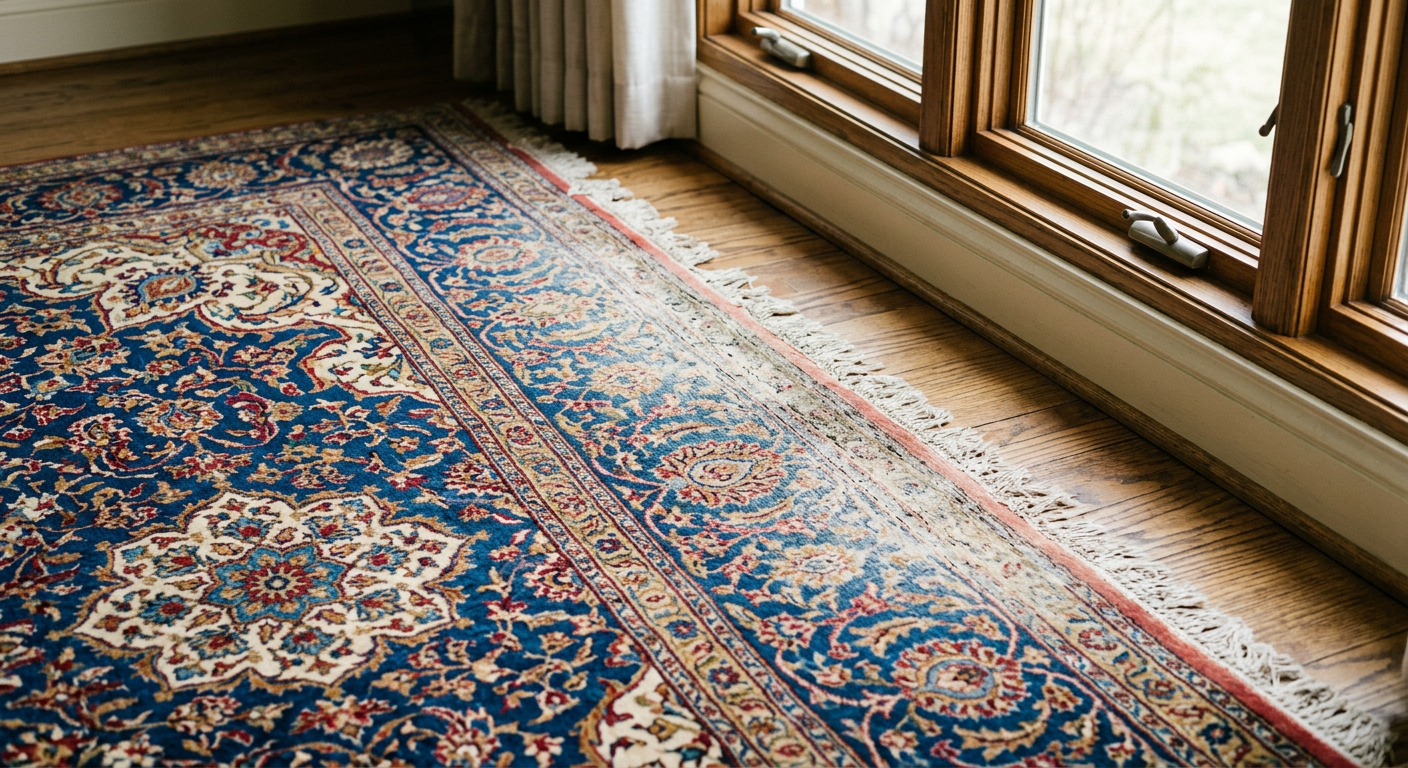
V damage often appears first near glass exposure
Placement: In UV damage section
Does Window Placement Increase Risk?
Yes. Placement matters significantly.
South- and west-facing windows typically expose rugs to stronger direct sunlight. Glass can intensify light concentration, especially in bright Chicago summers when daylight hours are longer. Even indoor environments can create sustained UV exposure if window coverings are minimal.
For broader environmental planning, see silk rug protection.
What Actually Happens When Homeowners Ignore Sunlight Risk
In real situations, homeowners in Chicago often:
Mistake 1
Place silk rugs directly in front of large picture windows.
Mistake 2
Assume indoor glass blocks all UV radiation.
Mistake 3
Rotate furniture but not the rug itself.
These mistakes occur because fading develops gradually. By the time color differences are obvious, UV exposure may have already weakened fibers. Seasonal brightness shifts can accelerate damage during summer months.
What Needs to Be Confirmed Before Placing a Silk Rug Near a Window
- Determine window orientation and daily sun duration.
- Assess whether UV-filtering film or coverings are installed.
- Monitor early signs of uneven sheen or fading.
- Evaluate whether the rug can be rotated periodically.
- Consider the rug’s age and dye stability.
Placement decisions should account for long-term exposure, not just aesthetic preference.
When Sunlight May Be Less of a Concern
If the rug receives only indirect or filtered light, risk may be lower.
Rooms with consistent blinds, curtains, or UV-filtering window film can reduce exposure intensity. However, no indoor setting fully eliminates UV presence. Monitoring remains important even in partially shaded environments.
Decision Recap
- If direct sunlight hits the rug daily, reduce exposure.
- If fading appears near windows, rotate immediately.
- If the rug is antique or highly valuable, avoid strong light zones.
- If window film is installed, verify its UV rating.
- If sheen differences increase seasonally, reassess placement.
Frequently Asked Questions
Does sunlight permanently damage silk rugs?
Yes. UV exposure can permanently fade dyes and weaken silk fibers. Damage is cumulative and cannot be reversed once fibers degrade.
Can rotating a silk rug prevent fading?
Rotation can help balance exposure but does not eliminate UV impact. It may reduce uneven fading patterns but cannot fully prevent fiber degradation.
Does indoor glass block UV damage?
Standard window glass reduces some UV radiation but does not block it completely. Additional protective measures may be necessary in high-sunlight rooms.
About the Author
This guide was developed by the textile specialists at Rouzati Rugs to help homeowners understand when specialized rug restoration decisions matter.